
Natural gas radiant tube heaters provide efficient, directional heat for garages, shops, and large spaces. This guide compares five top Amazon-listed units, summarizing key specs to help you choose the right radiant or infrared natural gas heater for your space.
| Product | Type | BTU / Coverage | Notable Feature |
|---|---|---|---|
| Dyna-Glo IR30NMDG-1 30,000 BTU | Infrared Wall Heater | 30,000 BTU / Up To 1,000 Sq. Ft. | Infrared Radiant Technology |
| Mr. Heater MHVFDF30RTT 30,000 BTU | Vent-Free Radiant Dual Fuel | 30,000 BTU / Up To 1,000 Sq. Ft. | Dual Fuel (Natural Gas + Propane) |
| Mr. Heater F272800 40,000 BTU | Infrared Garage Heater | 40,000 BTU (High Ceiling Use) | Designed For 12–15 Ft Ceilings |
| Mr. Heater MHVFRD20NGT 20,000 BTU | Vent-Free Radiant Wall Heater | 20,000 BTU / Up To 700 Sq. Ft. | Multiple Burner Tile Radiant Design |
| RH-175-50-N 175,000 BTU 50′ Long | Commercial Radiant Tube | 175,000 BTU / Commercial Use | Long Radiant Tube — Industrial Use |
Content Navigation
- Dyna-Glo IR30NMDG-1 30,000 BTU Natural Gas Infrared Wall Heater
- Mr. Heater MHVFDF30RTT 30,000 BTU Radiant Vent Free Dual Fuel Heater
- Mr. Heater F272800 40,000 BTU Natural Gas Garage Heater #MH40NG
- Mr. Heater MHVFRD20NGT Vent Free Radiant 20,000 BTU Natural Gas Heater
- RH-175-50-N Single Stage Natural Gas 175,000 BTU 50′ Long Radiant Tube Heater
- Buying Guide: How To Choose A Natural Gas Radiant Tube Heater
Dyna-Glo IR30NMDG-1 30,000 BTU Natural Gas Infrared Wall Heater

This unit is described as natural gas ready with a 30,000 BTU output and infrared technology that radiates heat to warm objects first. The manufacturer lists coverage up to 1,000 sq. ft. Infrared radiant heat creates a directional, sun-like warmth that can be more comfortable in spaces where air movement is limited.
Installation is wall-mounted, making it a good fit for garages, workshops, and open indoor spaces. Note the listing states fuel conversion not permitted, so confirm supply type before purchase. Infrared units like this tend to be efficient for spot heating and for environments where heating air is less effective.
Mr. Heater MHVFDF30RTT 30,000 BTU Radiant Vent Free Dual Fuel Heater
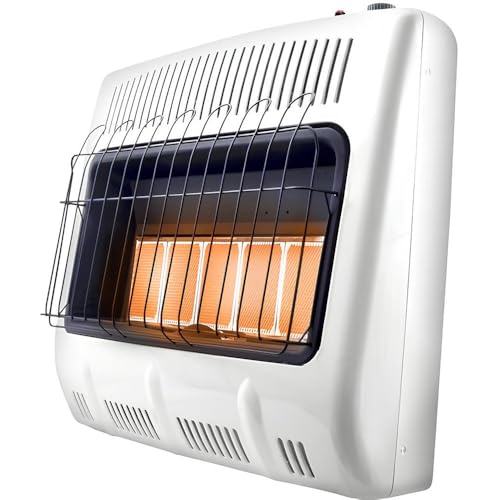
This vent-free radiant heater offers a 30,000 BTU output and dual-fuel capability, operating on both natural gas and propane. The product specifies advanced infrared heat that directly warms objects and people rather than air, listed coverage up to 1,000 sq. ft.
Call 888-896-7031 for Free Local HVAC Quotes – Compare and Save Today!
Safety features include an automatic low oxygen shut-off system and a patented two-step fuel connection to reduce incorrect hookups. The fuel-type selector allows switching operation based on available fuel. Vent-free heaters require compliance with local codes and adequate room ventilation; check regulations prior to installation.
Mr. Heater F272800 40,000 BTU Natural Gas Garage Heater #MH40NG

Marketed for garages and higher-ceiling spaces, this unit emphasizes efficient, cost-effective infrared heat. It’s designed for buildings with 12 to 15 ft ceilings and lists specific clearance requirements for safe operation.
The heater uses infrared emission to warm surfaces and occupants, which can be effective in taller spaces where hot air would otherwise stratify. The product is intended for fixed installation and requires adherence to clearance and mounting specifications for safe performance.
Mr. Heater MHVFRD20NGT Vent Free Radiant 20,000 BTU Natural Gas Heater

This vent-free radiant wall heater lists a 20,000 BTU output with coverage up to 700 sq. ft. It uses multiple burner tiles to generate radiant warmth similar to the sun, described for supplemental heating in homes, garages, patios, and cabins.
Call 888-896-7031 for Free Local HVAC Quotes – Compare and Save Today!
Safety protection includes an automatic low-oxygen shut-off system. As with other vent-free models, verify local building codes and ventilation requirements before selecting a vent-free unit, especially for indoor residential use.
RH-175-50-N Single Stage Natural Gas 175,000 BTU 50′ Long Radiant Tube Heater

This listing is a commercial/industrial radiant tube heater featuring 175,000 BTU and a long emitter tube design intended for large structures. The description notes the unit is not approved for residential use and includes black coated aluminized steel emitter tubes.
Long tube radiant heaters like this are designed for warehouses, large bays, and industrial settings where centralized radiant heat is required. They require professional installation, proper venting or flue connections where specified, and adherence to commercial safety and clearance regulations.
Buying Guide: How To Choose A Natural Gas Radiant Tube Heater
Choosing a radiant tube or infrared natural gas heater involves assessing your space, usage patterns, and local regulations. Below are key considerations and comparison perspectives to guide selection.
1. Intended Space And Coverage
- Square Footage: Match BTU output to area size. Smaller units (20k–30k BTU) suit workshops and garages up to ~1,000 sq. ft.; larger or commercial spaces require higher BTU ratings.
- Ceiling Height: High ceilings (>10 ft) reduce convective effectiveness. Infrared/radiant heaters and tube heaters are effective for high-ceiling areas because they warm objects directly.
2. Radiant Type: Vent-Free vs. Direct-Vent vs. Tube
- Vent-Free (Ventless) Radiant: Releases combustion products into the room within code limits. Offers high efficiency and easy installation but is subject to local code restrictions and requires good ventilation.
- Direct-Vent / Vented Wall Heaters: Sealed combustion provides better indoor air quality control. Recommended where combustion byproducts must be isolated.
- Radiant Tube Heaters: Long-tube, commercial units designed for large areas. They typically require professional installation and may be unsuitable for residential spaces.
3. Fuel Flexibility And Conversion
- Dual-Fuel Models: Offer versatility if fuel supply may change (natural gas and propane). Confirm safe fuel-selection mechanisms are included.
- Fuel Conversion Limitations: Some units do not permit fuel conversion—confirm before purchase if conversion might be needed.
4. Safety Features
- Low-Oxygen Shut-Off (ODS): Essential for vent-free units to stop gas flow if oxygen drops.
- Sealed Burn Systems: Found in direct-vent heaters to isolate combustion.
- Clearance And Mounting Requirements: Check manufacturer-specified clearances and required distances to combustibles for safe operation.
5. Efficiency, Comfort, And Heating Style
- Radiant Comfort: Warms people and surfaces directly; perceived as comfortable at lower ambient air temperatures.
- Spot vs. Whole-Space Heating: Infrared wall heaters excel at spot or zone heating. Tube heaters are for whole-bay or industrial applications.
- Energy Use: Compare BTU output relative to coverage and expected run times to estimate operating needs (no pricing mentioned here).
6. Installation, Code Compliance, And Maintenance
- Professional Installation: Recommended for large tube heaters and where venting or gas line modifications are required.
- Local Codes: Verify whether vent-free appliances are permitted in your area and whether permits are required.
- Maintenance: Regular inspection of burners, thermocouples, and vents (where applicable) is important for safe operation.
7. Application-Specific Considerations
- Residential Garages & Workshops: Consider mid-range infrared or vent-free radiant units with appropriate safety features and code compliance.
- Commercial Bays & Warehouses: Evaluate long tube radiant heaters or high-BTU unit heaters designed for industrial clearances.
- Intermittent Use vs. Continuous Operation: For intermittent spot heating, wall-mounted infrared units may be efficient. Continuous heating of large spaces favors tube or unit heaters sized for sustained operation.
When comparing models, weigh coverage area, venting type, safety systems, installation complexity, and local code allowances. For commercial projects, consult a licensed HVAC professional to size and install radiant tube systems safely and to ensure compliance with all regulations.
Tips for Getting the Best HVAC Prices
- Prioritize Quality Over Cost
The most critical factor in any HVAC project is the quality of the installation. Don’t compromise on contractor expertise just to save money. - Check for Rebates
Always research current rebates and incentives — they can significantly reduce your overall cost. - Compare Multiple Quotes
Request at least three estimates before making your choice. You can click here to get three free quotes from local professionals. These quotes include available rebates and tax credits and automatically exclude unqualified contractors. - Negotiate Smartly
Once you've chosen a contractor, use the proven strategies from our guide — How Homeowners Can Negotiate with HVAC Dealers — to get the best possible final price.