
Choosing the right oil-filled heater wattage affects comfort, running cost, and room coverage. Below is a quick comparison of five common oil radiator options so you can match wattage to room size and use case.
| Product | Brand | Typical Wattage | Key Feature |
|---|---|---|---|
| Comfort Zone Electric Oil-Filled Radiant Radiator | Comfort Zone | Up To 1200W (500/700/1200W) | Quiet operation, adjustable thermostat |
| COSTWAY Oil Filled Radiator Heater | COSTWAY | 700W | Small-room heating, adjustable thermostat |
| Dreo Oil Filled Radiator (Large Room) | Dreo | 1500W | High efficiency, digital controls |
| De’Longhi Dragon Digital Oil Filled Radiator | De’Longhi | 1500W | Digital timer and increased radiant surface |
| Amazon Basics Oil Space Heater With Remote | Amazon Basics | 1500W (600/900/1500W) | Multiple heat settings, long-lasting heat |
Content Navigation
- Comfort Zone Electric Oil-Filled Radiant Radiator Space Heater, 1,200W
- COSTWAY Oil Filled Radiator Heater, 700W Portable Space Heater
- Dreo Oil Filled Radiator, 1500W Large Room Radiant Heater
- De’Longhi Dragon Digital Oil Filled Radiator Heater, 1500W
- Amazon Basics Oil Space Heater With Remote Control, 1500W
- Buying Guide: How To Choose The Right Oil Heater Wattage
- Room Size And Wattage Estimates
- Insulation, Windows, And Ceiling Height
- How Many Watts Per Square Foot?
- Startup vs Maintenance Wattage
- Energy Efficiency And Run Time
- Safety Features To Consider
- Controls And Convenience
- Noise And Heat Distribution
- Electrical Circuit Considerations
- Lifestyle And Use Cases
- Comparing Product Perspectives
- Maintenance And Longevity
- Cost Considerations
Comfort Zone Electric Oil-Filled Radiant Radiator Space Heater, 1,200W

This Comfort Zone radiator offers three power settings (500W, 700W, 1200W) and an adjustable thermostat, allowing selection of lower wattage for small rooms or higher output for medium areas. It is described as operating whisper-quiet, which suits bedrooms or offices where fan noise is undesirable.
Key features listed include a tip-over switch and overheat protection system. The compact footprint and portability support moving the unit between rooms. The multiple wattage steps let users balance heat delivery and energy usage depending on room insulation and required comfort level.
COSTWAY Oil Filled Radiator Heater, 700W Portable Space Heater

The COSTWAY model is a lower-wattage option designed for tight spaces and supplemental heating. Rated at 700W, it aims for even warmth using 7 fins and diathermic oil, and it includes an adjustable thermostat and ETL certification.
Call 888-896-7031 for Free Local HVAC Quotes – Compare and Save Today!
Its feature set emphasizes auto shutoff at target temperature for energy savings and built-in overheat protection. This wattage is suitable when the goal is localized comfort — near a desk, bedside, or in a small bedroom — and where electrical load or cost concerns limit continuous high-power use.
Dreo Oil Filled Radiator, 1500W Large Room Radiant Heater

Dreo’s 1500W radiator emphasizes high heat output and efficiency. The product description highlights rapid, quiet heating with improved fin design for broader heat dispersion and multiple safety layers including tilt protection and overheat prevention.
At 1500W this heater is positioned for larger rooms or whole-room heating applications. It offers digital controls, eco modes, and precise temperature management that allow users to control energy consumption while maintaining steady warmth for living rooms or open-plan spaces.
De’Longhi Dragon Digital Oil Filled Radiator Heater, 1500W
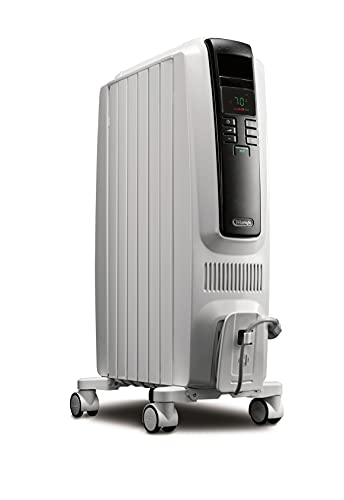
De’Longhi’s Dragon model lists a 1500W maximum output with a digital control panel and 24-hour timer. The design claims a larger radiant surface for more efficient heat transfer and improved convection performance for faster room warm-up.
Call 888-896-7031 for Free Local HVAC Quotes – Compare and Save Today!
Digital controls and programmability enable scheduled operation, which can reduce run time and manage energy use. The enhanced radiant surface area affects how quickly warmth is perceived, making wattage effective not just by raw power but by how heat is delivered to occupants.
Amazon Basics Oil Space Heater With Remote Control, 1500W

The Amazon Basics oil heater offers three heat settings including a 1500W high setting and lower modes for 900W and 600W. The product emphasizes sustained warmth from oil-filled fins and quiet operation with remote control convenience.
Multiple wattage settings enable staged heating: use lower settings to maintain temperature once a space is warmed, and higher wattage for initial heat-up. The sustained radiant heating characteristic is useful for energy management because the unit continues to emit heat after the element cycles off.
Buying Guide: How To Choose The Right Oil Heater Wattage
Selecting an oil heater wattage depends on room size, insulation, ceiling height, usage pattern, and electrical constraints. Use the guidance below to match wattage to needs.
Room Size And Wattage Estimates
- Small Rooms (Up To ~100 sq ft): 600W–900W often suffices for localized comfort in small bedrooms or home offices.
- Medium Rooms (100–250 sq ft): 1000W–1200W is appropriate when heating one room for extended periods.
- Large Rooms (250+ sq ft): 1500W and up provides whole-room heating for living rooms and larger open areas.
Insulation, Windows, And Ceiling Height
Well-insulated rooms with double-pane windows and standard ceilings require less wattage. Older homes, high ceilings, or rooms with many exterior walls need higher wattage to maintain comfort. Always assess heat loss when selecting capacity.
How Many Watts Per Square Foot?
A general starting point is 10–15 watts per square foot for average insulation. For example, a 150 sq ft room might need 1500–2250 watts if it’s poorly insulated; many oil heaters rely on retained radiant heat so staged operation can be effective.
Startup vs Maintenance Wattage
- High Wattage For Heat-Up: Use higher settings (1200–1500W) to warm a cool room quickly.
- Lower Wattage For Maintenance: After reaching set temperature, lower settings or thermostat cycling maintains warmth more efficiently.
Energy Efficiency And Run Time
Higher wattage units produce more heat faster but can draw more power while on. Models with thermostats, timers, and multi-stage settings allow shifting between high-power heat-up and low-power maintenance modes, reducing total energy consumption.
Safety Features To Consider
- Overheat Protection: Automatically cuts power if internal temperatures exceed safe limits.
- Tip-Over Switch: Prevents operation if the unit falls over.
- ETL/UL Listing: Certification indicates adherence to electrical safety standards.
Controls And Convenience
Digital thermostats, timers, and remote control allow precise temperature control and scheduled operation. These features can reduce runtime and energy usage by maintaining stable temperatures and avoiding unnecessary operation.
Noise And Heat Distribution
Oil-filled radiators are typically quiet because they rely on convection and radiant transfer rather than fans. Consider fin design and surface area — larger radiant surfaces disperse heat more evenly, affecting perceived warmth more than wattage alone.
Electrical Circuit Considerations
Confirm the circuit capacity where the heater will run. Many homes provide 15A circuits; a 1500W heater draws about 12.5A on 120V. Avoid running additional high-load appliances on the same circuit to reduce risk of tripping breakers.
Lifestyle And Use Cases
- Short-Term Use / Spot Heating: Lower-wattage units (600–900W) are cost-effective for short bursts or when you’re nearby.
- All-Day Room Heating: Medium to high wattage (1000–1500W) with thermostat control is better for sustained comfort.
- Large Open Areas: Consider portable high-output units combined with supplemental heating or multiple heaters zoned across spaces.
Comparing Product Perspectives
When comparing models, evaluate not only wattage but heat dispersion design (fins and surface area), control precision (digital thermostat and timer), and safety features. A 1500W unit with precise thermostatic control may run less overall energy than a lower-wattage unit that stays on continuously.
Maintenance And Longevity
Oil-filled heaters are low maintenance because the oil is sealed and never needs refilling. Inspect cords and plug integrity periodically and store units upright in dry conditions during off-season to prolong lifespan.
Cost Considerations
Evaluate expected operating hours and local electricity rates. Use programmable settings to limit run time at high wattage. Models featuring energy-saving or eco modes help manage ongoing costs.
Tips for Getting the Best HVAC Prices
- Prioritize Quality Over Cost
The most critical factor in any HVAC project is the quality of the installation. Don’t compromise on contractor expertise just to save money. - Check for Rebates
Always research current rebates and incentives — they can significantly reduce your overall cost. - Compare Multiple Quotes
Request at least three estimates before making your choice. You can click here to get three free quotes from local professionals. These quotes include available rebates and tax credits and automatically exclude unqualified contractors. - Negotiate Smartly
Once you've chosen a contractor, use the proven strategies from our guide — How Homeowners Can Negotiate with HVAC Dealers — to get the best possible final price.