
Quick Guide: This article compares five top on demand heaters—compact electric tankless units, a powerful 240V whole-point model, an RV gas tankless, and a portable propane option—so you can match capacity, installation requirements, and use case.
| Product | Type | Best For |
|---|---|---|
| Orbek 14kW Tankless Water Heater Electric | 240V Electric Tankless | Small homes, 2–3 point-of-use systems |
| Tankless Water Heater Electric 110V 3000W (xwdzswgs) | 110V Plug-In Tankless | Under-sink point-of-use, sinks, compact kitchens |
| ECOTINYMACH 110V Tankless Water Heater Electric | 110V Plug-In Tankless | Apartments, RV kitchens, tiny homes |
| Ranein 65,000 BTU RV Tankless Water Heater | Gas Tankless (RV) | RVs, mobile homes, high-altitude operation |
| hillhub Portable Propane Water Heater | Portable Propane Tankless | Camping, outdoor showering, off-grid use |
Content Navigation
- Orbek 14kW Tankless Water Heater Electric, 240 Volt
- Tankless Water Heater Electric 110V, 3000W Instant
- ECOTINYMACH 110V Tankless Water Heater Electric 3000W
- Ranein 65,000 BTU RV Tankless Water Heater With Controller
- hillhub Portable Propane Water Heater With Pump And Showerhead
- Buying Guide: Choosing The Right On Demand Heater
Orbek 14kW Tankless Water Heater Electric, 240 Volt

This 240V on demand heater delivers up to 3.38 GPM, designed to serve 2–3 points of use simultaneously. It requires a dedicated 240V/60A two-pole breaker, one set of 6 AWG wires, and 1/2″ NPT water connections, making it suitable for installations where higher electrical capacity is available.
Key features include LED digital display, ETL certification, and a water-electricity separation design that reduces scale and corrosion. Orbek claims rapid warm-up—hot water in approximately three seconds—and improved efficiency that can reduce electricity use versus tank-style heaters.
Considerations: This unit is a higher-power electric tankless solution requiring proper electrical infrastructure. It is best for homeowners wanting continuous hot water at a few fixtures without a storage tank.
Tankless Water Heater Electric 110V, 3000W Instant

Call 888-896-7031 for Free Local HVAC Quotes – Compare and Save Today!
This 110V plug-in tankless heater is a compact point-of-use option with 3000W power and an LED display. It heats water quickly for sinks and small tasks and offers selectable Fahrenheit or Celsius readouts.
Manufacturer notes the unit can raise water temperature significantly at low flow rates, with output varying by flow. It is not recommended for showers since showers typically require ~1.8 GPM or more. Safety features include water-electric isolation, IPX4 waterproofing, leak protection, dry-boil protection, and automatic thermal shutoff.
Considerations: This model suits under-sink installation for kitchens or laundry tasks where only modest flow is needed. Plug-in convenience reduces installation complexity compared with hardwired tankless units.
ECOTINYMACH 110V Tankless Water Heater Electric 3000W

The ECOTINYMACH offers instant plug-in convenience with a compact footprint for small living spaces. It supports straightforward installation without complex wiring, ideal for apartments, RVs, or tiny homes where space and simplicity matter.
Features include easy temperature switching between Fahrenheit and Celsius and a design that emphasizes space-saving installation. This model is promoted for quick setup and efficient point-of-use heating.
Call 888-896-7031 for Free Local HVAC Quotes – Compare and Save Today!
Considerations: As with other 110V tankless heaters, performance depends on inlet water temperature and flow rate. These units work best for sinks and tasks requiring short bursts of hot water, not full showers in most climates.
Ranein 65,000 BTU RV Tankless Water Heater With Controller

This gas-powered RV tankless heater produces up to 65,000 BTU and a maximum of about 3.9 GPM, designed as a direct replacement for many RV tank-style units. It supports a 12V electrical supply for controls and has a multi-function controller showing gas usage, voltage, GPM, and freeze/anti-freeze activation.
Notable upgrades include high-altitude capability (up to 9,800 ft) and compatibility with common RV opening sizes. The deep fire row design aims to improve heating efficiency for longer baths without waiting for stored water to heat.
Considerations: This model is targeted to RVs and mobile homes and requires proper gas hookups, venting, and power for the controller. It replaces tank units for users seeking continuous hot water on propane.
hillhub Portable Propane Water Heater With Pump And Showerhead
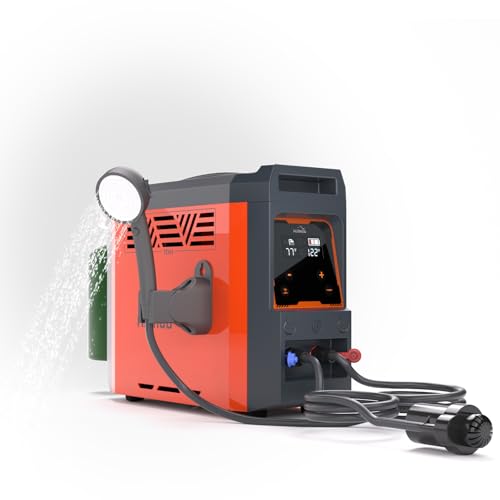
The hillhub portable propane unit provides an on demand outdoor hot water solution with a 4000mAh battery and included water pump and showerhead. Rated at 20,500 BTU, it claims near-instant heating and precise thermostat control via a Turbo SmartChip for ±1°F stability.
Designed for camping and outdoor cleaning, it delivers roughly 2.2–3 L/min flow and supports around 100 minutes continuous hot water on a full battery. The battery supports charge-while-use, making it suitable for extended outdoor activities where mobile power is available.
Considerations: This unit is purpose-built for portable outdoor use rather than indoor installation. It requires propane and proper ventilation during operation. It is suited to campers, hikers, and outdoor enthusiasts seeking a lightweight, self-contained on demand heater.
Buying Guide: Choosing The Right On Demand Heater
This buying guide highlights the key factors to compare when selecting an on demand heater. Consider application, flow demand, energy source, installation complexity, and safety features to find the best fit.
Use Case And Flow Rate
- Point Of Use (Sinks): 110V plug-in tankless units (3000W) or compact mini-tank heaters provide instant hot water for single sinks and low-flow tasks.
- Multiple Fixtures: Hardwired 240V tankless units or higher-BTU gas models provide higher GPM for two to three fixtures simultaneously.
- Showers And Baths: Require higher flow (typically 1.8–3.5 GPM). Choose higher-power electric or gas tankless units or ensure a gas RV unit is sized appropriately.
Energy Source And Efficiency
- Electric Tankless (110V vs 240V): 110V devices are easy to install (plug-in) but limited in output. 240V units need dedicated circuits and can support multiple uses.
- Gas/Propane: Gas tankless heaters generally produce higher flow rates and are better for whole-home or RV bathing needs but require gas supply, venting, and combustion safety measures.
- Portable Propane: Ideal for outdoor/on-the-go use; battery-assisted models are self-contained and do not require house electrical service.
Installation Requirements
- Electrical Capacity: Check breaker size, wire gauge, and panel space. 240V tankless units often need 60A breakers and heavy-gauge wiring.
- Plumbing Connections: Confirm NPT sizes, inlet water pressure, and whether flow restriction devices are needed to maintain temperature rise.
- Venting And Gas Lines: Gas units require proper venting and gas-line sizing for safe operation; RV models may have specialized mounting and door requirements.
Performance Metrics To Compare
- Gallons Per Minute (GPM): The primary performance metric for tankless heaters. Match GPM to simultaneous fixtures.
- Temperature Rise: Check the unit’s rated temperature increase at given flow rates—cold climates reduce effective output.
- Response Time: Many on demand heaters produce hot water in seconds; some devices specify exact warm-up times.
Safety Features And Certifications
- Certifications: Look for ETL, CSA, or UL listings indicating compliance with safety standards.
- Built-In Protections: Features like dry-boil protection, overheat shutdown, leak detection, IPX water resistance, and automatic power-off improve reliability and safety.
- Separation Of Water And Electricity: Some electric units emphasize design to minimize scaling and prevent electrical contact with water.
Installation Complexity And Cost Considerations
- Plug-In 110V Units: Low installation cost and DIY friendly but limited flow performance.
- Hardwired 240V Units: Higher installation complexity and electrical upgrade potential; they offer superior performance for multiple fixtures.
- Gas Units: May require professional gas-line work and venting; they deliver higher continuous flow rates and are common in RVs and homes requiring substantial hot water.
Durability, Maintenance, And Water Quality
- Scale And Corrosion Management: Hard water areas benefit from models with separation designs or recommended scale management to extend lifespan.
- Regular Maintenance: Tankless units may require descaling annually depending on water hardness. Gas units may need periodic burner inspection.
- Material Construction: Stainless steel heat exchangers and quality internal components typically increase longevity.
Portability And Specialized Features
- Portable Propane Units: Battery-assisted heaters with included pumps and showerheads are ideal for outdoor use and camping scenarios.
- Remote Controllers And Displays: Some RV and higher-end models include controllers that report GPM, gas usage, and freeze protection status.
- Thermostatic Control: Precise temperature control (±1°F claimed by some portable models) improves comfort and reduces water waste.
Comparison Perspectives
- Performance vs. Convenience: 240V and gas units offer more GPM (performance) but require professional installation; 110V plug-ins prioritize convenience with lower capacity.
- Indoor vs. Outdoor Use: Indoor tankless heaters require code-compliant installation and ventilation for gas units; portable propane units are designed for outdoor use only.
- Single Fixture vs. Whole-Home: Match the device type to needs: mini-tank or 110V for single sinks, 240V electric or gas for multi-fixture demands.
Use this guide to weigh flow needs, installation feasibility, energy source, and safety features against your situation. Matching measured GPM and temperature-rise specs to your typical simultaneous hot-water demands will provide the most reliable outcome when choosing an on demand heater.
Tips for Getting the Best HVAC Prices
- Prioritize Quality Over Cost
The most critical factor in any HVAC project is the quality of the installation. Don’t compromise on contractor expertise just to save money. - Check for Rebates
Always research current rebates and incentives — they can significantly reduce your overall cost. - Compare Multiple Quotes
Request at least three estimates before making your choice. You can click here to get three free quotes from local professionals. These quotes include available rebates and tax credits and automatically exclude unqualified contractors. - Negotiate Smartly
Once you've chosen a contractor, use the proven strategies from our guide — How Homeowners Can Negotiate with HVAC Dealers — to get the best possible final price.