
This guide reviews 5 top 220–240V outdoor electric heaters suitable for patios, decks, restaurants, and light commercial use. Each product summary highlights power, mounting options, and weather resistance to help match heaters to different outdoor settings.
| Product | Power | Mounting | Weather Rating |
|---|---|---|---|
| Dr. Infrared 3000W Heater | 3000W / 10,260 BTU | Ceiling / Wall | IP55 Weatherproof |
| Bromic Tungsten 3000W | 3000W | Wall / Ceiling / Recess | High-temp corrosion-resistant finish |
| Bromic Tungsten 2000W | 2000W | Wall / Ceiling | High-temp corrosion-resistant finish |
| Bromic Tungsten 6000W | 6000W (dual element) | Wall / Ceiling / Under Awnings | Ceramic-coated stainless steel |
| Bromic Tungsten 6000W White | 6000W | Wall / Ceiling / Recess | White high-temp ceramic coating |
Content Navigation
Dr. Infrared 3000W Heater
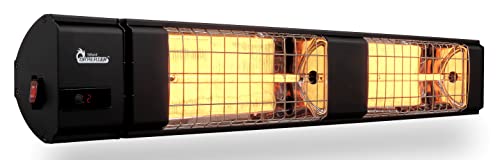
Power And Coverage: Carbon infrared element rated at 10,260 BTU / 3000W designed to provide instant, direct heat for patio and garage areas using 220–240V supply.
Installation And Control: Includes mounting hardware for ceiling or wall installation and a remote control that toggles between two power levels and standby.
Weather Resistance: Rated IP55—suitable for outdoor patios and backyard gatherings with weatherproof protection for the heater body and components.
Use Cases: Marketed for indoor and outdoor use, suitable for covered patios, garages, workshops, and small commercial outdoor seating areas where instant infrared heat is preferred.
Call 888-896-7031 for Free Local HVAC Quotes – Compare and Save Today!
Bromic Tungsten 3000W

Heat Technology: Dual quartz heating elements deliver infrared warmth focused on people and objects rather than air, improving perceived comfort in outdoor settings.
Build Quality: Constructed from premium stainless steel with a corrosion-resistant, high-temperature finish for long-term outdoor durability and modern aesthetic.
Coverage And Installation: Effective for roughly 100 sq ft. Designed for wall or ceiling mounting with specific minimum clearances (72″ for wall, 96″ for ceiling). Optional recess kit available for integrated installations.
Target Users: Suited for restaurants, high-end patios, and commercial spaces requiring targeted, controlled heating with a durable finish and adjustable directional bracket.
Bromic Tungsten 2000W

Call 888-896-7031 for Free Local HVAC Quotes – Compare and Save Today!
Power And Footprint: Dual quartz elements producing 2000W of infrared heat suitable for smaller zones up to about 65 sq ft where space or electrical capacity is limited.
Durability And Finish: Stainless steel construction with corrosion-resistant coating designed for outdoor exposure and low-maintenance operation.
Installation Flexibility: Wall or ceiling mount compatible with the same clearance standards as larger Tungsten models. Directional bracket helps focus heat where needed.
Ideal Applications: Smaller patios, residential decks, or accent heating for outdoor dining tables where a compact high-quality heater is required.
Bromic Tungsten 6000W

High Output: Dual frosted infrared tube elements with a combined high wattage for large patios and commercial outdoor areas. The low-intensity glow provides ambient lighting with heat.
Design And Finish: White high-temperature ceramic coating over stainless steel for aesthetic integration under awnings and low ceilings, while resisting corrosion in humid or coastal environments.
Use Scenarios: Designed for residential and commercial installations including under awnings, covered patios, and indoor applications where ceiling height or mounting configuration favors low-glow elements.
Installation Notes: Suitable for wall or ceiling mounting; typically used where larger coverage and consistent comfort are priorities.
Bromic Tungsten Recessed Or Surface Models
Recessed And Directional Options: Many Tungsten series models support recessed installation with optional kits for a clean ceiling finish and precise heat direction control.
Materials And Longevity: Stainless steel and high-temperature finishes extend service life in outdoor environments. Choose model and finish based on exposure to salt air or heavy moisture.
Commercial Versatility: Range of wattages allows designers and operators to specify units for tableside heating, larger open areas, or mixed-use spaces where aesthetics and performance are both required.
Buying Guide: Selecting The Right 220V Outdoor Electric Heater
Voltage Compatibility: Confirm your supply is 220–240V and that circuit amperage and breaker capacity match the heater’s full-load amperage. Many high-wattage units require dedicated circuits and professional hardwiring.
Output And Coverage: Match wattage/BTU to intended coverage. Rough guide: 2000W for ~65 sq ft, 3000W for ~100 sq ft. Larger areas or open-air seating require more units or higher wattage.
Heat Type: Infrared (quartz or carbon) heats people and objects directly and is more efficient outdoors than convection heaters. Carbon elements produce steady infrared; quartz/tungsten elements deliver rapid, focused warmth.
Mounting Options: Decide between wall-, ceiling-, or recessed installations. Ceiling mounts offer broader coverage; wall mounts allow directional focus. Recessed units give a flush appearance but may need optional kits.
Weather Rating And Materials: Look for IP ratings or corrosion-resistant finishes (stainless steel, ceramic coating) for outdoor durability—especially in coastal or humid climates.
Clearance And Safety: Follow manufacturer-specified minimum clearances for walls, ceilings, and combustible materials. Confirm any auto-shutoff, thermal sensors, or safety certifications required for commercial use.
Control And Convenience: Remote controls, multiple power levels, and directional brackets increase usability. Commercial installations may benefit from timer and zoning controls for energy management.
Energy And Circuit Considerations: High-wattage heaters draw substantial current; verify breaker size and wiring gauge. Consider splitting loads across circuits or using lower-wattage units in multiples for flexible zoning.
Aesthetic And Ambient Output: Some infrared heaters emit a visible low glow for ambience; others are low-glare. Choose based on preference for visual warmth versus discreet operation.
Installation Complexity: Decide between plug-in models (if available and rated for outdoors) versus hardwired units that require a licensed electrician and possibly permits for permanent commercial installations.
Maintenance And Service: Select heaters with accessible elements and durable finishes. Check warranty terms and availability of replacement parts for long-term upkeep.
Indoor Vs Outdoor Use: Confirm model ratings before using indoors—some outdoor-rated heaters are weatherproof but may require venting or clearances not suitable for indoor environments.
Comparison Perspectives: Compare wattage per unit, coverage area, mounting flexibility, finish durability, and control features when choosing among models. For commercial venues prioritize modular layouts and serviceability; for residential patios emphasize compact footprint and quiet operation.
Tips for Getting the Best HVAC Prices
- Prioritize Quality Over Cost
The most critical factor in any HVAC project is the quality of the installation. Don’t compromise on contractor expertise just to save money. - Check for Rebates
Always research current rebates and incentives — they can significantly reduce your overall cost. - Compare Multiple Quotes
Request at least three estimates before making your choice. You can click here to get three free quotes from local professionals. These quotes include available rebates and tax credits and automatically exclude unqualified contractors. - Negotiate Smartly
Once you've chosen a contractor, use the proven strategies from our guide — How Homeowners Can Negotiate with HVAC Dealers — to get the best possible final price.