
Choosing the right outdoor plug-in heater depends on space, power source, weather resistance, and control options. Below is a quick comparison of five heaters and close alternatives from the product list to help match a heater to your patio, garage, greenhouse, or commercial area.
| Product | Type | Power / Rating | Key Feature |
|---|---|---|---|
| Dr Infrared Heater DR-238 | Electric Infrared Plug-In | 900W / 1200W / 1500W | IP55 Rated For Indoor & Outdoor Use |
| Buyplus Greenhouse Heater | Electric Plug-In | 1500W | Digital Thermostat & Waterproof Probe |
| Heliosa 66 Black Infrared | Electric Wall-Mounted Plug-In | 1500W | IPX5 Water Resistant, Reduced Glare |
| Riseon 1500W Patio Heater | Electric Plug-In PTC Ceramic | 1500W | Remote, Multiple Modes, Safety Features |
| EAST OAK 50,000 BTU Patio Heater | Propane Commercial Patio Heater | 50,000 BTU | High Output For Large Areas |
Content Navigation
Dr Infrared Heater DR-238 Carbon Infrared
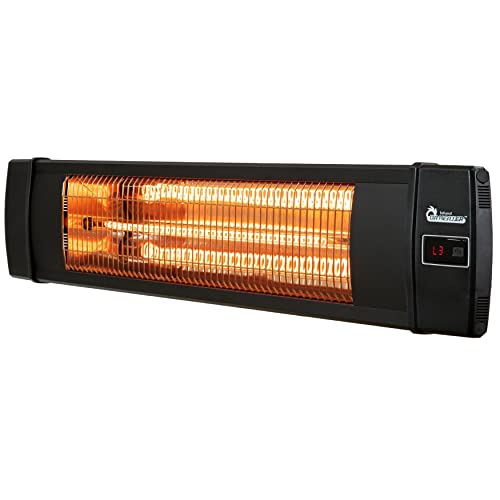
The DR-238 is an electric infrared heater designed for both indoor and outdoor use with an IP55 rating. It offers three power settings (900W, 1200W, 1500W) and uses a standard 120V plug.
Notable features include instant, odorless infrared heat, remote control operation, and suitability for patios, decks, garages, and open-air restaurants. The IP55 rating indicates protection against dust and water spray, supporting sheltered outdoor installations.
Consider this model if you need a plug-and-play infrared heater with multiple power levels and remote convenience. It is aimed at users wanting a balance of portability, safety, and immediate thermal comfort.
Buyplus Greenhouse Heater With Thermostat

Call 888-896-7031 for Free Local HVAC Quotes – Compare and Save Today!
The Buyplus 1500W unit is marketed as a greenhouse heater but also works for garages, small patios, and grow tents. It features a digital thermostat with an external waterproof probe and an adjustable temperature range.
Key specs include rapid heating (claims of 3 seconds to begin warming), an adjustable setpoint range (approx. 40–108°F), and built-in overheat protection with a self-resetting breaker. Coverage is noted up to roughly 215 square feet in enclosed or semi-enclosed spaces.
This heater suits users prioritizing precise temperature control for plants or confined outdoor structures. The digital thermostat probe allows ambient sensing and automated cycling to maintain a target temperature.
Heliosa 66 Black Infrared Outdoor Heater

The Heliosa 66 is a wall-mounted infrared electric heater with a 6-foot plug-in cord. It delivers instant heat at 1500W and carries an IPX5 water-resistant rating for outdoor exposure.
This heater emphasizes reduced glare via a heat-resistant black safety glass that minimizes visible red light while delivering radiant warmth. It’s designed for residential and commercial outdoor spaces where a mounted profile and weather resistance are desired.
Call 888-896-7031 for Free Local HVAC Quotes – Compare and Save Today!
Choose this option if you prefer a semi-permanent wall-mounted installation that provides directed infrared warmth without the visual glare of standard halogen units.
Riseon 1500W Electric Garage Heater

The Riseon electric heater uses a PTC ceramic element and offers three operational modes (ECO, Low, High) with a remote control and touch interface. It is ETL certified and includes multiple safety features.
Highlighted features include a built-in thermostat control behavior that cycles based on setpoint, overheat protection, a child lock, and an anti-tip brace. The product targets small-to-medium outdoor-covered spaces, garages, and greenhouses.
This unit is useful for users wanting programmable modes, remote operation, and safety-oriented features in a plug-in electric heater format.
EAST OAK 50,000 BTU Patio Heater

The EAST OAK is a high-output propane patio heater rated at 50,000 BTU, designed for large terraces and commercial outdoor spaces. It uses a double-layer 304 stainless steel burner mesh and a round table design with wheels for mobility.
Although not an electric plug-in heater, this model is relevant as an outdoor heating alternative when plug-in power or electric coverage is limited. It’s ETL certified for outdoor use and claims heat spread up to a 20-foot diameter from the central source.
Consider this unit for wide-open outdoor areas where radiant heat from a gas source is preferable to electric plug-in units, especially in commercial or high-use scenarios.
Buying Guide: How To Choose An Outdoor Plug-In Heater
Selecting the right plug-in heater requires comparing power, coverage, installation type, weather resistance, and control options. Below are key considerations and comparison perspectives to guide a well-informed choice.
Heating Technology
- Infrared Heaters (DR-238, Heliosa): Radiant heat warms people and objects directly, efficient in open or semi-open spaces.
- Convection/PTC Ceramic Heaters (Riseon): Heat the air; suited to enclosed or semi-enclosed spaces where air circulation helps distribute warmth.
- Propane/BTU Heaters (EAST OAK): High output for large open areas; requires fuel and ventilation and is not plug-in electric.
Power And Coverage
Electric plug-in models typically top out around 1500W on a standard 120V circuit. Expect effective comfort for small to medium-size patios or covered porches.
- 1500W Electric: Best for patios up to ~200 sq ft in partially sheltered areas (actual coverage depends on airflow and ambient temps).
- High-BTU Propane: Better for wide-open commercial spaces due to greater heat dispersion.
Weather Resistance And Mounting
- IP Ratings: IP55 (DR-238) or IPX5 (Heliosa) indicate suitability for sheltered outdoor use and resistance to water spray. Confirm installation guidelines for fully exposed locations.
- Mounting Type: Wall-mounted units deliver directed heat and stay out of the way; portable plug-in units allow repositioning but might need a protected location.
Controls And Thermostats
- Digital Thermostats (Buyplus): Allow precise temperature setpoints and automated cycling for energy savings.
- Remote / App Controls (Riseon): Offer convenience from a distance; useful for mounted or hard-to-reach units.
- Multiple power settings help tailor heat output and manage circuit load.
Safety Features
- Overheat Protection: Auto shutoff if internal temps exceed safe levels — standard on many models.
- Tip-Over Protection: Relevant for freestanding units in windy environments or high-traffic patios.
- ETL / Certification: Look for safety certifications for outdoor equipment.
Installation And Electrical Considerations
- Standard 120V plug-in heaters are convenient but be mindful of circuit capacity if combining lights, fans, and heaters.
- For permanent or high-power solutions, consult an electrician to determine dedicated circuits or hardwired options.
- Extension cords: Use only heavy-duty cords rated for outdoor use and the heater’s amperage if absolutely necessary; follow manufacturer guidance.
Environment And Use Case
- Open Patios & Restaurants: Infrared units can warm seated guests effectively. Propane towers deliver more broad-area heat for large outdoor gatherings.
- Covered Patios, Garages, Greenhouses: Electric heaters with thermostats and probes provide controlled environments for plants and hobbies.
- Commercial vs Residential: Commercial spaces may need ETL-certified high-BTU units or multiple heaters for uniform coverage.
Comparison Perspectives
- Efficiency: Infrared tends to feel more efficient in open-air seating because it heats people/objects directly rather than wasting energy heating moving air.
- Control: Digital thermostats and remote controls reduce wasted runtime and improve comfort consistency.
- Durability: Stainless steel and IP-rated housings resist corrosion and weather; permanent mounts reduce theft and accidental damage.
Use these criteria to match the heater to your space: choose infrared for directed, immediate warmth; PTC/convection for enclosed spaces requiring air heating; and propane for large, open-area coverage when electrical options are limited.
Tips for Getting the Best HVAC Prices
- Prioritize Quality Over Cost
The most critical factor in any HVAC project is the quality of the installation. Don’t compromise on contractor expertise just to save money. - Check for Rebates
Always research current rebates and incentives — they can significantly reduce your overall cost. - Compare Multiple Quotes
Request at least three estimates before making your choice. You can click here to get three free quotes from local professionals. These quotes include available rebates and tax credits and automatically exclude unqualified contractors. - Negotiate Smartly
Once you've chosen a contractor, use the proven strategies from our guide — How Homeowners Can Negotiate with HVAC Dealers — to get the best possible final price.