
Finding the right outdoor shed heater means matching heat type, safety ratings, power source, and shed compatibility. Below is a quick summary of the five products featured in this guide, including two dedicated outdoor heaters, one wall-mounted infrared heater suitable for enclosed sheds, and two metal sheds commonly used with supplemental heat or lighting.
| Product | Type | Key Feature |
|---|---|---|
| Dr Infrared Heater DR-238 | Carbon Infrared Indoor/Outdoor Heater | IP55 Rated, 3 Power Settings, Remote |
| EAST OAK 50,000 BTU Patio Heater | Propane Patio Heater | High BTU Output, Wide Coverage |
| Heat Storm HS-1500-PHX-WIFI | Wall-Mounted Infrared Heater | Wi‑Fi Control, Digital Thermostat |
| Vongrasig 5 x 3 x 6 FT Metal Shed | Metal Storage Shed | Side Window, Waterproof Roof, Lockable Door |
| Flamaker 5 x 3 FT Metal Garden Shed | Galvanized Metal Shed | Sloped Roof, Lockable Door, Rust-Resistant |
Content Navigation
- Dr Infrared Heater DR-238 Carbon Infrared Outdoor Heater
- EAST OAK 50,000 BTU Patio Heater With Round Table Design
- Heat Storm HS-1500-PHX-WIFI Infrared Wall Mounted Heater
- Vongrasig 5 x 3 x 6 FT Outdoor Storage Metal Shed
- Flamaker 5 x 3 FT Waterproof Metal Garden Shed
- Buying Guide: Choosing The Right Heater For Your Outdoor Shed
Dr Infrared Heater DR-238 Carbon Infrared Outdoor Heater
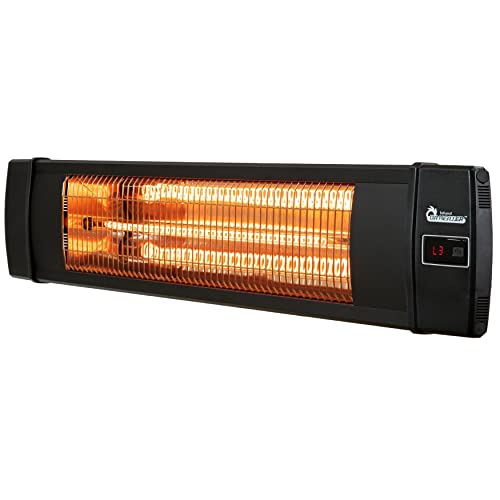
The DR-238 Carbon Infrared Heater is designed and rated for both indoor and outdoor use with an IP55 rating, indicating protection against dust and water jets. It delivers clean, instantaneous infrared heat through carbon heating elements and offers three power settings: 900W, 1200W, and 1500W on a standard 120V circuit. The unit includes a remote control and is plug-and-play for straightforward installation.
For shed use, infrared heat is effective at warming objects and occupants directly rather than heating large volumes of air. The DR-238’s IP55 rating supports use in semi-open or ventilated outbuildings, but full enclosure or combustible surroundings require following manufacturer clearance and mounting instructions. The remote control and multiple wattage options allow flexible heat output for smaller sheds or partially open structures.
EAST OAK 50,000 BTU Patio Heater With Round Table Design

The EAST OAK 50,000 BTU patio heater is a propane-fueled standing unit built for wide outdoor coverage. Its design spreads heat across a large radius—suitable for patios, decks, or larger open-sided sheds. The heater uses a double-layer stainless steel burner mesh for durability and even flame distribution, and the unit includes wheels for portability.
Call 888-896-7031 for Free Local HVAC Quotes – Compare and Save Today!
When considering this heater for shed applications, note that propane units require ventilation and distance from combustible materials. They are best used in open or semi-enclosed sheds with adequate airflow. The high BTU output makes quick heat for larger spaces, but matching shed size, clearance requirements, and local codes is essential for safe operation.
Heat Storm HS-1500-PHX-WIFI Infrared Wall Mounted Heater

The Heat Storm HS-1500 is a wall-mounted infrared heater with Wi‑Fi connectivity and a digital touchscreen thermostat. Its space-saving mount preserves floor area and is suited to enclosed sheds, workshops, or garages where a hardwired or mounted solution is preferred. The unit includes tip-over safety and a remote control for ease of use.
For shed installations, this heater performs well in enclosed or insulated sheds where electrical supply is available. Infrared panels warm surfaces and occupants directly, improving perceived comfort without heating all stored air. Install per the manufacturer’s recommended clearances and electrical requirements. Wi‑Fi control allows temperature scheduling and remote activation when paired with the home’s network.
Vongrasig 5 x 3 x 6 FT Outdoor Storage Metal Shed

The Vongrasig metal shed is a compact galvanized steel storage unit with a side acrylic window, side vents, and a lockable door. Its protective coating and ribbed steel panels are designed to resist rust and weather. The included window provides daylight, reducing the need for continuous lighting during daytime use.
Call 888-896-7031 for Free Local HVAC Quotes – Compare and Save Today!
When planning to heat a shed like this, consider insulation, ventilation, and heater placement. Metal sheds can be cold and transfer heat quickly unless insulated; pairing a compact infrared or wall-mounted heater with added insulation will increase efficiency. Ensure any heater used meets safety standards for metal enclosures and leave proper clearance from walls and stored materials.
Flamaker 5 x 3 FT Waterproof Metal Garden Shed

The Flamaker metal garden shed is manufactured from galvanized steel with a sloped roof and lockable door. The design aims to shed rainwater and resist corrosion, making it suitable for storing tools, firewood, or equipment. Its compact footprint fits many backyard spaces.
Using a heater in a small galvanized shed necessitates attention to moisture control and clearances. Condensation is common in uninsulated metal sheds; adding vapor barriers and insulation will improve heater performance and protect stored items. Choose heaters rated for enclosed use or position heaters where airflow and safety distances are preserved.
Buying Guide: Choosing The Right Heater For Your Outdoor Shed
This buying guide covers the core considerations when selecting a heater for an outdoor shed. Compare heat source, safety features, power supply, shed compatibility, and installation requirements before purchasing.
Tips for Getting the Best HVAC Prices
- Prioritize Quality Over Cost
The most critical factor in any HVAC project is the quality of the installation. Don’t compromise on contractor expertise just to save money. - Check for Rebates
Always research current rebates and incentives — they can significantly reduce your overall cost. - Compare Multiple Quotes
Request at least three estimates before making your choice. You can click here to get three free quotes from local professionals. These quotes include available rebates and tax credits and automatically exclude unqualified contractors. - Negotiate Smartly
Once you've chosen a contractor, use the proven strategies from our guide — How Homeowners Can Negotiate with HVAC Dealers — to get the best possible final price.
Heat Type And How It Affects Sheds
- Infrared Heaters: Heat objects and occupants directly; effective for workspaces or sheds where quick, localized warmth is needed. Good for partially open or ventilated sheds when units are rated for outdoor use.
- Convection/Electric Heaters: Warm air and raise ambient temperature. More effective in insulated and enclosed sheds but can be less efficient in drafts or non-insulated metal structures.
- Propane Patio Heaters: High output and suitable for large open areas. Require ventilation, clearances from combustible materials, and compliance with local codes; less suitable for fully enclosed sheds.
- Forced Air/Combustion Heaters: Provide strong heat but need careful venting and safety controls; not recommended in enclosed small sheds without professional installation.
Power Supply And Installation
- Electric (Plug-In / Hardwired): Convenient for sheds with existing electrical outlets. Check circuit capacity and heater wattage. Wall-mounted infrared models may require mounting hardware and electrical access.
- Propane: Offers portability and high output. Ensure proper storage of cylinders, ventilation, and stable placement to avoid tipping.
- Solar / Low-Voltage Options: Useful for lighting and small LED tasks but not practical as primary heating sources for cold climates.
Safety Ratings And Features
- IP Ratings: For semi-outdoor use, look for IP55 or higher to resist dust and water ingress.
- Tip-Over And Overheat Protection: Essential for portable or floor-standing heaters in sheds with foot traffic or stored items.
- Clearance Requirements: Review manufacturer stated clearances to combustibles; metal sheds can conduct heat to stored materials.
- Certifications: ETL, UL, or CSA listings indicate product testing and safety compliance.
Shed Compatibility And Insulation
- Insulation: Adding insulation (foam board, fiberglass, or reflective barriers) significantly improves heater efficiency and comfort.
- Ventilation: Even with electric heaters, some ventilation reduces condensation and fumes if fuel-burning devices are used.
- Flooring And Mounting: Ensure stable mounting surfaces for wall heaters and level ground for freestanding patio units.
Size, Output, And Coverage
- Match BTU/Wattage To Space: Small sheds may need 1000–1500W electric heaters or low-BTU infrared. Larger or open-sided spaces require higher BTU outputs (propane patio heaters).
- Heat Distribution: Infrared for spot heating; convection for whole-space warming if shed is insulated.
- Thermostat And Controls: Digital thermostats, remotes, or Wi‑Fi allow controlled operation and energy savings.
Operational Costs And Efficiency
- Electric Heating Costs: Determined by heater wattage and local electricity rates. Infrared may feel warmer at lower ambient temperatures, offering practical savings.
- Propane Costs: Vary with fuel prices and consumption rate; high BTU heaters use more fuel but heat larger areas quickly.
- Insulation Lowers Runtime: Proper insulation reduces runtime and operational cost regardless of heat source.
Multiple Comparison Perspectives
- Safety Perspective: Choose heaters with tip-over shutoff and overheat protection for sheds with tools or flammable materials.
- Performance Perspective: For quick, localized warmth in a workbench area, infrared models are efficient. For social outdoor coverage, high-BTU patio heaters are more effective.
- Environmental Perspective: Electric infrared heaters produce no on-site combustion byproducts, making them preferable in enclosed sheds compared to propane.
- Installation Perspective: Wall-mounted electric heaters require proper mounting and wiring; freestanding units need stable bases and clearance checks.
Practical Setup Tips
- Insulate walls and roof where possible to retain heat and reduce condensation.
- Position heater to warm work areas and avoid pointing directly at stored fabrics or flammables.
- Install carbon monoxide detectors if using combustion heaters in semi-enclosed spaces.
- Consider supplemental lighting and ventilation to support safe, year-round shed use.