
Choosing the right heater for outdoor workspaces requires balancing portability, heating power, fuel type, and safety features. This guide compares top-rated options suited to patios, garages, workshops, and job sites. Below is a quick summary of the five selected heaters covered in detail.
| Product | Type | Key Strength |
|---|---|---|
| Dr Infrared Heater DR-238 Carbon Infrared | Electric Infrared | Indoor/Outdoor IP55, 3 power settings |
| Amazon Basics 46,000 BTU Outdoor Propane Patio Heater | Propane Tower Heater | High-output 46,000 BTU, wide radius |
| Dura Heat EUH1465 Electric Forced Air Heater | Electric Forced Air | Durable steel body, PTC ceramic element |
| Mr. Heater Portable Buddy MH9BX | Propane Radiant | Portable radiant heat, 4,000–9,000 BTU |
| Remington 1500W Heavy-Duty Electric Heater | Electric Space Heater | Portable jobsite-friendly, two heat settings |
Content Navigation
- Dr Infrared Heater DR-238 Carbon Infrared
- Amazon Basics 46,000 BTU Propane Patio Heater
- Dura Heat EUH1465 Forced Air Heater
- Mr. Heater Portable Buddy MH9BX
- Remington 1500W Heavy-Duty Electric Heater
- Buying Guide: How To Choose An Outdoor Work Heater
- 1. Heating Type And Heat Distribution
- 2. Fuel Type And Availability
- 3. Output And Coverage
- 4. Portability And Installation
- 5. Weather Resistance And Suitability
- 6. Safety Features
- 7. Energy Efficiency And Running Costs
- 8. Noise, Airflow, And Comfort
- 9. Application-Specific Considerations
- 10. Maintenance And Durability
Dr Infrared Heater DR-238 Carbon Infrared
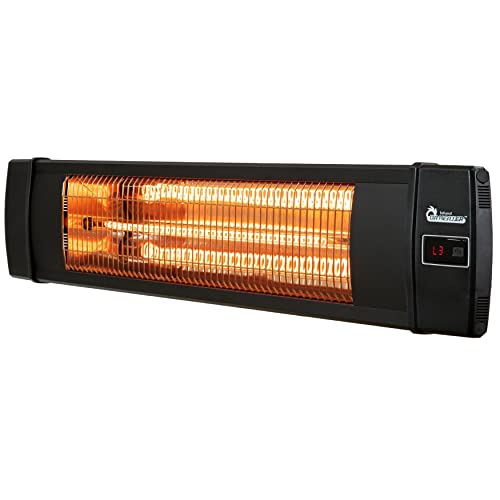
The DR-238 Carbon Infrared is designed for both indoor and outdoor use, with an IP55 rating that indicates weather resistance suitable for patios and open-air restaurant spaces. It delivers clean and instant infrared heat across three power settings (900W, 1200W, 1500W), which provides flexibility for varying conditions. The unit operates on standard 120V with remote control for convenience and includes a plug-and-go setup.
Relevant features: IP55 approval for indoor/outdoor use, odorless infrared heating, three power settings, standard 120V operation, remote control. This heater is best for situations where direct radiant warmth is preferred and where a weather-resistant electric option is desirable.
Amazon Basics 46,000 BTU Propane Patio Heater

This Amazon Basics tower heater provides 46,000 BTU output intended to warm seating areas with an approximate 9-foot radius. It uses propane and features a one-touch ignition and wheels for mobility. The design is oriented toward commercial and residential patios where high-output centralized heat is preferred.
Call 888-896-7031 for Free Local HVAC Quotes – Compare and Save Today!
Relevant features: high BTU output, one-touch ignition, wheels for maneuverability, adjustable temperature knob, intended for outdoor seating zones. This heater suits environments requiring broad-area radiant and convective heat, such as restaurant patios or large residential decks where propane fuel and high heat are acceptable.
Dura Heat EUH1465 Forced Air Heater
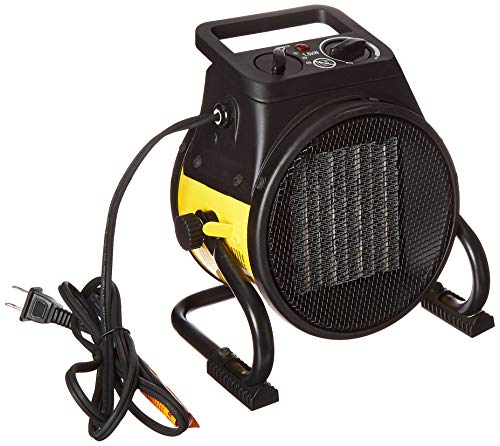
The Dura Heat EUH1465 is a forced-air electric heater that delivers around 5,120 BTU equivalent through a 1500W PTC ceramic element. It uses a rugged steel construction and includes a pivoting base for directional airflow. Heat and fan-only modes provide versatility for warming and ventilating small to medium enclosed workspaces or partially enclosed garages.
Relevant features: 1500W PTC ceramic heating, steel body for durability, heat and fan-only settings, pivoting base. It is suited to users who need a compact, durable electric heater that can double as an air circulator on job sites or in workshops.
Mr. Heater Portable Buddy MH9BX
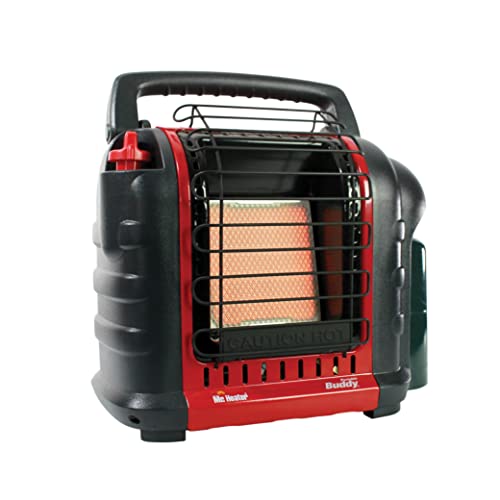
The Mr. Heater MH9BX Portable Buddy is a portable propane radiant heater offering 4,000 to 9,000 BTU with radiant infrared-style heat that directly warms people and objects. It features an improved tip-over safety switch and a Piezo igniter for matchless start-up. It is marketed for campers, workshops, patios, and job sites where mobility and on-demand fuel-based heat are needed.
Call 888-896-7031 for Free Local HVAC Quotes – Compare and Save Today!
Relevant features: radiant heat, adjustable 4,000–9,000 BTU range, tip-over safety switch, Piezo ignition, suitable for up to 225 sq. ft. This option is appropriate when portable propane heat is necessary and where electrical power may not be available.
Remington 1500W Heavy-Duty Electric Heater

The Remington 1500W is a compact heavy-duty electric heater designed for garages, workshops, and jobsites. It offers two heat settings and an adjustable thermostat designed to heat spaces up to roughly 165 sq. ft. The design emphasizes quick warm-up and portability for intermittent workspace heating.
Relevant features: 1500W output, two heat settings, adjustable thermostat, intended coverage up to ~165 sq. ft., fast heat-up. This heater works well for localized spot heating in enclosed or semi-enclosed work areas where electric power is available and mobility is valued.
Buying Guide: How To Choose An Outdoor Work Heater
Selecting the right outdoor work heater depends on several interrelated factors: space size, enclosure level, fuel availability, portability needs, and safety requirements. Below are key considerations and comparison perspectives to guide purchase decisions.
1. Heating Type And Heat Distribution
- Radiant/Infrared: Heats objects and people directly, good for open spaces and outdoor seating where wind may reduce convective warming. Examples: infrared carbon panels and propane radiant heaters.
- Convective/Forced Air: Warms air to raise ambient temperature. Effective in partially enclosed or sheltered areas. Examples: forced-air electric heaters and propane tower heaters with convective spread.
- Combination: Some units provide both radiant and convective effects; choose based on how you use the area (stationary seating vs. circulating work).
2. Fuel Type And Availability
- Electric: Cleaner, easier to operate, often weather-resistant designs exist. Requires access to a suitable outlet and may be limited by circuit capacity.
- Propane/Gas: High BTU output and mobility without cords; better for large open areas. Requires safe fuel storage, ventilation, and adherence to outdoor use guidelines.
3. Output And Coverage
- Check BTU or wattage relative to the intended coverage area. Higher BTU suits larger open areas while wattage (e.g., 1500W) suits smaller enclosed spaces.
- Consider how heat disperses: tower heaters radiate outward, infrared panels target specific zones, and forced-air heaters move warm air directionally.
4. Portability And Installation
- Wheeled bases and lighter propane units favor frequent relocation.
- Wall/ceiling-mount infrared panels are less portable but useful for fixed patio installations.
5. Weather Resistance And Suitability
- Look for IP ratings (e.g., IP55) or manufacturer notes for outdoor use to ensure resistance to moisture and dust.
- Propane towers are designed for outdoor zones; ensure placement away from flammable materials and stable footing.
6. Safety Features
- Tip-over protection and oxygen depletion sensors (ODS) are important for propane units, especially in partially enclosed or portable scenarios.
- For electric units, check for overheat protection and sealed electrical components if used outdoors.
7. Energy Efficiency And Running Costs
- Electric heaters convert input to heat nearly directly but can be limited by available power; propane provides strong output but involves fuel refills.
- Match runtime expectations and fuel logistics to your usage patterns to evaluate ongoing costs.
8. Noise, Airflow, And Comfort
- Forced-air models may generate fan noise and airflow, which can be useful for drying or ventilating but might be undesirable in quiet settings.
- Radiant and infrared heaters operate more quietly and provide a different comfort profile by warming surfaces and people directly.
9. Application-Specific Considerations
- For restaurant patios: prioritize coverage radius, consistent heat distribution, and ease of lighting or shutdown during service hours.
- For workshops and garages: focus on spot warmth, durability, and mounting options to keep floors clear.
- For job sites and outdoor work: portability, rugged construction, and fuel independence can be decisive factors.
10. Maintenance And Durability
- Review construction materials (e.g., steel bodies for jobsite resilience), and check for components that require seasonal inspection or replacement.
- For propane units, maintain regulator and hose integrity and follow storage recommendations for cylinders.
Comparative perspectives: If you need high-area heating for outdoor dining, a high-BTU propane tower may be best. For localized spot warming in a semi-enclosed garage, electric forced-air or infrared options are often safer and simpler. For portability without power access, compact propane radiant units deliver effective direct warmth. Safety features and installation context should guide final selection.
Tips for Getting the Best HVAC Prices
- Prioritize Quality Over Cost
The most critical factor in any HVAC project is the quality of the installation. Don’t compromise on contractor expertise just to save money. - Check for Rebates
Always research current rebates and incentives — they can significantly reduce your overall cost. - Compare Multiple Quotes
Request at least three estimates before making your choice. You can click here to get three free quotes from local professionals. These quotes include available rebates and tax credits and automatically exclude unqualified contractors. - Negotiate Smartly
Once you've chosen a contractor, use the proven strategies from our guide — How Homeowners Can Negotiate with HVAC Dealers — to get the best possible final price.