
Ceiling-mounted patio heaters provide targeted warmth without taking floor space, ideal for porches, gazebos, and restaurants. Below is a quick comparison of five top ceiling or ceiling/wall-mount infrared patio heaters available on Amazon, followed by detailed product summaries and a buying guide to help choose the right unit for your space.
| Product | Type | Power / Mount |
|---|---|---|
| ThermoMate Infrared Electric Patio Heater | Hardwired Carbon Fiber | 3000W / Ceiling |
| Dr. Infrared Heater 10,260 BTU | Carbon Infrared | 3000W / Ceiling & Wall |
| sundate Ceiling Electric Outdoor Heater | Carbon Fiber Tube | 1500W / Ceiling & Wall |
| Danluke Electric Outdoor Heater | 1500W Infrared Hanging | 1500W / Ceiling Hung |
| Bromic Smart Heat Tungsten Electric | High-Power Radiant | 6000W / Ceiling & Wall |
Content Navigation
ThermoMate 3000W Ceiling Infrared Heater

Power And Coverage: This hardwired unit delivers 3000W designed for roughly 100 sq. ft. outdoor area (up to 130 sq. ft. enclosed) and recommends a mounting height of about 7.9 ft.
Heating Technology: Uses a carbon fiber heating tube for instant radiant warmth that primarily heats people and surfaces rather than air, making it effective in breezy outdoor conditions.
Controls & Installation: Includes a remote with a 24-hour timer and two power levels (1500W / 3000W). Must be hardwired to a dedicated 240V circuit, which suits semi-permanent installations over shared patios or restaurant seating.
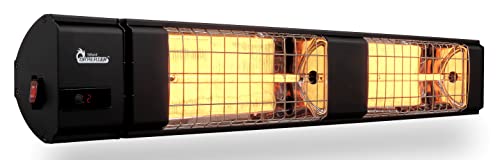
Dr. Infrared 3000W Ceiling Heater
Call 888-896-7031 for Free Local HVAC Quotes – Compare and Save Today!
Output And Form Factor: Rated at 10,260 BTU / 3000W, this unit is designed for both indoor and outdoor use with ceiling or wall mounting hardware included.
Durability & Use: Weatherproof with IP55 rating, allowing operation in semi-exposed environments like patios and garages. The unit offers instant, odorless infrared heat and is suitable for residential and commercial spaces.
Convenience: Comes with a remote and simple mounting hardware to facilitate installation. Offers selectable power levels and a standby mode for energy control.
sundate Ceiling Mounted Infrared Heater

Fast Heating: Offers 1-second fast heating claim and a 1500W carbon fiber element providing focused radiant warmth with up to 9 heat levels and timer options.
Installation Flexibility: Includes brackets for ceiling and wall mounting and supports remote and Wi-Fi control, giving flexibility for smart-home setups and commercial applications.
Call 888-896-7031 for Free Local HVAC Quotes – Compare and Save Today!
Weather Resistance: Built with an IP65 waterproof rating and rustproof metal cover for durability in harsh outdoor conditions, suitable for gazebos, balconies, and cafes.
Danluke 1500W Hanging Patio Heater

All-Weather Design: IP34-rated for water and dust resistance, intended for ceiling-hung or suspended installations under porches and gazebos.
Heat Distribution: 1500W infrared element with claims of 360° coverage for full-area warming. Includes safety features such as overheat and tip-over protection for added peace of mind.
Use Cases: Compact form makes it appropriate for residential porches, small commercial overhangs, or personal seating zones where a ceiling-hung unit preserves floor space.
Bromic Smart Heat 6000W Radiant Heater

High-Capacity Output: Designed for commercial-strength warmth with 6000W radiant tungsten elements, suitable for large covered areas or high-ceiling installations.
Design & Ambiance: Frosted tubes provide a softer glow for a modern look while delivering efficient radiant heat. Mountable on walls or ceilings to direct warmth where needed.
Construction: Built for durability with materials that resist corrosion and high temperatures, addressing longevity in busy outdoor dining or hospitality environments.
Buying Guide: Choosing A Ceiling-Mounted Patio Heater
Selecting a ceiling patio heater requires matching performance to the space and usage. Below are the key considerations to compare multiple models effectively.
Heat Output And Coverage
Measure The Area: Estimate the seating area to determine required watts. Small residential spots often need 1500W units; larger or commercial zones may need 3000W–6000W systems.
Mounting Height Matters: Most infrared ceiling heaters recommend a specific mounting height (often 7–9 ft). Higher mounting reduces felt intensity and may require higher wattage or angled mounting.
Heating Technology
Carbon Fiber Vs. Tungsten: Carbon fiber elements (instant, efficient, lower wattage) are good for typical patios and windier conditions because they heat objects and people directly. Tungsten or quartz elements deliver very high output suited to large commercial areas but may use more power.
Power & Wiring Requirements
Plug-In Vs. Hardwired: Plug-and-play units (120V) offer simple setup for homeowners. Hardwired 240V units (3000W and above) provide higher output but require professional electrical installation and a dedicated circuit.
Mounting Flexibility
Ceiling, Wall, Or Hanging: Confirm the heater supports the intended mount. Some models offer both ceiling and wall brackets or optional tripod stands for temporary placement.
Adjustable Angles: For targeted warmth, choose units with adjustable brackets or directional mounting capability.
Weatherproofing And Durability
IP Ratings: Look for IP ratings to match exposure levels. IP55–IP65 are common for semi-exposed patios; lower ratings may be suitable for fully covered porches.
Materials: Rust-resistant metal housings and sealed electronics extend life in coastal or wet climates.
Controls, Timers, And Smart Features
Remote & Timers: Remote control and programmable timers increase convenience. Some models offer Wi‑Fi or smart home integration for business or advanced residential setups.
Multiple Power Levels: Variable wattage or stepped power lets you balance comfort and energy use.
Safety Features
Automatic Shutoff: Overheat protection and tip-over switches (for free‑standing variants) are critical for safe operation. For ceiling units, ensure thermal cutoffs and proper mounting torque to avoid hazards.
Energy Efficiency & Operating Cost
Radiant Efficiency: Infrared heaters deliver heat directly to people and objects, often more efficient than convection heating outdoors. Assess runtime, duty cycles, and any eco modes to estimate ongoing energy use.
Installation And Maintenance
Professional Installation: Hardwired high-wattage units generally require a licensed electrician. Verify weight, clearances, and bracket compatibility before installation.
Maintenance: Periodic cleaning of housing and verification of mounting hardware will preserve performance. Replace bulbs or heating elements per manufacturer guidance.
Noise And Ambiance
Silent Radiant Heat: Infrared units generally produce minimal noise compared with forced-air solutions. Consider light emission from elements (frosted vs. clear tubes) if ambiance matters for dining or lounge areas.
Use Case Comparisons
- Residential Covered Porch: 1500W–3000W carbon fiber ceiling units provide focused warmth with flexible mounting and easy installation.
- Large Gazebo or Open Restaurant: 3000W+ units or multiple units spaced evenly, possibly tungsten-based for higher output and coverage.
- Temporary Or Seasonal Needs: Consider wall/ceiling brackets with plug-in units or portable tripod options to avoid permanent wiring.
By weighing output, mounting, weather resistance, power requirements, and safety, you can select a ceiling-mounted patio heater that fits your space and usage pattern. Review installation guidelines and local electrical codes for a safe setup.
Tips for Getting the Best HVAC Prices
- Prioritize Quality Over Cost
The most critical factor in any HVAC project is the quality of the installation. Don’t compromise on contractor expertise just to save money. - Check for Rebates
Always research current rebates and incentives — they can significantly reduce your overall cost. - Compare Multiple Quotes
Request at least three estimates before making your choice. You can click here to get three free quotes from local professionals. These quotes include available rebates and tax credits and automatically exclude unqualified contractors. - Negotiate Smartly
Once you've chosen a contractor, use the proven strategies from our guide — How Homeowners Can Negotiate with HVAC Dealers — to get the best possible final price.