
Choosing the right patio heater height affects warmth coverage, safety, and installation flexibility. Below is a concise comparison table of top patio heater types and heights to help you match heater style to space.
| Product | Type | Typical Height | Best For |
|---|---|---|---|
| Hykolity Pyramid Patio Heater | Propane Pyramid | 90 Inches | Open patios, visual flame |
| Amazon Basics 46,000 BTU | Propane Commercial | 91.3 Inches | Restaurants, large patios |
| Danluke Electric Hanging Heater | Hanging Electric | Adjustable/ceiling-mounted | Gazebos, covered patios |
| Dr. Infrared 3000W | Ceiling/Wall-Mount Infrared | Ceiling or wall heights | Covered outdoor areas, garages |
| SereneLife Infrared Patio Heater | Portable Stand Electric | Table/stand heights (portable) | Small patios, decks |
Content Navigation
- Hykolity Pyramid Patio Heater — 90-Inch Propane Tower
- Amazon Basics 46,000 BTU Propane Patio Heater — Commercial Height
- Danluke Electric Hanging Heater — Adjustable Height Ceiling Mount
- Dr. Infrared Heater 3000W — Ceiling/Wall-Mount Infrared Unit
- SereneLife Infrared Patio Heater — Portable 1500W Stand Heater
- Buying Guide — How To Choose The Right Patio Heater Height
- 1. Understand Your Space And Coverage Needs
- 2. Match Heater Type To Height Constraints
- 3. Safety Clearances And Regulations
- 4. Heat Distribution vs. Intensity Trade-Off
- 5. Weather Exposure And Ratings
- 6. Mobility And Installation Flexibility
- 7. Energy Source And Output Considerations
- 8. Safety Features And Household Factors
- 9. Visual Impact And Ambiance
- 10. Practical Tips For Determining Optimal Height
Hykolity Pyramid Patio Heater — 90-Inch Propane Tower

This 90-inch pyramid-style propane heater is designed to radiate warmth from a tall central glass tube, making it effective for standing or seated groups on open patios. The clear glass tube produces a visible flame for ambiance while the 48,000 BTU output delivers long-lasting warmth across a wide area.
- Height Impact: The 90-inch height positions the heat source above eye level, improving safety and providing even radial warmth for groups.
- Mobility: Two detachable wheels aid repositioning — important when optimizing coverage without changing height.
- Controls: Variable heat settings and built-in control valve allow temperature adjustments for different seating arrangements.
Reference features: 90-inch tall design, 48,000 BTU output, runs 8–10 hrs on a standard 20 lb tank (tank not included), detachable wheels, variable heat.
Amazon Basics 46,000 BTU Propane Patio Heater — Commercial Height

The Amazon Basics propane patio heater stands about 91.3 inches tall and is geared for commercial and residential use. Its height and 46,000 BTU output are engineered to heat up to a 9-foot radius effectively, making it suitable for clustered seating and larger patios.
Call 888-896-7031 for Free Local HVAC Quotes – Compare and Save Today!
- Height Impact: Near 8-foot-plus height reduces glare and direct heat exposure to seated faces while maximizing radial coverage.
- Ease Of Use: One-touch ignition and wheels simplify relocation and ignition when adjusting to different seating layouts.
- Power And Coverage: 46,000 BTU provides a balance between strong output and manageable flame height within a tall tower design.
Reference features: 46,000 BTU, wheels for maneuvering, one-touch ignition, adjustable temperature knob, commercial/residential suitability.
Danluke Electric Hanging Heater — Adjustable Height Ceiling Mount
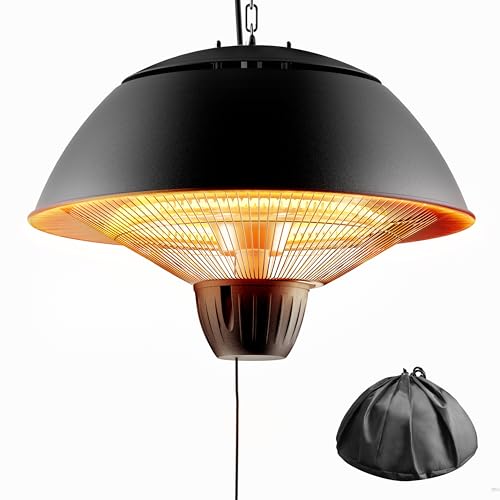
The Danluke hanging electric heater installs to a ceiling or overhead structure and provides adjustable height configurations depending on mounting hardware and drop length. Its 1500W output with 360° infrared coverage is best used in covered patios, gazebos, or under awnings where overhead mounting is available.
- Height Impact: Ceiling mounting allows the heater to be positioned above obstructions and out of reach, focusing heat downward and outward depending on mounting height.
- Weather Resistance: IP34 rating offers splash and dust protection for semi-exposed outdoor areas.
- Safety & Coverage: Built-in safety protections like tip-over and overheat shutdown are more relevant when mounting in multi-use spaces.
Reference features: IP34 waterproof, 1500W fast heating, 360° infrared coverage, built-in safety features, dust cover included.
Dr. Infrared Heater 3000W — Ceiling/Wall-Mount Infrared Unit
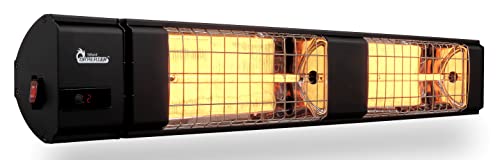
The Dr. Infrared 3000W model offers high-output infrared heating for ceiling or wall mounting, suited to commercial patios, covered outdoor spaces, and garages. Designed for 220–240V operation, its placement height affects intensity and footprint of warmth.
Call 888-896-7031 for Free Local HVAC Quotes – Compare and Save Today!
- Height Impact: Ceiling-mounted at higher elevations disperses heat over a wider area; lower wall mounting concentrates warmth nearby.
- Installation Flexibility: Supplied mounting hardware and remote control support multiple mounting heights and user comfort levels.
- Weatherproofing: IP55-rated construction allows safe use in many outdoor settings while offering odorless infrared heat.
Reference features: 10,260 BTU / 3000W carbon infrared element, wall/ceiling mountable, remote control, IP55 weatherproof.
SereneLife Infrared Patio Heater — Portable 1500W Stand Heater

The SereneLife 1500W infrared heater is a portable option designed for both indoor and outdoor use. It’s best placed near seating or mounted on a short stand; height selection is critical to avoid glare and ensure comfortable radiative warmth.
- Height Impact: Lower stand heights (table or short-post) give direct, focused heat to a small group; taller portable stands broaden the heated area at the expense of intensity.
- Safety: Features like tip-over protection, overheat shutoff, and safety mesh increase suitability at various heights around households with pets or children.
- Energy Efficiency: Uses carbon fiber elements to deliver efficient, instant heat — useful for spot heating without raising ambient air temperature much.
Reference features: ETL-certified 1500W, waterproof design, 360-degree tip-over safety switch, overheat protection, remote control, safety mesh guard.
Buying Guide — How To Choose The Right Patio Heater Height
Selecting the correct heater height depends on space type, coverage needs, safety, and mounting options. Below are key considerations and comparison perspectives to evaluate before purchase.
1. Understand Your Space And Coverage Needs
Measure floor area and ceiling height. Tall free-standing towers (around 90–92 inches) are ideal for open outdoor patios and larger seating clusters because they provide broad radial coverage without directing flame or heat at eye level. For covered patios or gazebos, use ceiling- or wall-mounted units to concentrate heat downward.
2. Match Heater Type To Height Constraints
- Propane Tower Heaters: Typically 7.5–8 feet tall. Best when ground clearance is needed and mobility is important. Provide visible flame aesthetic and strong BTU output.
- Ceiling/Wall-Mount Infrared Heaters: Mount higher (8–12 feet) to distribute heat broadly; lower wall mounting increases intensity in a smaller area.
- Hanging Electric Heaters: Useful when floor space is limited and overhead mounting exists; drop length determines effective heating angle.
- Portable Stand Electric: Best for spot heating; keep at seated-head height or below to avoid discomfort from direct radiant glare.
3. Safety Clearances And Regulations
Always follow manufacturer clearance requirements from combustible materials and ceiling surfaces. Taller heaters reduce risk of accidental contact but require stable bases or secure mounts. For ceiling or wall-mounted units, ensure structural support for weight and that electrical circuits match heater voltage.
4. Heat Distribution vs. Intensity Trade-Off
Higher-mounted heaters distribute warmth over a larger footprint with lower perceived intensity. Lower-mounted units feel warmer for those nearby but heat smaller zones. Consider seating layout: clustered tables benefit from a central tall tower, while lounge seating under a pergola may work better with ceiling-mounted infrared panels.
5. Weather Exposure And Ratings
Use IP-rated units where exposure to moisture or wind is possible. Higher-rated units (IP55, IP34) handle splashes and dust better. Propane towers are common for open-air use, while electric infrared with weather ratings are preferable under partial cover.
6. Mobility And Installation Flexibility
Wheels and portable stands allow quick repositioning to test optimal height and coverage. Fixed mounts (ceiling or wall) require planning of drop height and angle prior to installation. Consider whether you need seasonal storage and how easy the heater is to relocate.
7. Energy Source And Output Considerations
BTU ratings indicate fuel-based output; wattage indicates electric output. High BTU tower heaters produce visible flame and broader heat. Electric infrared units provide instant, focused radiant warmth with quieter operation and simpler installation in areas with electrical access.
8. Safety Features And Household Factors
- Tip-Over Switches: Important for portable units at lower heights around children and pets.
- Overheat Protection: Prevents damage when mounted in confined spaces.
- Remote Controls & Adjustable Settings: Allow fine-tuning of output without changing physical height.
9. Visual Impact And Ambiance
Consider whether a visible flame or discrete infrared panel suits your space. Tall pyramid towers add ambiance at height without obstructing sightlines; hanging or recessed units create subtler warmth without visible flame.
10. Practical Tips For Determining Optimal Height
- Start with manufacturer-recommended mounting heights and clearances.
- Test heat at seating level: if close faces feel hot or there is glare, raise the heater or reduce output.
- For multi-table areas, position taller heaters centrally for even coverage; supplement with portable units for cold spots.
- In wind-prone locations, shorter, sheltered mounting reduces heat loss but requires careful safety placement.
By combining the right heater type with correct mounting height and safety clearances, you can maximize comfort while minimizing energy waste and risk. Evaluate the interplay of coverage area, height placement, and local conditions to select the best patio heater and height for your space.
Tips for Getting the Best HVAC Prices
- Prioritize Quality Over Cost
The most critical factor in any HVAC project is the quality of the installation. Don’t compromise on contractor expertise just to save money. - Check for Rebates
Always research current rebates and incentives — they can significantly reduce your overall cost. - Compare Multiple Quotes
Request at least three estimates before making your choice. You can click here to get three free quotes from local professionals. These quotes include available rebates and tax credits and automatically exclude unqualified contractors. - Negotiate Smartly
Once you've chosen a contractor, use the proven strategies from our guide — How Homeowners Can Negotiate with HVAC Dealers — to get the best possible final price.