
Converting a patio heater from propane to natural gas requires the right hose, fittings, and certifications for safe low-pressure operation. Below is a concise comparison table of five conversion kits selected for wide compatibility, certified components, and range of lengths and diameters to suit different heater fittings.
| Product | Brand | Key Feature |
|---|---|---|
| 12FT 3/8″ Natural Gas Hose, Low Pressure LPG Hose | GardenNow | Multiple brass adapters, 12 ft length, CSA-certified components |
| GasSaf 6 FT 1/2″ ID Natural Gas Hose | GasSaf | 1/2″ ID quick connect, 6 ft length, versatile adapter options |
| 5369 Propane to Natural Gas Conversion Kit, 12FT 3/8″ ID | Hosile | 12 ft 3/8″ hose, complete adapter set, 16 orifices and wrench |
| 12FT 1/2″ ID Natural Gas Hose with Quick Connect | NQN | 1/2″ ID supports up to 135,000 BTU/hr, seven adapters included |
| 3/8″ ID Natural Gas Hose, 24FT Low Pressure LPG Hose | Dingbaayee | 24 ft length for distant hookups, 3/8″ ID, full adapter kit |
Content Navigation
- GardenNow 12FT 3/8″ Natural Gas Hose Conversion Kit
- GasSaf 6 FT 1/2″ ID Natural Gas Hose With Quick Connect
- Hosile 5369 12FT 3/8″ ID Propane To Natural Gas Conversion Kit
- NQN 12FT 1/2″ ID Natural Gas Hose With Quick Connect
- Dingbaayee 24FT 3/8″ ID Natural Gas Hose Conversion Kit
- Buying Guide: How To Choose A Natural Gas Conversion Kit For Patio Heaters
GardenNow 12FT 3/8″ Natural Gas Hose Conversion Kit

This kit features a 12-foot 3/8″ ID natural gas hose made with a high-quality rubber body and 100% solid brass fittings. The package lists multiple adapter fittings: 3/8″ NPT Male x 3/8″ NPT Male, 1/2″ Female NPT x 3/8″ Flare Male, 3/8″ NPT Male x 3/8″ Flare Male, 3/8″ Flare Male x 3/8″ Flare Male, and 1/4″ NPT Male x 3/8″ Flare Male. A 3/8″ quick connector, 16 natural gas orifices, and thread check gauges are included for tuning and compatibility. The listing cites CSA certification for the hose assembly and emphasizes heat resistance, anti-aging properties, and airtight connections. This kit suits patio heaters requiring 3/8″ connections and users who need a variety of adapter options for cross-brand setups.
GasSaf 6 FT 1/2″ ID Natural Gas Hose With Quick Connect

The GasSaf kit supplies a 6-foot 1/2″ inner diameter hose with a quick connect/disconnect at each end and a 3/4″-16UNF nut connection. The 1/2″ ID supports steadier flow rates compared with 3/8″ hoses and is often preferred for patio heaters with larger burners or when minimizing pressure drop is important. Included adapters convert the quick-connect to common NPT threads, expanding compatibility with Blackstone, Weber, fire pits, and generators. The product description highlights stable gas flow and flexible connection options for low-pressure installations.
Hosile 5369 12FT 3/8″ ID Propane To Natural Gas Conversion Kit
Call 888-896-7031 for Free Local HVAC Quotes – Compare and Save Today!
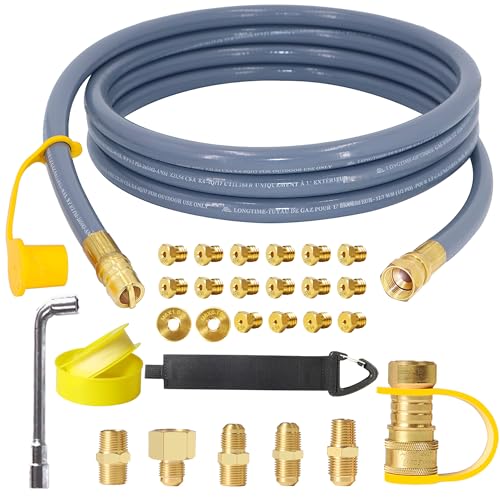
Hosile’s 5369 kit includes a 12 ft 3/8″ ID hose with a 3/8″ male quick connect plug and a 3/8″ female flare end, plus five coupling adapters similar to other kits. The package also contains 16 natural gas orifices, two thread check gauges, a 7mm orifice wrench, sealing tape, and Velcro strap, enabling on-site conversion and minor orifice sizing. The hose and fittings are described as 100% solid brass and upgraded rubber for airtight, long-life performance. Compatibility notes reference Weber, Char-Broil, Blackstone griddles, fire pits, and patio heaters that accept 3/8″ ID connections.
NQN 12FT 1/2″ ID Natural Gas Hose With Quick Connect

NQN offers a 12-foot 1/2″ ID hose with a 1/2″ quick disconnect plug and 7 adapter types. The listing states the kit can handle up to 135,000 BTU/hr, indicating suitability for larger patio heaters or setups with multiple burners where higher BTU supply is needed. The included adapters cover conversions between 1/2″ and 3/8″ fittings and several NPT/flared combinations. The hose specification references use with low-pressure natural gas systems (11″ W.C., 1/2 PSI), and the material and adapter set aim to deliver flexibility across different appliances.
Dingbaayee 24FT 3/8″ ID Natural Gas Hose Conversion Kit

This kit emphasizes length with a 24-foot 3/8″ ID hose, useful when the gas inlet is distant from the patio heater location. It includes a 3/8″ male quick connect plug, a 3/8″ quick connector (female NPT to female quick connect), five coupling adapters, sealing tape, wrench, Velcro strap, and a product manual. The hose is built with upgraded rubber and 100% solid brass fittings; the seller highlights aging resistance and airtight performance. The listing notes compatibility with Weber metric-style fittings and warns about certain Blackstone/1902 Griddle incompatibilities, so checking heater inlet type is important before purchase.
Buying Guide: How To Choose A Natural Gas Conversion Kit For Patio Heaters
Converting a patio heater requires attention to diameter, length, fittings, certifications, and flow capacity to ensure safe operation with low-pressure natural gas. Use the sections below to compare essential factors.
Call 888-896-7031 for Free Local HVAC Quotes – Compare and Save Today!
Hose Inner Diameter (ID)
3/8″ vs 1/2″ vs 3/4″: Smaller diameters like 3/8″ are common for single-burner patio heaters and many grills. A 1/2″ ID provides higher flow and reduced pressure drop, suited to larger heaters or multi-burner appliances. 3/4″ hoses are typically for high-demand appliances or generators.
Length And Placement
Choose a hose length that keeps the appliance flexible while maintaining minimal pressure drop. Shorter runs reduce potential leakage points; longer runs (12–24 ft) are useful when the gas supply is far from the heater. For long runs, prefer larger diameters to preserve flow.
Fittings And Adapters
Check your heater’s inlet thread type: NPT, flare, or quick-connect. Kits that include multiple adapters (NPT-to-flare, NPT-to-quick, etc.) increase compatibility. Verify that the kit supplies the adapter matching your heater and the line-side connector from the gas supply.
Certifications And Materials
CSA certification or equivalent indicates components rated for low-pressure gas service. Look for 100% solid brass fittings and hoses designed for outdoor, low-pressure natural gas. Brass resists corrosion and provides secure thread sealing compared with plated or lower-grade fittings.
Orifices, Wrenches, And Tuning
Natural gas often requires smaller orifices than propane. Kits that include multiple orifices and an orifice wrench allow the installer to match burner flow to natural gas. Ensure you understand or follow manufacturer guidance or have a qualified technician change orifices when needed.
BTU Capacity And Pressure Ratings
Confirm the kit’s stated pressure rating (commonly 11″ W.C. or low-pressure values) and whether the hose diameter and connectors support your heater’s BTU demand. Some listings state maximum BTU/hr capacity—use this to assess compatibility with larger burners.
Installation Considerations
- Qualified Installer: Many heater manufacturers and local codes require a licensed gas technician to perform conversions and final connections.
- Leak Testing: Always perform a soapy-water or electronic leak test after installation and whenever fittings are changed.
- Local Codes: Confirm local regulations for gas conversions, permits, or inspections prior to installing.
Compatibility Tips
Identify your heater manufacturer and inlet standard (metric vs imperial threads or quick-connect style). Kits often note specific model incompatibilities (e.g., certain Blackstone or 1902 griddles). Where possible, measure thread pitch or bring the original fitting to compare adapter types before purchasing.
Comparison Perspectives
- Best For Short Runs And Larger Flow: 1/2″ ID hoses (GasSaf, NQN) offer steadier flow and may support higher-BTU heaters.
- Best For Maximum Flexibility: Kits with many adapters and orifices (GardenNow, Hosile) allow matching to diverse appliance fittings and burner sizes.
- Best For Remote Hookups: Longer hoses (Dingbaayee 24 ft) are suited where the gas supply is distant, but consider diameter and pressure drop over length.
- Best For Field Tuning: Kits containing multiple orifices, gauges, and wrenches support on-site adjustments necessary for correct natural gas operation.
When selecting a conversion kit for your patio heater, verify your heater’s inlet type and required BTU, prioritize certified components and solid-brass fittings, and plan for professional installation and leak testing to meet safety and code requirements.
Tips for Getting the Best HVAC Prices
- Prioritize Quality Over Cost
The most critical factor in any HVAC project is the quality of the installation. Don’t compromise on contractor expertise just to save money. - Check for Rebates
Always research current rebates and incentives — they can significantly reduce your overall cost. - Compare Multiple Quotes
Request at least three estimates before making your choice. You can click here to get three free quotes from local professionals. These quotes include available rebates and tax credits and automatically exclude unqualified contractors. - Negotiate Smartly
Once you've chosen a contractor, use the proven strategies from our guide — How Homeowners Can Negotiate with HVAC Dealers — to get the best possible final price.