
Choosing the right patio wall heater means balancing coverage, mounting options, power, and weather resistance. The table below summarizes five well-reviewed infrared models suitable for patios, garages, and commercial outdoor seating areas. Each product listing below includes installation features, heating output, and safety or control options to help compare models side-by-side.
| Product | Type / Output | Key Features |
|---|---|---|
| Dr Infrared Heater DR-238 | 1500W / 120V | IP55 indoor/outdoor, 3 power settings, remote |
| Dr. Infrared 10,260 BTU (3000W) | 3000W / 220-240V | High output, IP55, ceiling/wall mount, remote |
| sundate 1500W Carbon Fiber | 1500W | IP65, 9 heat levels, Wi‑Fi & remote, fast heat |
| ThermoMate 3000W Carbon Fiber | 3000W / Hardwired 240V | Instant 3s heat, 100–130 sq ft coverage, 24h timer |
| EAST OAK 1500W | 1500W | Gold-coated lamp, low glare, 3 heat settings, IP rated |
Content Navigation
- Dr Infrared Heater DR-238 Carbon Infrared
- Dr. Infrared 10,260 BTU 3000W Infrared Heater
- Ceiling Electric Outdoor Heater 1500W Carbon Fiber
- ThermoMate Infrared Electric Patio Heater 3000W
- EAST OAK Infrared Patio Heater 1500W
- Buying Guide: How To Choose A Patio Wall Heater
- 1. Heating Output And Coverage
- 2. Power Type And Installation
- 3. Mounting Options And Placement
- 4. Weather Resistance And IP Rating
- 5. Heating Technology
- 6. Controls And Convenience
- 7. Safety Features
- 8. Light And Aesthetics
- 9. Durability And Materials
- 10. Energy Efficiency And Operating Cost
- Comparison Perspectives
Dr Infrared Heater DR-238 Carbon Infrared
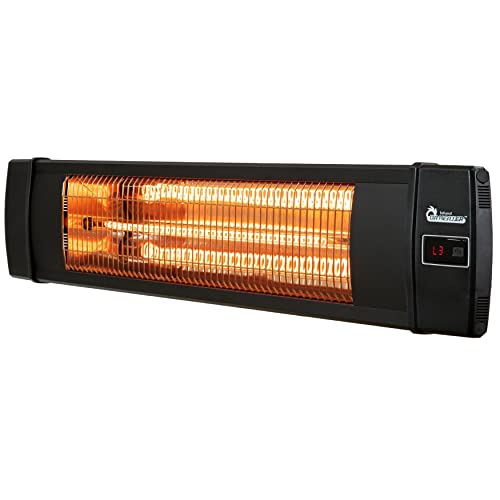
The DR-238 Is Marketed For Both Indoor And Outdoor Use With An IP55 Rating, Indicating Protection Against Dust And Water Jets. It Uses A Carbon Infrared Element And Offers Three Power Settings (900W, 1200W, 1500W) For Variable Heat Output. The Unit Connects To Standard 120V Power And Includes A Remote For Convenience.
Key Practical Points: Clean, Odorless Infrared Heat Is Instant; Plug-And-Go Setup Keeps Installation Simple; Suitable For Small Patios, Decks, Or Garages Where 120V Is Required.
Dr. Infrared 10,260 BTU 3000W Infrared Heater
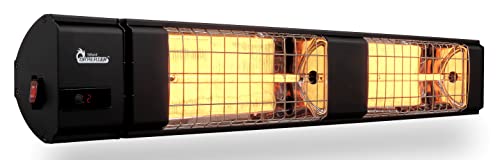
This High‑Output Model Uses A Carbon Infrared Element Rated At 3000W (Approx. 10,260 BTU) And Requires 220–240V Operation. It Is Designed For Ceiling Or Wall Mounting And Ships With Mounting Hardware And A Remote Control For Switching Power Levels And Standby Mode.
Call 888-896-7031 for Free Local HVAC Quotes – Compare and Save Today!
The Manufacturer Notes An IP55 Weatherproof Rating, Making It Suitable For Covered Outdoor Areas, Restaurants, Garages, And Larger Patios Where Stronger Heat And Larger Coverage Are Needed.
Ceiling Electric Outdoor Heater 1500W Carbon Fiber

This Model Emphasizes Fast 1‑Second Heating And High Efficiency From A 1500W Carbon Fiber Tube. It Offers 9 Heat Levels, 24‑Hour Timers, Remote And Wi‑Fi Control, And Both Wall And Ceiling Mounting Options. The Unit Is Built With An IP65 Waterproof Rating For Greater Outdoor Durability.
Design Notes: Metal Rustproof Cover And Dual Remote Support Are Aimed At Longevity And Ease Of Use; The Multi-Level Controls Allow Precise Temperature Tuning For Small To Medium Outdoor Spaces.
ThermoMate Infrared Electric Patio Heater 3000W

The ThermoMate Is A High‑Power Carbon Fiber Heater Specified At 3000W For Hardwired 240V Installation. It Emphasizes Instant Heat (3 Seconds) And Claims Coverage Of About 100 Sq Ft Outdoors / 130 Sq Ft Indoors. It Includes A Remote With A 24‑Hour Timer And Two Heat Modes (1500W / 3000W).
Call 888-896-7031 for Free Local HVAC Quotes – Compare and Save Today!
Installation Consideration: Requires Hardwiring To A Dedicated Circuit, Making It More Suitable For Permanent Installations On Larger Patios, Covered Areas, Or Commercial Settings.
EAST OAK Infrared Patio Heater 1500W
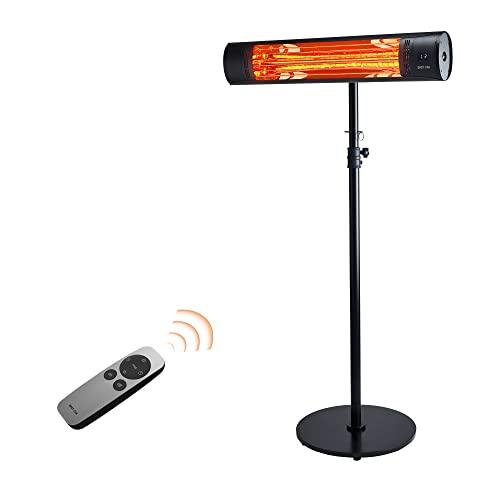
The EAST OAK Unit Uses A Gold‑Coated Heating Lamp To Provide Rapid Heat Within One Second And To Reduce Visible Glare While Maintaining Heat Transfer Efficiency. It Offers Three Heat Settings (1000W, 1200W, 1500W) And A 24‑Hour Timer, With Stated Coverage Between ~65–97 Sq Ft.
Features Focus: Low‑Glare Lighting For More Comfortable Outdoor Ambience; Built For Both Indoor And Outdoor Use With Safety Protections Like Tip‑Over And Overheat Prevention.
Buying Guide: How To Choose A Patio Wall Heater
Selecting The Best Patio Wall Heater Depends On Several Key Factors. Consider The Following To Match The Heater To Your Space And Use Case.
1. Heating Output And Coverage
Look At Wattage Or BTU To Estimate Coverage. 1500W Models Suit Small To Medium Covered Areas Or Personal Zones. 3000W Units Provide Greater Reach For Larger Patios Or Commercial Areas. Manufacturer Coverage Claims Are Useful But Vary With Wind And Mounting Height.
2. Power Type And Installation
Decide Between Plug‑In (120V) Versus Hardwired (240V) Units. Plug‑In Is Easier For Temporary Or Residential Use. Hardwired Models Often Deliver Higher Output But Require Professional Electrical Work And A Dedicated Circuit.
3. Mounting Options And Placement
Wall Mounting, Ceiling Mounting, And Tripod Stands Offer Different Coverage Patterns. Ceiling Mounts Are Ideal For Even Distribution Over Tables; Wall Mounts Direct Heat To Seating Areas. Ensure The Selected Height Aligns With Manufacturer Recommendations For Optimal Performance.
4. Weather Resistance And IP Rating
For Outdoor Use, Confirm An IP Rating. IP55 Or IP65 Units Provide Varying Degrees Of Protection From Dust And Water. Higher IP Ratings (IP65) Are Better For Exposed Patios; IP55 Is Often Sufficient For Covered Outdoor Spaces.
5. Heating Technology
Carbon Infrared And Carbon Fiber Tubes Deliver Fast, Directional Heat That Warms People And Surfaces Rather Than Air. This Is Efficient For Outdoor Use Where Wind Can Reduce convective warming.
6. Controls And Convenience
Remote Controls, Timers, Multi‑Level Heat Settings, And Wi‑Fi Options Provide Flexibility. A 24‑Hour Timer Or Multiple Heat Levels Helps Save Energy And Tailor Comfort For Varying Conditions.
7. Safety Features
Look For Overheat Protection, Tip‑Over Shutoff (For Portable/Tripod Models), Grounded Plugs, And Child Locks. Sturdier Grilles And Certifications (ETL/CSA) Add Safety Assurance For Residential And Commercial Environments.
8. Light And Aesthetics
Infrared Lamps Can Emit Visible Glare. Models With Gold‑Coated Lamps Or Low‑Glare Designs Soften Light While Preserving Heat Output—useful for outdoor dining and ambiance-sensitive areas.
9. Durability And Materials
Aluminum Alloy, Rustproof Metal Covers, And IP‑Rated Seals Improve Longevity In Outdoor Environments. Consider Units With Proven Weatherproofing For Year‑Round Use.
10. Energy Efficiency And Operating Cost
Infrared Heaters Typically Heat People And Objects Directly, Reducing Energy Lost To Air Heating Outdoors. Compare Wattage Options, Heat Modes, And Timer Features To Estimate Operating Time And Cost For Your Use Pattern.
Tips for Getting the Best HVAC Prices
- Prioritize Quality Over Cost
The most critical factor in any HVAC project is the quality of the installation. Don’t compromise on contractor expertise just to save money. - Check for Rebates
Always research current rebates and incentives — they can significantly reduce your overall cost. - Compare Multiple Quotes
Request at least three estimates before making your choice. You can click here to get three free quotes from local professionals. These quotes include available rebates and tax credits and automatically exclude unqualified contractors. - Negotiate Smartly
Once you've chosen a contractor, use the proven strategies from our guide — How Homeowners Can Negotiate with HVAC Dealers — to get the best possible final price.
Comparison Perspectives
- Residential Small Patio: 1500W plug‑in models offer portability and easy installation.
- Large Or Commercial Spaces: 3000W hardwired models deliver higher output and broader coverage.
- Exposed Environments: Choose IP65 rated units for enhanced weather resistance.
- Ambience Sensitive Areas: Low‑glare or gold‑coated lamps reduce visible light while maintaining heat.
- Temporary Versus Permanent Use: Tripod or plug models suit temporary setups; hardwired units are better for permanent installations.