
Choosing the right pipe heater wrap or exhaust heat wrap can lower under-hood temperatures, protect nearby components, and improve performance. Below is a quick comparison of selected wraps to help you narrow choices based on material, temperature rating, and included accessories.
| Product | Material / Type | Temp Resistance | Included Ties |
|---|---|---|---|
| LEDAUT 2″ x 50′ Titanium Wrap | Fiberglass (Titanium finish) | High (recommended pre-soak) | Pack Of 16 Stainless Steel Ties |
| NEZUIBAN 2″ x 16′ Fiberglass Wrap | Fiberglass Yarn (Titanium look) | 1200°F Direct / 2500°F Intermittent | Stainless Steel Ties |
| SunplusTrade 2″ x 50′ Black Wrap | Fiberglass | 1400°F Direct / 2000°F Radiant | Pack Of 6 Stainless Steel Zip Ties |
| Design Engineering Titanium Wrap 2″ x 25′ | Lava Rock Technology (Titanium) | 1800°F Direct / 2500°F Intermittent | No. Varies By Package (use stainless ties) |
| Tooomplus 2″ x 16′ Fiberglass Wrap | High-Quality Fiberglass | Up To 1832°F / 1000°C | 10 Stainless Steel Ties |
Content Navigation
- LEDAUT 2″ x 50′ Titanium Exhaust Heat Wrap Roll
- Exhaust Heat Wrap, 2” x 16 Ft, NEZUIBAN Fiberglass Heat Shield
- SunplusTrade 2″ x 50′ Black Exhaust Heat Wrap Roll
- Design Engineering Titanium Wrap With Lava Rock Technology
- Tooomplus 2″ x 16′ Fiberglass Heat Shield Tape
- Buying Guide: How To Choose The Right Pipe Heater Wrap
LEDAUT 2″ x 50′ Titanium Exhaust Heat Wrap Roll
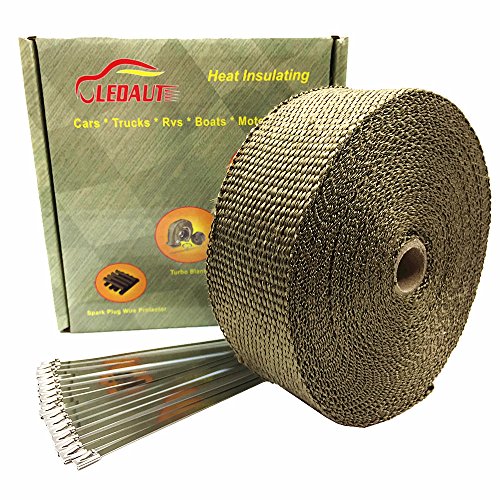
The LEDAUT wrap is supplied as a 2″ x 50′ roll with a titanium-style finish and a pack of 16 stainless steel (304) locking ties. The manufacturer recommends soaking the fiberglass wrap in water before installation to reduce airborne fibers during handling. Gloves are advised to prevent skin irritation from the fiberglass.
Features include high resistance to abrasion, oil, temperature, and vibration breakdown. The long roll length is suitable for multiple headers or longer runs of exhaust or industrial pipe. Use overlapping wraps and secure endpoints with the supplied ties to maintain placement during thermal cycling.
Exhaust Heat Wrap, 2” x 16 Ft, NEZUIBAN Fiberglass Heat Shield

NEZUIBAN’s exhaust wrap uses fiberglass yarn that is pliable for tight wrapping around headers and tight bends. It is rated to withstand 1200°F direct and 2500°F intermittent heat, making it suitable for motorcycle headers, automotive turbo applications, and household gas exhaust protection.
Call 888-896-7031 for Free Local HVAC Quotes – Compare and Save Today!
The product emphasizes thermal insulation to reduce heat soak and increase effective exhaust velocity. The titanium-style appearance provides a carbon-fiber-like aesthetic while maintaining abrasion and oil resistance. Installation guidance notes pre-soaking and protective gloves to limit fiber dispersion.
SunplusTrade 2″ x 50′ Black Exhaust Heat Wrap Roll
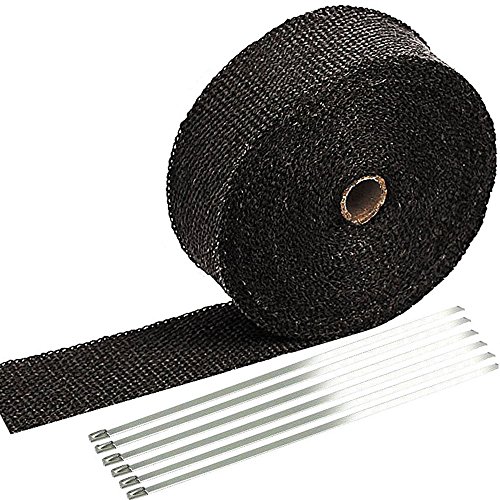
SunplusTrade provides a 2″ x 50′ black fiberglass wrap designed for long runs. The wrap claims resistance up to 1400°F direct and 2000°F radiant heat. The package typically includes a pack of 6 12″ stainless steel locking zip ties for securing wraps at endpoints.
This wrap focuses on durability against abrasion and vibration breakdown, with a heavy roll length suited to multiple exhaust headers or larger industrial pipes. It is compatible with typical installation practices: overlap wraps, use stainless ties, and consider pre-wetting to control fiber release during installation.
Design Engineering Titanium Wrap With Lava Rock Technology

Design Engineering’s (DEI) titanium wrap uses proprietary lava rock technology and a diagonal weave intended for increased pliability and durability. The wrap is rated to withstand 1800°F direct and 2500°F intermittent heat without requiring pre-wetting, according to the manufacturer.
Call 888-896-7031 for Free Local HVAC Quotes – Compare and Save Today!
DEI highlights performance benefits: reduced under-hood temps, maintained exhaust gas velocity, and shielding of heat-sensitive components. The diagonal weave aids wrapping around complex curves and edges. This wrap is designed specifically to minimize heat soak and protect adjacent systems while maximizing performance retention.
Tooomplus 2″ x 16′ Fiberglass Heat Shield Tape

Tooomplus supplies a 2″ x 16′ high-quality fiberglass wrap rated to withstand up to 1832°F (1000°C). The package includes 10 stainless steel ties for securing the wrap after installation. Instructions recommend soaking the wrap prior to installation to reduce fiber dispersion and wearing gloves to prevent skin irritation.
Marketing emphasizes performance gains via reduced under-hood temperatures and preserved exhaust velocity. The wrap claims low thermal conductivity, superior wear resistance, and extended service life relative to lower-grade materials. Its 16′ length is suitable for shorter headers or specific pipe runs.
Buying Guide: How To Choose The Right Pipe Heater Wrap
Selecting the correct pipe heater wrap depends on application, temperature exposure, installation constraints, and desired longevity. Below are key considerations and comparison perspectives to guide purchase decisions.
Material And Temperature Ratings
- Fiberglass Wraps — Common, flexible, and cost-effective. Many offer continuous direct temperature ratings around 1200–1400°F and higher intermittent thresholds. Pre-wetting before installation reduces fiber dust.
- Lava Rock / Titanium Technology — Typically higher-rated for direct and intermittent heat, with improved durability and less need for pre-wetting. Consider for extreme-performance engines or hot turbo applications.
- Foam/Aluminum Foil Wraps — Intended for freeze protection and general insulation rather than exhaust heat; choose these for cold-weather outdoor plumbing, not high-temperature exhausts.
Application Type
- Exhaust Headers And Turbo Systems — Use high-temperature fiberglass or lava rock wraps rated for direct exhaust heat. Prioritize high intermittent temperature resistance if applications see thermal spikes.
- Household Gas Exhaust Or Venting — Wraps rated for high heat can work; follow local codes and manufacturer instructions. Consider non-fiberglass solutions if fiber release is a concern near living spaces.
- Plumbing Freeze Protection — Use foam and foil self-adhesive insulation designed for cold prevention, not exhaust heat wraps.
Length, Width, And Coverage
- Measure pipe circumference and length to determine how many rolls or feet are required. A 2″ wide wrap is standard for narrow headers and pipes; multiple wraps in parallel may be necessary for larger diameters.
- Longer rolls (e.g., 50′) are economical for multiple pipes or full exhaust systems. Shorter rolls are suitable for targeted areas.
Installation Considerations
- Pre-Soaking — Many fiberglass wraps recommend soaking to limit airborne fibers during wrapping. Read manufacturer guidance for safety steps.
- Protective Gear — Use gloves and eye protection to avoid irritation from glass fibers. Long sleeves and a dust mask are recommended during cutting and handling.
- Securing Methods — Stainless steel locking ties or zip ties are common. Ensure ties are rated for the temperatures encountered. Some wraps include ties; others require separate purchase.
Durability And Environmental Resistance
- Abrasion & Oil Resistance — Choose wraps specified for resistance to oil and abrasion if the wrap will be exposed to spills or mechanical wear.
- Vibration & Thermal Cycling — Look for products that specify resistance to vibration breakdown and repeated thermal cycles to minimize rework.
Performance And Heat Management Goals
- Reduce Under-Hood Temperatures — Wraps that limit heat soak help protect electronics, hoses, and intake air temps.
- Maintain Exhaust Gas Velocity — Some wraps claim improved exhaust gas velocity, which can benefit turbo spool and certain performance metrics.
- Protect Nearby Components — Use wraps to shield wiring, sensors, and body panels from radiated heat.
Safety And Compliance
- Follow local regulations for exhaust modifications and heat shielding on street-driven vehicles. Check building codes for household vent and flue insulation.
- Consider non-fiberglass barrier shields in areas where fiber release is a concern (e.g., enclosed living areas, near HVAC intakes).
Comparison Perspectives
- Cost vs. Longevity — Longer rolls and advanced materials may cost more upfront but provide extended service life and higher temperature ratings.
- Ease Of Installation — Tighter weaves and pliable diagonal weaves wrap easier around complex bends; wider or stiffer wraps may require tooling or more labor.
- Aesthetic vs. Function — Titanium-colored or black wraps offer different visual results; choose based on visual preference and heat tolerance requirements.
By matching material properties, temperature ratings, and inclusion of mounting hardware to your specific application, you can select the best pipe heater wrap for durability and thermal protection. Always follow manufacturer installation instructions and safety guidelines when handling high-temperature insulation materials.
Tips for Getting the Best HVAC Prices
- Prioritize Quality Over Cost
The most critical factor in any HVAC project is the quality of the installation. Don’t compromise on contractor expertise just to save money. - Check for Rebates
Always research current rebates and incentives — they can significantly reduce your overall cost. - Compare Multiple Quotes
Request at least three estimates before making your choice. You can click here to get three free quotes from local professionals. These quotes include available rebates and tax credits and automatically exclude unqualified contractors. - Negotiate Smartly
Once you've chosen a contractor, use the proven strategies from our guide — How Homeowners Can Negotiate with HVAC Dealers — to get the best possible final price.