
Choosing the right plug-in garage heater depends on garage size, installation preference, and desired control features. The table below summarizes five top-rated options selected for heating performance, mounting style, and safety features to help you compare at a glance.
| Product | Type | Power / Coverage | Key Feature |
|---|---|---|---|
| Barphygo 4800-Watt Plug In Shop Heater | Ceiling Mount, Plug-In | 4800 W / ~400 sq. ft. | Remote, Timer, Thermostat |
| TEMPWARE 7500-Watt Ceiling Shop Heater | Ceiling Mount, Hardwired/Plug-style | 6,250–7,500 W / up to 1,250 sq. ft. | Adjustable Louvers, ECO Mode |
| Comfort Zone 7,500W Ceiling Space Heater | Ceiling Mount, Hardwired | 7,500 W / up to 1,250 sq. ft. | Durable Steel, Adjustable Louvers |
| ENVI Plug-In Electric Wall Heater | Wall Mount, Plug-In | Low wattage / Targeted zones | Fan-less Quiet Convection, Safety Sensor |
| Dura Heat EWH5510 Forced Air Heater | Forced-Air, Hardwired | 5,000 W / ~750 sq. ft. | Remote Control, LED Thermostat |
Content Navigation
- Barphygo 4800-Watt Plug In Shop Heater
- TEMPWARE 7500-Watt Digital Fan-Forced Ceiling Heater
- Comfort Zone 7,500 Watt Ceiling Space Heater
- ENVI Plug-In Electric Wall Heater With Fan-less Convection
- Dura Heat EWH5510 Electric Forced Air Heater With Remote
- Buying Guide: How To Choose The Right Plug In Garage Heater
Barphygo 4800-Watt Plug In Shop Heater

This 4800-watt, 240V plug-in ceiling heater is intended for indoor garages and workshops. The unit advertises a maximum output near 16,382 BTU and coverage up to ~400 square feet depending on insulation and ceiling height.
Key features include a full-function remote, built-in thermostat, and an 8-hour timer. The fan-forced design distributes heat quickly and the manufacturer highlights a robust steel construction and ETL listing for safety compliance. An overheat sensor provides automatic shutdown if temperatures exceed safe thresholds.
Best suited for mid-sized, enclosed garage spaces where a plug-in ceiling unit and remote control simplify operation without a hardwired installation.
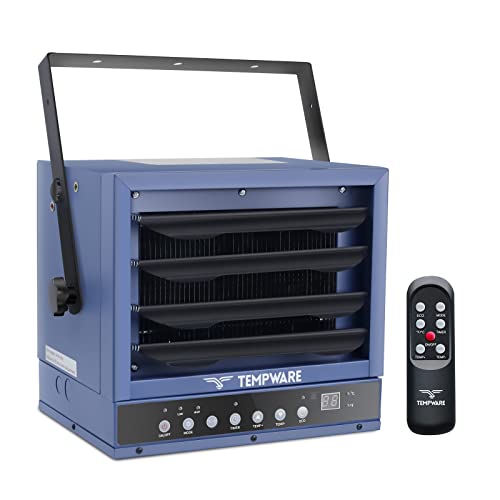
TEMPWARE 7500-Watt Digital Fan-Forced Ceiling Heater
Call 888-896-7031 for Free Local HVAC Quotes – Compare and Save Today!
The TEMPWARE ceiling heater supplies high output with selectable power settings from 6,250 to 7,500 watts, offering up to 25,590 BTU and coverage claims up to 1,250 square feet in suitable conditions.
Included features are adjustable louvers, variable mounting angle, digital controls with ECO mode, and a timer (1–12 hours). The built-in thermostat ranges from 45°F to 95°F, and overheat protection is integrated. The ECO function automatically adjusts operation based on ambient temperature to optimize energy use.
This model suits larger, better-insulated garages or workshops where strong airflow and adjustable targeting of heat are required for even distribution.
Comfort Zone 7,500 Watt Ceiling Space Heater

The Comfort Zone hard-wired ceiling heater targets maximal floor-space utility by mounting overhead. It claims coverage up to 1,250 sq. ft. and uses a fan-forced system with adjustable louvers to direct air where needed.
Constructed from heavy-gauge steel, the unit emphasizes durability for workshop conditions and temperature fluctuations. Controls include a digital thermostat, remote, and a 12-hour timer. Overheat protection is standard to reduce risk in enclosed environments.
Call 888-896-7031 for Free Local HVAC Quotes – Compare and Save Today!
Opt for this model when ceiling mounting and durable construction are priorities, and when hard-wired installation is acceptable or preferred for continuous high-power performance.
ENVI Plug-In Electric Wall Heater With Fan-less Convection
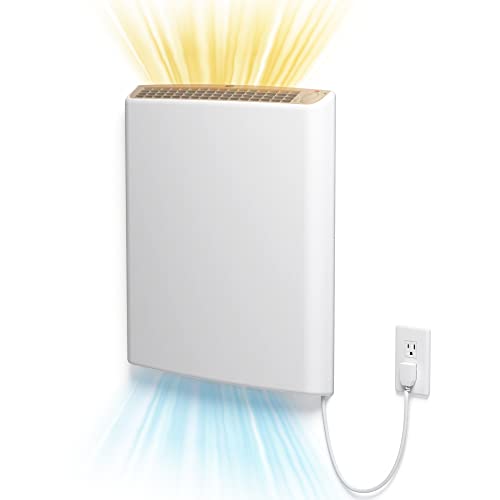
The ENVI wall-mounted panel heater uses a fan-less stack convection design for silent, continuous low-wattage heating. It is intended for targeted zones and can run 24/7 as a supplement to central heating.
Notable safety features include a wall-sense sensor that cuts power if the unit is removed from the wall and a cool surface operation at about 90°F. The design minimizes dust circulation, benefiting allergy-sensitive spaces. Installation is presented as quick and simple, designed for rooms where quiet, gradual warmth is preferred over forced-air blasts.
Choose this option when quiet, continuous zone heating and low energy draw are priorities rather than rapid warming of a large open garage.
Dura Heat EWH5510 Electric Forced Air Heater With Remote

The Dura Heat forced-air model delivers around 17,060 BTU and coverage for spaces up to approximately 750 sq. ft., using a 5,000W, 240V hardwired configuration. The unit requires professional installation for safe operation.
Controls include a remote and an LED thermostat adjustable between 45°F and 99°F. The design is intended for reliable, quick heating with a forced-air blower to move warm air through the space. Power indicator and safety interlocks are included to confirm correct installation and operation.
Suitable for medium-sized garages where hardwired, high-output heating and remote temperature control are necessary for consistent comfort.
Buying Guide: How To Choose The Right Plug In Garage Heater
Selecting a plug-in or mounted garage heater requires evaluating several practical factors to ensure the heater meets your space, safety, and operational needs.
1. Power And Coverage
Match heater capacity to garage volume, not just floor area. Higher ceilings or poor insulation increase required output. Manufacturer BTU or wattage ratings provide a starting estimate; use insulation and ceiling height to refine sizing.
2. Mounting Type: Ceiling, Wall, Or Portable
Ceiling-mounted and wall-mounted units free floor space and reduce obstruction risk. Portable units offer flexibility but may require supervision. Choose ceiling or wall mounting for permanent workshop setups and portability for intermittent use.
3. Installation Requirements
Confirm electrical requirements: plug-in 240V units are simpler but may still need a dedicated circuit. Hardwired models often require professional electricians and appropriately sized breakers. Check local codes and the unit’s ETL/UL listing.
4. Control Features And Convenience
Remote controls, digital thermostats, and timers improve usability. ECO modes and precise thermostats help maintain consistent temperature while reducing energy consumption. Consider where controls will be accessed from in the garage.
5. Safety Features
Always prioritize units with overheat protection, cool-touch surfaces for wall units, and safety sensors. ETL or UL listings indicate third-party safety testing. Automatic shutoff features reduce fire and damage risk.
6. Airflow And Distribution
Fan-forced heaters provide rapid warming and better distribution for larger spaces. Adjustable louvers or mounting angles help direct warm air to workbenches or vehicle bays. Fan-less convection models are quieter but slower to heat large volumes.
7. Noise And Indoor Air Quality
Consider whether blower noise will be disruptive. Fan-less panel heaters minimize noise and dust circulation, which benefits allergy sufferers. Forced-air units can move dust; regular maintenance reduces particulate buildup.
8. Durability And Build
Look for heavy-gauge steel construction and components rated for workshop environments. Units designed for commercial or garage use typically withstand temperature swings and incidental impacts better than household space heaters.
9. Energy Efficiency
Higher-watt heaters heat faster but consume more energy. ECO modes, timers, and accurate thermostats can reduce operating costs. For continuous low-level heating, low-wattage convection panels may be more efficient.
10. Zoning And Supplementing Heat
Decide whether the heater will be the primary heat source or a supplement. Large, open or poorly insulated garages may require multiple units or a single high-output heater. For targeted warmth at a bench or vehicle bay, smaller wall or panel units can be effective.
Comparing these perspectives—installation type, power needs, noise tolerance, safety, and control features—helps identify the best plug-in garage heater for your specific garage or workshop scenario.
Tips for Getting the Best HVAC Prices
- Prioritize Quality Over Cost
The most critical factor in any HVAC project is the quality of the installation. Don’t compromise on contractor expertise just to save money. - Check for Rebates
Always research current rebates and incentives — they can significantly reduce your overall cost. - Compare Multiple Quotes
Request at least three estimates before making your choice. You can click here to get three free quotes from local professionals. These quotes include available rebates and tax credits and automatically exclude unqualified contractors. - Negotiate Smartly
Once you've chosen a contractor, use the proven strategies from our guide — How Homeowners Can Negotiate with HVAC Dealers — to get the best possible final price.