
Compact, wall- or plug-in portable heaters are ideal for supplemental warmth in bedrooms, offices, dorms, and RVs. Below is a quick comparison of five well-reviewed plug-in portable heaters selected for safety features, thermostat control, and portability.
| Product | Type | Key Features |
|---|---|---|
| BLACK+DECKER Portable Space Heater | Plug-In / Corded Portable | 750/1500W, carry handle, adjustable thermostat |
| Ontel Handy Heater | Plug-In Personal Heater | Digital display, 12-hour timer, compact |
| Dreo Space Heater | Plug-In Portable Electric Heater | 1500W PTC, thermostat with 1°F increments, remote |
| VOCRS Small Portable Space Heater | Plug-In Portable Electric Heater | 3 power modes, remote, 12H timer |
| GiveBest Programmable Space Heater | Wall Outlet Plug-In Heater | 450W low-watt, LED display, rotatable plug |
Content Navigation
- BLACK+DECKER Portable Space Heater
- Ontel Handy Heater | Plug-In Personal Heater
- Dreo Space Heater With Thermostat
- VOCRS Small Portable Space Heater
- GiveBest Programmable Wall Outlet Heater
- Buying Guide: How To Choose A Plug-In Portable Heater
- 1. Power And Heating Capacity
- 2. Safety Features
- 3. Control Options And Thermostat Accuracy
- 4. Portability And Installation Style
- 5. Noise And Operation Mode
- 6. Energy Use And Circuit Considerations
- 7. Material Durability And Certifications
- 8. Use Case Comparison
- 9. Remote, Timer, And Smart Features
- 10. Maintenance And Placement
BLACK+DECKER Portable Space Heater

The BLACK+DECKER unit is a lightweight corded desktop heater designed for easy transport. It includes a built-in carry handle and a 6 ft. power cord for flexible placement.
Key features listed by the manufacturer include three operating modes: LOW HEAT (750W), HIGH HEAT (1500W), and FAN. The product also has an adjustable thermostat control to tailor heat output to personal comfort.
Typical use cases noted are dorm rooms, offices, garages, RV shelves, and small bedrooms. Because it offers two power settings, it provides a basic balance between energy use and room warming capability.
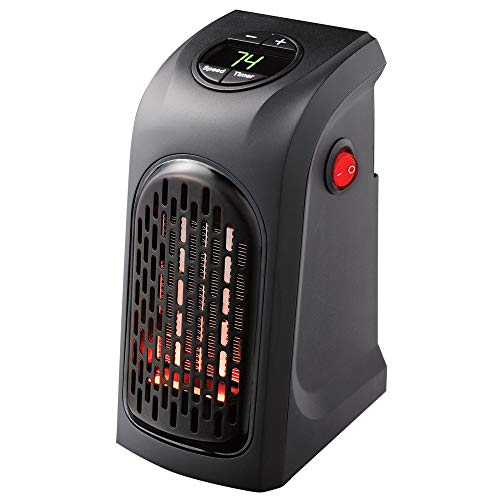
Ontel Handy Heater | Plug-In Personal Heater
Call 888-896-7031 for Free Local HVAC Quotes – Compare and Save Today!
The Ontel Handy Heater is a plug-in personal heater emphasizing simplicity and portability. It operates by plugging directly into an outlet for instant heat.
Manufacturer features include a digital temperature display and a programmable 12-hour timer. The compact design is intended for travel and quick warmth in small personal spaces.
Because the unit is designed for plug-and-play use, it targets users wanting minimal setup and digital readout control in confined areas like desks or bedside surfaces.
Dreo Space Heater With Thermostat

Dreo’s portable electric heater uses a 1500W PTC system and an updated heat funnel design to deliver fast heat and enhanced circulation. The brand highlights performance and safety certifications.
Key manufacturer features include precise thermostat control (41–95°F with 1°F increments), a digital display, tilt-detection sensor, overheat protection, flame-retardant materials, and ETL certification. A remote control and timer functionality are also noted.
Call 888-896-7031 for Free Local HVAC Quotes – Compare and Save Today!
These capabilities make the unit suitable for users who prefer precise temperature management and additional safety systems in a portable heater intended for bedrooms and offices.
VOCRS Small Portable Space Heater

VOCRS offers a 1500W PTC portable heater with multiple power modes and smart controls. The product lists three heating modes (700W/1000W/1500W) to adapt energy use to needs.
Manufacturer features include a remote control, high-definition digital display, and a 1–12 hour timer. The remote requires batteries and enables adjustments from a distance for convenience.
This unit targets users wanting mode flexibility and remote operation for living rooms, home offices, and bedrooms where timed or distance control is useful.
GiveBest Programmable Wall Outlet Heater

GiveBest’s model is a plug-in wall outlet heater designed for low-watt supplemental heating. It emphasizes energy efficiency and a compact footprint.
Manufacturer features include 450W low energy consumption, an LED temperature display adjustable between 60°F and 90°F, ETL listing, and a 180° rotatable plug to fit different outlet orientations.
This style of heater is useful for mild climates or for users seeking a low-draw heater that reduces circuit overload risk and fits flush to an outlet while providing selectable temperature control.
Buying Guide: How To Choose A Plug-In Portable Heater
Selecting the right plug-in portable heater depends on intended use, safety features, energy constraints, and control preferences. Below are the primary considerations and comparison perspectives to help evaluate options.
1. Power And Heating Capacity
Power is typically measured in watts. Common portable units run 450W, 750W, or 1500W. Higher wattage provides faster and wider-area heating but uses more electricity and can trip circuits if multiple high-watt devices share the same line.
Compare expected room size and insulation: for small personal zones (desk, bedside), 450–750W may suffice; for larger small rooms, a 1500W PTC heater will warm air faster and cover more distance.
2. Safety Features
Prioritize models with overheat protection, tip-over shutoff or tilt-detection sensors, ETL/UL/CSA certification, and flame-retardant materials. These reduce fire risk and are particularly important for unattended night use or in homes with pets and children.
3. Control Options And Thermostat Accuracy
Thermostat and timer features impact comfort and energy efficiency. Options range from basic low/medium/high switches to digital thermostats with precise 1°F increments. A programmable timer (1–12 hours) and a remote control add convenience.
Digital displays and precise thermostats help maintain stable temperatures and avoid overheating when trying to sustain a specific room temperature.
4. Portability And Installation Style
Decide between corded portable units and wall outlet plug-in heaters. Corded models offer flexible placement but require floor or table space and an available outlet. Wall outlet designs save space by mounting directly to a wall outlet and often operate at lower wattage.
Look for design elements like carry handles, lightweight construction, and compact footprints if frequent relocation is important.
5. Noise And Operation Mode
If you plan to use the heater in a bedroom or workspace, noise level matters. Fans and PTC elements vary; look for units marketed as “whisper-quiet” if noise sensitivity is a priority. Fan-only modes provide air movement without heat for summer use.
6. Energy Use And Circuit Considerations
Check household circuit capacity before using multiple high-watt devices on the same circuit. Low-watt models are safer for rooms with older wiring or when running alongside other appliances. When energy efficiency matters, models with multiple power modes let you choose lower settings to reduce consumption.
7. Material Durability And Certifications
Ceramic PTC elements are common for fast, stable heating with self-regulating characteristics. Verify product safety certifications (ETL/UL) and material claims such as V0 flame-retardant housings for added reliability.
8. Use Case Comparison
- Desk Or Close-Proximity Heating: Choose compact, low-to-medium wattage units or plug-in wall heaters for near-field warmth.
- Bedroom Overnight Use: Favor models with accurate thermostats, timers, tip-over detection, and low noise.
- Larger Small Rooms: Select 1500W PTC units with stronger airflow and wider reach.
- Energy-Conscious Use: Pick low-watt or multi-mode heaters and programmable timers.
9. Remote, Timer, And Smart Features
Remote controls and programmable timers increase convenience. Precision thermostats reduce energy waste by maintaining set temperatures rather than running continuously at full power. Some newer models include digital displays and fine-grain temperature control for more efficient operation.
10. Maintenance And Placement
Place portable heaters on stable, non-flammable surfaces away from curtains and clutter. Keep vents clear and periodically dust intake grills per manufacturer instructions to ensure safe operation and longevity.
Tips for Getting the Best HVAC Prices
- Prioritize Quality Over Cost
The most critical factor in any HVAC project is the quality of the installation. Don’t compromise on contractor expertise just to save money. - Check for Rebates
Always research current rebates and incentives — they can significantly reduce your overall cost. - Compare Multiple Quotes
Request at least three estimates before making your choice. You can click here to get three free quotes from local professionals. These quotes include available rebates and tax credits and automatically exclude unqualified contractors. - Negotiate Smartly
Once you've chosen a contractor, use the proven strategies from our guide — How Homeowners Can Negotiate with HVAC Dealers — to get the best possible final price.