
Plug-in space heaters offer targeted warmth without permanent installation. Below is a quick comparison of five plug-in heaters that balance energy use, safety, and control options for bedrooms, offices, and small living spaces.
| Model | Type | Power / Feature |
|---|---|---|
| GiveBest Programmable Space Heater | Plug-In / Low-Watt | 450W, LED Display, Rotatable Plug |
| Ontel Handy Heater Turbo | Wall Outlet Ceramic | 800W, 12-Hour Timer, Adjustable Thermostat |
| ENVI Plug-in Electric Panel Heater | Wall-Mounted Panel | Low-Wattage Continuous Heat, Fan-Less |
| Digital Ceramic 750W Wall Outlet Heater | Plug-In / Wall | 750W, Digital Display, 2 Heat Settings |
| Brightown Wall Space Heater | Wall-Mounted Plug-In | 450W, LED Display, Programmable Thermostat |
Content Navigation
GiveBest Programmable Space Heater With LED Display

This wall outlet plug-in heater is designed for low-wattage, continuous use. It operates at 450 watts, reducing the risk of overloading circuits while providing supplemental warmth in mild climates or small rooms. The LED display shows the set temperature which adjusts from 60°F to 90°F. A programmable timer and remote-style wall outlet design aim to maximize convenience. The plug rotates up to 180° to fit different outlet orientations. ETL listing indicates compliance with basic safety standards. This unit is suitable when minimizing energy draw and avoiding dedicated circuit changes is a priority.
Ontel Handy Heater Turbo Wall Outlet

The Ontel Handy Heater Turbo is a compact ceramic unit that plugs directly into a wall outlet. Rated at 800 watts, it’s positioned between low-watt and full-power plug-ins for quicker heat delivery. Features include an adjustable thermostat from 60°F to 90°F, a programmable 12-hour timer, and automatic shutoff for safety. The manufacturer claims coverage up to 250 sq ft; real-world performance will depend on room insulation and layout. Ceramic heating elements are engineered for rapid warm-up while maintaining moisture compared to some fan-forced models.
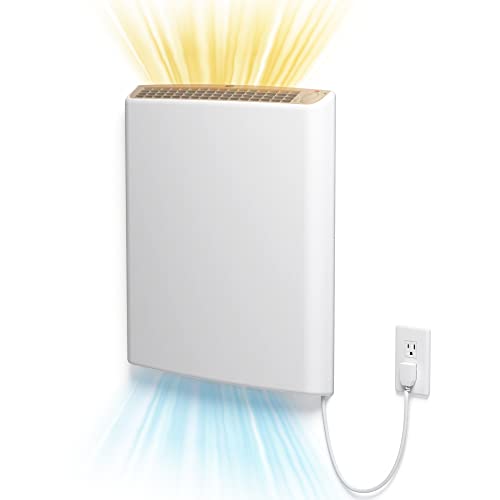
ENVI Plug-In Electric Panel Wall Heaters
Call 888-896-7031 for Free Local HVAC Quotes – Compare and Save Today!
The ENVI panel is a fan-less wall-mounted plug-in heater built for silent, long-duration use. Its low-wattage90°F surface temperature and is intended for 24/7 supplemental heating. The unit includes a wall-sense safety sensor that cuts power if removed and is designed to reduce airborne dust circulation. This model targets allergy-sensitive environments and rooms where noise or draft is a concern. The installation is a simple two-minute plug-in mount without hardwiring.
Digital Ceramic 750-Watt Wall Outlet Heater

This Good Housekeeping-branded plug-in heater offers 750 watts of ceramic heating with two heat settings and a digital display. The adjustable thermostat lets users set and monitor temperature for targeted comfort. The compact wall outlet format keeps floorspace clear and reduces trip hazards common with freestanding heaters. With a mid-range power rating, it balances quicker heat delivery with moderate energy draw. Built-in safeguards include typical overheat protections found in modern ceramic plug-in heaters.
Brightown Wall Space Heater With Remote

The Brightown wall space heater is a 450W plug-in option with a precise thermostat that supports 1°F increments between 60°F and 90°F. It includes an LED display, programmable timer up to 12 hours, and ETL certification for safety. The ceramic PTC element claims fast heat-up in about three seconds. The remote and wall-mounted orientation make it a space-saving choice for dorms, offices, or bedrooms where exact temperature control and timed operation are important.
Buying Guide: Choosing A Plug-In Space Heater
Power And Energy Considerations
Wattage Determines Heat Output: Higher wattage (700–1500W) delivers faster, stronger heating but increases energy draw. Lower-watt models (200–800W) are suited for mild climates or supplemental warmth.
Call 888-896-7031 for Free Local HVAC Quotes – Compare and Save Today!
Circuit Capacity: Most household outlets are on 15A circuits. Avoid running multiple high-wattage devices on the same circuit to prevent tripping breakers. Low-watt plug-ins are less likely to overload shared circuits.
Type And Placement
Wall Outlet/Plug-In Heaters: Mount directly to the outlet, saving floor space and reducing trip hazards. Many are intended for continuous or long-duration use.
Ceramic Vs. Panel: Ceramic units heat quickly and are suitable for periodic use. Panel and fan-less heaters provide gentle, continuous warmth and are quieter, better for bedrooms or allergy-sensitive users.
Control Features
Thermostat Precision: Digital thermostats with 1°F increments allow fine control and can improve comfort while saving energy.
Timers And Scheduling: Programmable timers enable automatic shutoff and scheduled heating, reducing wasted runtime.
Remote Or Wall Controls: Remote or built-in controls increase convenience; rotatable plugs improve outlet compatibility.
Safety Features
Overheat Protection: Automatically shuts the unit off if internal temperatures exceed safe levels.
Tip-Over Or Wall-Sense Sensors: Wall-mounted plug-ins often include sensors that disable the unit if dislodged.
Certifications: Look for ETL or UL listings indicating compliance with recognized safety standards.
Noise And Air Quality
Fan-Forced Models: May produce audible noise and circulate dust. Suitable for living areas where sound is acceptable.
Fan-Less/Convection Models: Provide silent operation and minimal air movement, beneficial for bedrooms and allergy sufferers.
Room Size And Coverage
Match Output To Space: Small plug-ins (200–800W) can warm small rooms or provide localized comfort. Larger rooms require higher wattage or central solutions. Insulation, ceiling height, and drafts affect perceived performance.
Installation And Convenience
Plug Orientation: Rotatable plugs improve fit in occupied or awkward outlets. Consider cord length if you need placement flexibility.
Space Saving: Wall-mounted units keep floors and tabletops clear and reduce trip hazards compared to freestanding heaters.
Tips for Getting the Best HVAC Prices
- Prioritize Quality Over Cost
The most critical factor in any HVAC project is the quality of the installation. Don’t compromise on contractor expertise just to save money. - Check for Rebates
Always research current rebates and incentives — they can significantly reduce your overall cost. - Compare Multiple Quotes
Request at least three estimates before making your choice. You can click here to get three free quotes from local professionals. These quotes include available rebates and tax credits and automatically exclude unqualified contractors. - Negotiate Smartly
Once you've chosen a contractor, use the proven strategies from our guide — How Homeowners Can Negotiate with HVAC Dealers — to get the best possible final price.
Performance Comparisons
- Energy Efficiency: Low-watt models are most efficient for mild supplemental heating; higher watt models heat faster but consume more power.
- Speed Of Heat: Ceramic PTC elements deliver rapid warm-up. Panel and fan-less designs are slower but maintain steady ambient heat.
- Noise: Fan-less models are quietest; fan-based ceramic units are louder but may spread heat faster.
When To Choose Each Type
- Choose low-watt plug-ins for energy-conscious supplemental heat in small rooms or when circuits are limited.
- Choose ceramic wall plug-ins for quicker warmth in moderately sized rooms where occasional heating is needed.
- Choose fan-less panel heaters for silent, continuous background heating and allergy-friendly operation.