
Quick Overview: This guide compares compact plug-in wall heaters that offer targeted warmth for small rooms, bathrooms, offices, and RVs. Below is a summary table of the five selected models showing brand, primary wattage, and standout feature to help you compare at a glance.
| Product | Brand | Wattage | Standout Feature |
|---|---|---|---|
| GiveBest Programmable Space Heater (450W) | GiveBest | 450W | Low Energy Consumption, 180° Rotatable Plug |
| Ontel Handy Heater Turbo (800W) | Ontel | 800W | Ceramic Element, Heats Up To 250 Sq Ft |
| Digital Ceramic 750W Wall Outlet Heater | Good Housekeeping | 750W | Digital Display, 2 Heat Settings |
| ENVI Plug-in Electric Panel Wall Heater | ENVI | Low-Wattage (Panel) | Fan-less Quiet Panel, Safety Sensor |
| Brightown Wall Space Heater (450W) | Brightown | 450W | Fast Ceramic Heating, Precise Thermostat |
Content Navigation
- GiveBest Programmable Space Heater With LED Display
- Ontel Handy Heater Turbo Wall Outlet Ceramic Heater
- Digital Ceramic 750-Watt Wall Outlet Plug-In Space Heater
- Envi Plug-In Electric Panel Wall Heater With Safety Sensor
- Brightown Wall Space Heater With Precise Thermostat
- Buying Guide: How To Choose The Right Plug-In Wall Heater
GiveBest Programmable Space Heater With LED Display

This 450-watt plug-in heater is designed for low energy consumption in mild climates or supplemental heating situations. It includes an LED display and adjustable thermostat with a temperature range of 60°F to 90°F, enabling degree-level control over room temperature.
The device features a 180° rotatable plug to accommodate outlets in different orientations and reduce strain on the outlet. The low wattage minimizes risk of circuit overload, making it suitable for rooms with limited electrical capacity. The unit is ETL listed for safety.
Ideal use cases: maintaining comfort in small spaces like bathrooms, offices, or dorm rooms where continuous high-wattage heating is unnecessary. The programmable controls allow scheduled operation and automated temperature maintenance.
Ontel Handy Heater Turbo Wall Outlet Ceramic Heater

Call 888-896-7031 for Free Local HVAC Quotes – Compare and Save Today!
The Ontel 800-watt ceramic plug-in heater provides higher output for rooms up to an estimated 250 sq ft. It uses ceramic heating technology intended to warm quickly and maintain humidity better than some forced-air options.
Controls include an adjustable thermostat from 60°F to 90°F and a programmable 12-hour timer. The unit offers automatic shut-off features for safety. Packaging may vary and the model emphasizes compact footprint for wall outlet mounting.
Because of its higher wattage, this heater is suited for larger small rooms or situations needing faster temperature rise. Ceramic technology can reduce perceived dryness versus resistive coil heaters, which may be a consideration for sensitive users.
Digital Ceramic 750-Watt Wall Outlet Plug-In Space Heater

This Good Housekeeping branded plug-in heater offers 750 watts of ceramic heating power with 2 heat settings and a digital display. The adjustable thermostat allows users to set a target temperature and maintain it via automatic cycling.
The compact design fits directly into a wall outlet and provides a balance between quick heat-up and moderate energy consumption. Digital readout simplifies temperature verification and mode selection.
Call 888-896-7031 for Free Local HVAC Quotes – Compare and Save Today!
Recommended where a middle-ground wattage is preferred—more output than low-watt models but lower maximum draw than larger space heaters. The two heat settings provide basic flexibility without complex controls.
Envi Plug-In Electric Panel Wall Heater With Safety Sensor
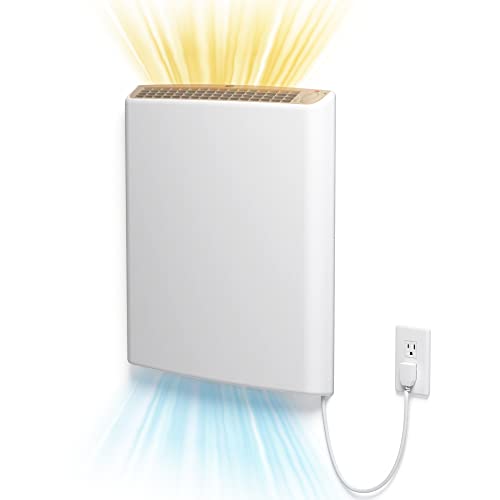
The ENVI unit is a fan-less panel heater designed for silent, continuous operation. Its stack convection panel offers quiet, gentle warmth without blowing dust or allergens, which may benefit allergy sufferers and sensitive environments.
Safety features include a wall-sense sensor that cuts power if the heater is removed, and an auto-dimming indicator light to reduce distraction. The panel maintains a cool surface and is intended for 24/7 use with low energy consumption.
This model suits bedrooms, nurseries, or spaces where noise-free operation and clean heat distribution are priorities. The panel approach differs from ceramic plug-in units by providing steady radiant/convection warmth rather than directed forced-air output.
Brightown Wall Space Heater With Precise Thermostat

The Brightown plug-in heater uses an upgraded ceramic PTC heating plate for fast heat-up and stable output. It supports an LED display, timer function (1–12 hours), and a precise thermostat adjustable in 1°F increments between 60°F and 90°F.
Built-in safety features include overheat protection and ETL certification. The unit emphasizes rapid response time and precise temperature control rather than maximum raw output.
Use cases include office cubicles, dorms, and small rooms where controlled, repeatable temperature settings and overnight timer functionality are valuable. The precise thermostat supports energy-efficient operation by cycling only as needed.
Buying Guide: How To Choose The Right Plug-In Wall Heater
Selecting a plug-in wall heater requires balancing room size, wattage, energy use, and safety features. The following considerations will help match a unit to your space and needs.
Room Size And Wattage
Estimate room square footage to choose appropriate wattage. Lower-watt models (around 400–500W) are suitable for small rooms and supplemental heating. Mid-range units (700–800W) provide faster warm-up and can handle larger small rooms or open floor areas.
Heating Technology
- Ceramic/PTC Heaters: Rapid heat-up and stable output; often quieter and maintain humidity better than coil designs.
- Panel (Fan-less) Heaters: Provide gentle, silent convection/radiant warmth and reduce circulating dust; good for bedrooms or allergy-sensitive spaces.
- Forced-Air With Fan: Faster heat distribution but can be noisier and may circulate dust.
Controls And Programmability
Digital displays, timers, and precise thermostats (±1°F) allow better control and energy savings. Look for programmable timers and ECO or smart modes if you plan scheduled operation or overnight use.
Safety And Certifications
Prioritize units with ETL or UL listing, overheat protection, tip or wall-sense shutoff for removable plug designs, and cool-touch housings. For bathroom or damp locations, verify indoor-use ratings and local electrical code requirements.
Outlet And Installation Considerations
Check whether the heater uses a rotatable plug or requires a grounded outlet. A 180° rotatable plug offers flexibility for upside-down or tight outlets. Avoid using extension cords unless the heater’s manual explicitly permits them.
Noise And Sleep-Friendliness
If noise is a concern, prefer fan-less panel designs or models listing low dB operation. Many plug-in heaters note quiet operation suitable for bedrooms and nurseries.
Energy Efficiency And Operating Cost
Lower wattage units consume less electricity but produce less heat. Consider ECO modes and programmable thermostats to reduce runtime. For continuous background warmth, a fan-less panel may be more energy-efficient than cycling a high-wattage fan heater.
Air Quality And Comfort
Ceramic heaters can retain more moisture in the air compared to some resistive coil heaters. Panel heaters that avoid blowing air may reduce dust circulation, benefiting allergy sufferers.
Durability, Warranty, And Certification
Review manufacturer warranty length and service policy for long-term use. Certification marks (ETL, UL) indicate compliance with safety standards; these are important for continuous or unattended operation.
Comparison Perspectives
- Lowest Energy Draw: Choose 400–500W models for occasional spot heating and to avoid overloading circuits.
- Fastest Heat-Up: Higher-watt ceramic units (700–800W) heat a space more rapidly.
- Quietest Operation: Fan-less panel designs offer silent, steady warmth.
- Most Control: Units with precise thermostats and timers enable efficient, scheduled operation.
- Best For Allergy/Sleep Concerns: Panel heaters that do not blow air or units with ceramic tech that preserve humidity.
Use these criteria to match a heater to the physical room, electrical constraints, and comfort priorities. When in doubt, confirm device certifications and follow manufacturer instructions for safe installation and operation.
Tips for Getting the Best HVAC Prices
- Prioritize Quality Over Cost
The most critical factor in any HVAC project is the quality of the installation. Don’t compromise on contractor expertise just to save money. - Check for Rebates
Always research current rebates and incentives — they can significantly reduce your overall cost. - Compare Multiple Quotes
Request at least three estimates before making your choice. You can click here to get three free quotes from local professionals. These quotes include available rebates and tax credits and automatically exclude unqualified contractors. - Negotiate Smartly
Once you've chosen a contractor, use the proven strategies from our guide — How Homeowners Can Negotiate with HVAC Dealers — to get the best possible final price.