
Finding a reliable plug-in wall heater with a thermostat helps maintain consistent room temperatures without rewiring or complicated installation. Below is a concise comparison table of selected plug-in wall heaters and thermostat options to help you shop more efficiently.
| Product | Type | Thermostat | Power / Features |
|---|---|---|---|
| GiveBest Programmable Space Heater (450W) | Plug-In Outlet Heater | Digital LED Thermostat | 450W, 180° rotatable plug, timer, remote |
| ENVI Panel Wall Heater | Hardwall/Panel Plug-In Style | Built-In Sensor / Safe Operation | Low-watt convection, fan-less, wall-sense safety |
| Ontel Handy Heater Turbo (800W) | Plug-In Ceramic Heater | Adjustable Thermostat + Timer | 800W, heats up to 250 sq ft, 12-hour timer |
| Brightown Wall Space Heater (450W) | Plug-In Outlet Heater | Precise Digital Thermostat | PTC ceramic, LED display, remote, timer |
| GiveBest 800W Plug-In Wall Space Heater | Plug-In Outlet Heater | Precision ±1°F Thermostat | 800W, ECO mode, 180° plug, quiet operation |
Content Navigation
- GiveBest Programmable Space Heater With LED Display
- Envi Plug-In Electric Panel Wall Heater
- Ontel Handy Heater Turbo Wall Outlet Ceramic Heater
- Brightown Wall Space Heater With Precise Thermostat
- GiveBest 800W Plug-In Wall Space Heater With ECO Mode
- Buying Guide: How To Choose A Plug-In Wall Heater With Thermostat
- Power And Room Size
- Thermostat Type And Accuracy
- Installation And Outlet Compatibility
- Safety Features
- Noise And Heating Method
- Energy Efficiency And Modes
- Humidity And Air Quality Considerations
- Controls And Usability
- Availability Of External Thermostats
- Safety And Local Electrical Codes
- Comparison Perspectives
GiveBest Programmable Space Heater With LED Display

This compact plug-in heater operates at 450 watts, offering low energy consumption suited for mild climates and small rooms. The unit includes a digital LED display and an adjustable thermostat covering 60°F to 90°F. A programmable timer and remote control allow scheduled operation without direct access to the outlet.
Key design points include a 180° rotatable plug to accommodate upside-down or tight outlets and ETL listing for safety. The lower wattage reduces the likelihood of tripping circuit breakers when used on typical household outlets, making it appropriate for bedroom, office, or bathroom plug-in use.
Envi Plug-In Electric Panel Wall Heater
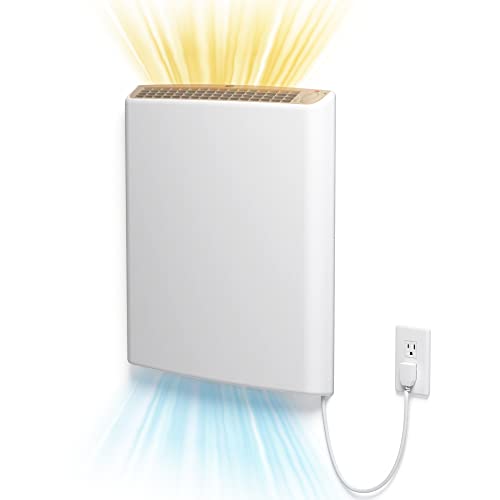
The ENVI panel heater uses a fan-less convection design to deliver silent, even warmth. Its low-wattage operation is intended for continuous or 24/7 comfort as a supplemental heat source without high energy peaks.
Call 888-896-7031 for Free Local HVAC Quotes – Compare and Save Today!
Safety features include a wall-sense sensor that cuts power if the unit is removed from the wall and a design that minimizes airborne dust circulation—useful for allergy-prone spaces. The heater maintains a cool external surface temperature (around 90°F), which supports safe operation around pets and children.
Ontel Handy Heater Turbo Wall Outlet Ceramic Heater

The Ontel Handy Heater Turbo is a plug-in ceramic heater rated at 800 watts and marketed for rooms up to 250 sq ft in ideal conditions. It offers precise thermostat control from 60°F to 90°F and a programmable 12-hour timer for automated cycles.
Ceramic heating elements typically provide quick heat and retain moisture better than some resistive elements, which can reduce dry-air effects. The unit includes auto shut-off and claims quiet operation, making it practical for offices and residential spaces where outlet access is convenient.
Brightown Wall Space Heater With Precise Thermostat

Brightown’s plug-in unit uses a PTC ceramic heating plate that claims fast heat-up (within seconds). The LED display and remote provide user-friendly control, while the built-in timer supports 1 to 12 hour automatic shut-off scheduling.
Call 888-896-7031 for Free Local HVAC Quotes – Compare and Save Today!
The advertised thermostat precision (1°F increments between 60°F and 90°F) enables fine temperature control compared with basic low/medium/high settings. Safety features include overheat protection and ETL certification, which aligns with common expectations for plug-in heaters.
GiveBest 800W Plug-In Wall Space Heater With ECO Mode

This higher-output GiveBest model provides 800 watts with multiple modes: 400W, 800W, ECO, and fan-only. It advertises rapid heat delivery and an ECO mode designed to reduce energy use automatically based on ambient conditions.
Precision thermostat control to ±1°F and quiet operation (below 38 dB in mute mode) target bedroom or nursery use. The 180° rotating plug and compact form factor make it convenient for tighter outlet locations. The remote and LED display allow set-and-forget use.
Buying Guide: How To Choose A Plug-In Wall Heater With Thermostat
Power And Room Size
Determine the square footage of the area you want to heat. Lower-watt models (around 400–500W) suit small rooms and mild climates. Higher-watt units (~800W) can heat larger single rooms faster but may be limited by outlet and circuit capacity.
Thermostat Type And Accuracy
Digital thermostats with precise degree settings give finer control and often improve comfort while reducing runtime. Analog dial thermostats are simpler but less accurate. Look for units that specify a temperature range compatible with your needs (commonly 60°F–90°F).
Installation And Outlet Compatibility
Check plug orientation and clearance. A rotatable plug or compact footprint helps when outlets are in tight spaces. Confirm that the heater’s plug rating matches the outlet and circuit to avoid overloads, especially with 800W units.
Safety Features
Prioritize features like overheat protection, auto shut-off, and wall-sense removal cut-off where applicable. ETL or UL certification signals that the device has undergone independent safety testing.
Noise And Heating Method
Fan-less convection models provide silent operation and gentle warmth, suitable for bedrooms or allergy sufferers because they do not blow dust. Ceramic/PTC units warm quickly and can be quieter than fan-based heaters, but some models include a fan for faster heat distribution.
Energy Efficiency And Modes
Consider models with an ECO mode or multiple power settings to match usage needs. A programmable timer and remote control enable scheduled operation and energy savings. Lower wattage does not always mean better efficiency; thermostat control and cycling behavior determine actual energy use.
Humidity And Air Quality Considerations
Some ceramic heaters claim to retain moisture better than other heating elements. If dry indoor air is a concern, match heater selection with humidification strategies and avoid units that increase dust circulation if allergies are an issue.
Controls And Usability
Decide between simple dial controls and digital displays with remotes. Digital interfaces often provide more precise temperature settings and timers, while analog units are straightforward and durable.
Availability Of External Thermostats
For existing outlet heaters without a precise thermostat, external plugin thermostats (universal analog or digital) can control third-party heaters and extend functionality. Verify compatibility and the temperature control range before purchasing.
Safety And Local Electrical Codes
Ensure the unit’s wattage is appropriate for the intended circuit. Do not plug high-watt devices into extension cords or multi-outlet power strips unless rated for the load. Follow manufacturer instructions for bathroom use and areas with moisture.
Comparison Perspectives
- Lower-Watt Models (450W): Best For Small Rooms, Lower Circuit Load, Longer Run Times
- Higher-Watt Models (800W): Faster Heat, Larger Single Rooms, Requires Circuit Assessment
- Fan-Less Panel Heaters: Silent, Gentle, Better For Allergies And Sleep
- Ceramic/PTC Units: Quick Heat Response, Often Preserve Moisture Better
- External Thermostats: Add Precision To Existing Heaters Without Built-In Controls
When choosing, balance the heater’s power, thermostat precision, safety credentials, and installation constraints. Matching these factors to your room size and usage patterns will yield the best day-to-day performance and energy outcome.
Tips for Getting the Best HVAC Prices
- Prioritize Quality Over Cost
The most critical factor in any HVAC project is the quality of the installation. Don’t compromise on contractor expertise just to save money. - Check for Rebates
Always research current rebates and incentives — they can significantly reduce your overall cost. - Compare Multiple Quotes
Request at least three estimates before making your choice. You can click here to get three free quotes from local professionals. These quotes include available rebates and tax credits and automatically exclude unqualified contractors. - Negotiate Smartly
Once you've chosen a contractor, use the proven strategies from our guide — How Homeowners Can Negotiate with HVAC Dealers — to get the best possible final price.