
Ceiling-mounted porch heaters are ideal for extending outdoor seasons on covered porches, gazebos, and garages. Below is a quick comparison of five ceiling or overhead heaters that suit covered outdoor spaces and garages. Each entry links to the Amazon listing and includes main features to help narrow choices.
| Product | Type | Power / Voltage | Weather Rating |
|---|---|---|---|
| Dr Infrared DR-238 Carbon Infrared | Plug-In Infrared | 900 / 1200 / 1500W, 120V | IP55 |
| ThermoMate Carbon Fiber Patio Heater | Hard-Wired Infrared | 3000W, 220-240V | Noted For Outdoor Use |
| Danluke 1500W Ceiling Mounted Infrared | Hanging Ceiling Heater | 1500W, 120V | IP34 |
| Dr. Infrared 10,260 BTU / 3000W | Ceiling / Wall Mount Infrared | 3000W, 220-240V | IP55 |
| Comfort Zone Hard-Wired Ceiling Mount | Fan-Forced Hard-Wired | 5000W, 240V | Indoor / Workshop Use |
Content Navigation
- Dr Infrared Heater DR-238 Carbon Infrared Outdoor Heater
- ThermoMate Infrared Electric Patio Heater 3000W
- Electric Outdoor Heater 1500W Ceiling Mounted Infrared Patio Heater
- Dr. Infrared 10,260 BTU / 3000W Infrared Heater
- Comfort Zone Hard-Wired Ceiling Mount 5000W Garage Heater
- Buying Guide: Choosing The Right Ceiling Porch Heater
Dr Infrared Heater DR-238 Carbon Infrared Outdoor Heater
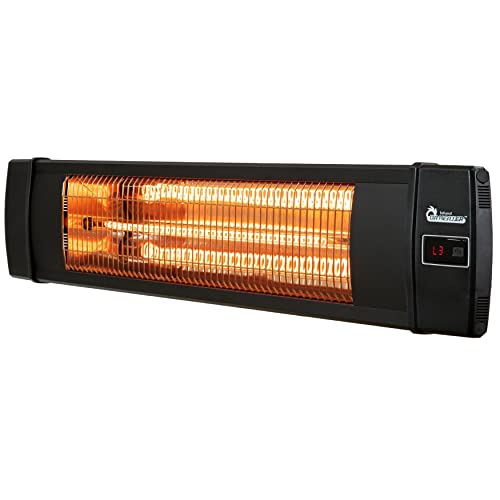
This plug-and-play carbon infrared ceiling heater is rated for indoor and outdoor use with an IP55 weather rating, making it suitable for covered porches and partially exposed patios. It offers three power settings (900W, 1200W, 1500W) on a standard 120V circuit and includes a remote for convenient control. The carbon infrared element provides instant, odorless radiant heat that warms people and surfaces directly rather than heating surrounding air.
Designed for easy installation, the DR-238 is useful for homeowners wanting a portable, non-permanent overhead heating solution that can be plugged into a standard outlet. The IP55 rating indicates good protection from dust and water jets, appropriate for covered outdoor areas but not for fully exposed placement.
ThermoMate Infrared Electric Patio Heater 3000W

The ThermoMate is a hard-wired 3000W carbon fiber infrared heater designed for larger covered patios and semi-enclosed spaces. It claims fast (3-second) radiant heat and is intended to cover roughly 100–130 square feet depending on conditions. Recommended mounting height is approximately 7.9 feet for optimal coverage.
Call 888-896-7031 for Free Local HVAC Quotes – Compare and Save Today!
This unit requires a dedicated 240V hardwired circuit and includes a remote with a 24-hour timer and two power modes (1500W/3000W). The carbon fiber element focuses warmth on occupants and objects, which helps maintain comfort in breezy outdoor conditions better than convection heaters that heat air.
Electric Outdoor Heater 1500W Ceiling Mounted Infrared Patio Heater

This 1500W Danluke ceiling hanging heater is built for all-weather use with an IP34 waterproof and dustproof rating. It provides full 360° infrared coverage and is intended for porches, balconies, and garages. The unit includes safety features like tip-over and overheat protection and comes with a dust cover for offseason storage.
Its 1500W output makes it a practical choice for small to medium covered areas. The IP34 rating offers protection from splashing water, suitable for covered outdoor installations but not for direct exposure to heavy rain. This model suits owners seeking a balanced mix of portability, safety features, and simple ceiling or hanging installation.
Dr. Infrared 10,260 BTU / 3000W Infrared Heater
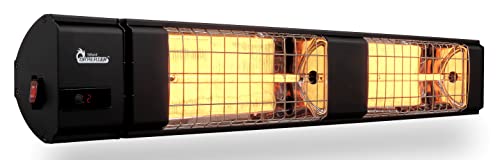
The higher-capacity Dr. Infrared 3000W model provides 10,260 BTU equivalent output with a carbon infrared heating element and an IP55 weatherproof rating. It supports ceiling or wall mounting and includes remote control for switching between power levels and a standby mode.
Call 888-896-7031 for Free Local HVAC Quotes – Compare and Save Today!
As a 220–240V hard-wired solution, this heater is suited for larger covered patios, commercial outdoor dining areas, or workshops where more heat coverage is needed. The IP55 rating provides solid protection in covered outdoor setups. This model emphasizes higher heat output and robust outdoor suitability for semi-enclosed spaces.
Comfort Zone Hard-Wired Ceiling Mount 5000W Garage Heater

The Comfort Zone ceiling heater is a fan-forced, hard-wired 5000W unit designed primarily for garages, workshops, and utility spaces. Unlike infrared radiant heaters, this fan-forced model circulates heated air using louvers and adjustable mounting angle to target specific zones.
Its heavy-gauge steel construction and thermal cut-out safety make it suitable for indoor ceiling-mounted applications where powerful air heating is desired. Because it relies on forced air, it performs best in enclosed or well-sealed spaces rather than open or breezy porches.
Buying Guide: Choosing The Right Ceiling Porch Heater
Selecting a ceiling-mounted porch heater involves evaluating heat type, power requirements, mounting options, weather protections, controls, and safety. Below are core considerations to compare across models.
Heat Delivery: Infrared vs Fan-Forced
- Infrared (Radiant) Heaters warm people and objects directly. They are efficient for covered outdoor areas because wind has less impact on perceived warmth.
- Fan-Forced Heaters heat air and distribute it with a fan. They work well in enclosed garages or workshops but lose efficiency in drafty outdoor settings.
Power And Coverage
- Match wattage to space: 1500W typically handles small to medium covered porches; 3000W suits larger semi-enclosed patios; 5000W and up are aimed at garages and large enclosed areas.
- Consider mounting height: Manufacturer-recommended heights (often around 7–9 feet) affect coverage and perceived warmth.
Electrical Requirements And Installation
- Plug-In Units (120V) are easiest to install—good for retrofit on covered porches with accessible outlets.
- Hard-Wired Units (240V) require a dedicated circuit and professional installation but often offer higher output and cleaner look.
Weather Resistance And Placement
- Look for an IP rating—IP34 and above indicate basic splash and dust protection suitable for covered outdoor use; IP55 provides stronger protection against dust and water jets.
- For fully exposed patios buy purpose-built outdoor-rated fixtures or position heaters under solid overhangs.
Controls And Convenience
- Remote control and timers add convenience when mounted overhead. Many hard-wired models offer remote or wall controls.
- Multiple heat settings help manage energy use and tailor warmth to conditions.
Safety Features
- Important safety options include overheat shutoff, tip-over protection (for hanging or portable models), thermal cut-outs, and grounded plugs.
- Ensure mounting hardware and clearances follow manufacturer guidelines to prevent fire or electrical hazards.
Installation And Mounting Considerations
- Check ceiling structure: joist strength and mounting points must support the heater weight. Hard-wired units often include mounting hardware; plug-in models may need convenient outlet access.
- Consider angled or adjustable mounts if you need directional heat toward seating areas.
Operational Costs And Efficiency
- Infrared heaters can be more efficient outdoors since they heat objects directly, reducing wasted energy compared with heating air.
- Balance wattage and run-time—timers and adjustable settings help limit energy use while maintaining comfort.
Comparing Use Cases
- For covered residential porches, a 1500W–3000W infrared ceiling or hanging unit with an IP34–IP55 rating is often ideal.
- For large semi-enclosed patios or commercial outdoor dining, hard-wired 3000W units or multiple fixtures provide broader coverage.
- For garages and workshops, consider fan-forced ceiling-mounted hard-wired units (higher wattage) when air circulation and whole-space heating are required.
Durability And Maintenance
- Choose models with protective grilles and available dust covers for offseason storage.
- Carbon fiber and quartz elements have different lifespans; check ratings for tube life or expected operating hours.
When comparing specific models, weigh installation complexity, heat type, weather rating, and intended use. A plug-in 1500W infrared model is often sufficient for a small covered porch, while a hard-wired 3000W or larger unit is better for extensive semi-enclosed patios or commercial applications. Fan-forced ceiling heaters fit enclosed garages where warm air circulation is important.
Tips for Getting the Best HVAC Prices
- Prioritize Quality Over Cost
The most critical factor in any HVAC project is the quality of the installation. Don’t compromise on contractor expertise just to save money. - Check for Rebates
Always research current rebates and incentives — they can significantly reduce your overall cost. - Compare Multiple Quotes
Request at least three estimates before making your choice. You can click here to get three free quotes from local professionals. These quotes include available rebates and tax credits and automatically exclude unqualified contractors. - Negotiate Smartly
Once you've chosen a contractor, use the proven strategies from our guide — How Homeowners Can Negotiate with HVAC Dealers — to get the best possible final price.