
Portable immersion heaters offer a practical way to warm baptistry pools, bathtubs, and inflatable or above-ground pools. Below is a concise comparison of top-rated submersible heaters selected for safety features, materials, and power range.
| Product | Power / Type | Key Safety / Material |
|---|---|---|
| 1500W Fully Submersible Electric Titanium Immersion Water Heater | 1500W / Submersible | Titanium, GFCI |
| 240V 3500W Pool Heater | 3500W / 240V Submersible | 316L Steel, CFCI plug |
| 3500W 240V Portable Immersion Water Heater | 3500W / 240V Submersible | 316 Stainless Steel, GFCI, thermostat |
| XCLBTFDC 1800W Immersion Water Heater | 1800W / Submersible | 316 Stainless Steel, Precision Thermostat, GFCI |
| LASTINGCAPE 1500W Titanium Fully Submersible | 1500W / Submersible | Titanium Alloy, Temp Control, GFCI |
Content Navigation
- 1500W Titanium Immersion Heater
- 240V 3500W Pool Heater
- 3500W Immersion Heater With Thermostat
- 1800W Immersion Heater With Thermostat
- 1500W Titanium Portable Heater
- Buying Guide For Portable Baptistry Heaters
- 1. Power And Heating Capacity
- 2. Material And Corrosion Resistance
- 3. Safety Features: GFCI / CFCI / Overload Protection
- 4. Temperature Control Precision
- 5. Cable And Plug Considerations
- 6. Portability And Physical Dimensions
- 7. Compatibility With Container Type
- 8. Installation And Local Electrical Requirements
- 9. Maintenance And Cleaning
- 10. Multiple Perspectives On Selection
- Risk Mitigation Checklist Before Use
- How To Compare Performance
1500W Titanium Immersion Heater

This 1500W Fully Submersible Electric Titanium Immersion Water Heater from JNICEANTAI is designed for portability and corrosion resistance. The titanium construction resists scaling and saltwater exposure while remaining lightweight for transport between locations.
Features highlighted by the seller include suitability for above-ground pools, hot tubs, baptistries, and livestock tanks, plus a compact design for tight spaces. The product includes a built-in safety device described as GFCI protection to reduce risk of electrical leakage. Its portability and small footprint make it suitable for small to medium baptistry volumes where gradual heating is acceptable.
240V 3500W Pool Heater

The JUPSDDTH 240V 3500W immersion heater targets larger pools up to several thousand gallons and is rated for robust heating performance. It specifies compatibility with saltwater and high-temperature operation, along with professional grounding for metal containers.
Call 888-896-7031 for Free Local HVAC Quotes – Compare and Save Today!
Notable safety features include a CFCI shock prevention plug that claims faster leakage detection than standard GFCI devices and a high-temperature resistant silicone-jacketed cable. The heater rod is 316L steel for enhanced corrosion resistance. Because it requires a 240V circuit and professional grounding, it’s more appropriate for fixed installations or venues with appropriate electrical infrastructure.
3500W Immersion Heater With Thermostat

This JNICEANTAI model combines high power with integrated safety and control. The 3500W 240V unit is listed with a built-in thermostat, GFCI protection with auto-reset, and seamless 316L stainless steel construction for improved efficiency and corrosion resistance.
Design details include a 19.7″ rod length for submersion, 24/7 GFCI monitoring with 0.03s cutoff, and an auto-reset function that removes the need for manual restarts after certain trips. The seller recommends professional grounding when used in metal containers. This product is targeted toward larger baptistries or pools where faster heating and precise temperature control are required.
1800W Immersion Heater With Thermostat
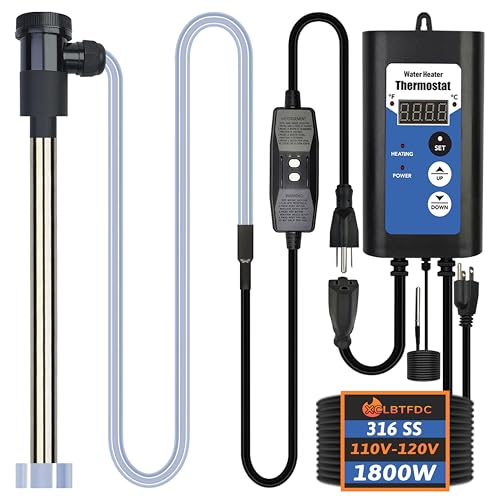
The XCLBTFDC 1800W immersion heater emphasizes precise thermostat control and user-friendly operation. The seller states the thermostat can be adjusted in ±0.1°C increments and supports both Fahrenheit and Celsius displays, which is useful where exact temperature maintenance is desired.
Call 888-896-7031 for Free Local HVAC Quotes – Compare and Save Today!
Safety features detail a full waterproof design, GFCI leakage protection, overload protection, and a silicone gasket at the rod bottom to protect soft-sided containers from overheating. The 316 stainless steel heating element and silicone-wrapped power cable aim to balance rapid heating with durability and easier cleaning.
1500W Titanium Portable Heater
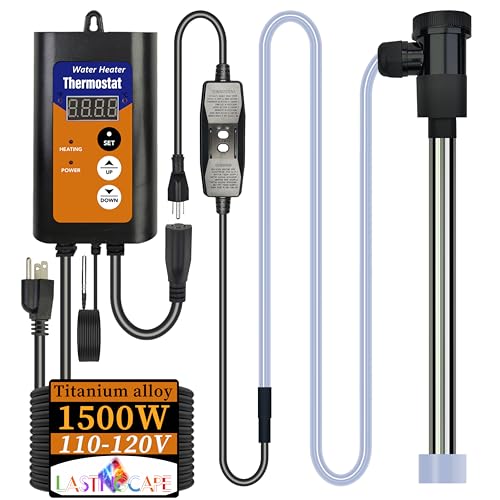
The LASTINGCAPE 1500W Titanium immersion heater is presented as fully waterproof with instant heating behavior and a handheld waterproof control panel. It features titanium alloy construction which is noted for corrosion resistance and ease of cleaning.
Key safety features include GFCI protection, silicone-wrapped cable with double insulation, and an automatic temperature cutoff and restart behavior to maintain set temperature. The product positions itself for spa tubs, baptistry pools, and inflatable or above-ground pools where corrosion resistance and portability are priorities.
Buying Guide For Portable Baptistry Heaters
1. Power And Heating Capacity
Immersion heater wattages vary widely—from around 1500W for small baptistries and bathtubs to 3500W for larger pools. Higher wattage yields faster heating, but required current and circuit type must match your venue’s electrical supply. For larger baptistries or rapid temperature raises, choose higher wattage with appropriate 240V supply and professional electrical setup.
2. Material And Corrosion Resistance
Heater rods are commonly stainless steel (304 or 316) or titanium. 316L stainless steelTitanium
3. Safety Features: GFCI / CFCI / Overload Protection
Electrical safety is paramount around water. Many portable models include built-in GFCI protection to detect leakage and cut power rapidly. Some higher-end units advertise faster detection (e.g., CFCI). Also look for overload protection and auto-reset behavior that limits manual intervention after trips. Verify whether the device requires external grounding or professional installation, especially for metal tanks.
4. Temperature Control Precision
If maintaining a precise water temperature is important, choose models with a reliable thermostat and clear controls. Some heaters offer digital setpoints with ±0.1°C accuracy and both Fahrenheit and Celsius readouts. Precision thermostats reduce overshoot and frequent cycling, which can prolong heater life and improve user comfort during services.
5. Cable And Plug Considerations
Inspect cable length, insulation, and plug type. Silicone-jacketed cables offer heat and water resistance. Ensure the plug matches available circuits; many high-power units require 240V outlets and should be hardwired or used with designated receptacles and professional installation. Confirm local electrical codes for temporary or permanent setups.
6. Portability And Physical Dimensions
Smaller rod length and compact controllers make transport and storage easier for portable baptistries. If you move the heater between locations, weigh the benefits of lighter titanium units or compact designs versus larger, higher-wattage models that may require fixed electrical connections.
7. Compatibility With Container Type
Check manufacturer guidance for use in soft-sided inflatable pools, metal tanks, or permanent concrete/liner baptistries. Some heaters require professional grounding for metal containers or include silicone gaskets and protective bottoms to prevent local overheating in soft materials. Match the heater’s installation notes to your container construction.
8. Installation And Local Electrical Requirements
Higher-powered heaters (especially 240V, 3000–3500W models) often require dedicated circuits and professional grounding. Verify amperage requirements, breaker sizing, and whether hardwiring is necessary. Portable lower-watt models may operate from standard circuits but still require GFCI protection and safe cable routing.
9. Maintenance And Cleaning
Plan for routine descaling and cleaning, particularly in hard-water or chlorinated conditions. Titanium and 316 stainless surfaces are easier to clean and resist scale. Regular inspection of the cable, plug, and GFCI device ensures continued safe operation.
10. Multiple Perspectives On Selection
- Small Church Or Temporary Baptistry: Lower-watt (1500–1800W) portable units with titanium or 316 stainless rods balance safety and portability. They can fit standard outlets and are easier to handle.
- Larger Venue Or Faster Heating Need: 3000–3500W 240V models provide quicker temperature rise but require appropriate 240V supply and professional grounding.
- Saltwater / Harsh Chemistry: Prioritize 316L stainless steel
- Precise Thermal Control: Units with digital thermostats and ±0.1°C accuracy are preferred when consistent water temperature is necessary for ritual comfort.
- Portable Multiuse Deployments: If moving between sites, choose lighter, compact units with durable cable insulation and integrated GFCI protection.
Risk Mitigation Checklist Before Use
- Confirm the heater’s rated voltage matches the available outlet.
- Ensure GFCI is functioning and test it prior to submersion.
- Verify professional grounding where required, especially for metal containers.
- Keep power connections dry and elevated away from splash zones.
- Allow adequate water coverage over the heating element per manufacturer instructions.
- Monitor the heating session, and avoid leaving heaters unattended for extended periods unless designed for continuous safe operation.
How To Compare Performance
When comparing models, evaluate:
- Wattage vs Volume: Estimate water volume and expected temperature rise; more watts equals faster heating.
- Material Durability: Titanium vs 316 stainless for expected chemical exposure.
- Control Features: Presence of thermostat, precision, and display.
- Safety Systems: GFCI/CFCI, auto-reset, overload protection, and cable insulation quality.
- Installation Needs: 120V vs 240V and grounding requirements.
Use the above factors to match a heater to your baptistry size, water chemistry, mobility needs, and electrical capabilities. Proper selection and adherence to safety and local electrical codes will help ensure reliable operation and reduce risk during use.
Tips for Getting the Best HVAC Prices
- Prioritize Quality Over Cost
The most critical factor in any HVAC project is the quality of the installation. Don’t compromise on contractor expertise just to save money. - Check for Rebates
Always research current rebates and incentives — they can significantly reduce your overall cost. - Compare Multiple Quotes
Request at least three estimates before making your choice. You can click here to get three free quotes from local professionals. These quotes include available rebates and tax credits and automatically exclude unqualified contractors. - Negotiate Smartly
Once you've chosen a contractor, use the proven strategies from our guide — How Homeowners Can Negotiate with HVAC Dealers — to get the best possible final price.