
Cold garages, workshops, and sheds need reliable portable heating. This guide reviews top portable garage heaters that balance power, safety, portability, and coverage. Below is a quick comparison of the most relevant models covered in this article.
| Product | Type | Coverage / Output | Key Safety/Features |
|---|---|---|---|
| NewAir NGH160GA00 | Electric Ceramic | Up To 160 Sq. Ft. | Cool-To-Touch, Internal Thermostat, Auto Shut-Off |
| Mr. Heater Portable Buddy MH9BX | Propane Radiant | Up To 225 Sq. Ft. (4,000-9,000 BTU) | Tip-Over Safety Switch, Piezo Igniter |
| NewAir 5600W Portable Electric Garage Heater | High-Power Forced Air | Up To 600 Sq. Ft. (5,600W) | Thermostat, Auto-Fan Temp Control, Steel Body |
| Dreo Space Heater 1500W | Electric PTC Ceramic | Approx. 200 Sq. Ft. | 8 Safety Protections, Thermostat, Oscillation |
| Dura Heat EUH1465 | Forced Air Electric | 1500W PTC (Small Spaces) | Steel Construction, Pivoting Base |
Content Navigation
- NewAir NGH160GA00 Electric Portable Garage Heater
- Mr. Heater Portable Buddy MH9BX Propane Radiant Heater
- NewAir 5600W Portable Electric Garage Heater
- Dreo 1500W Space Heater With Thermostat And Oscillation
- Dura Heat EUH1465 Electric Forced Air Heater
- Buying Guide: How To Choose The Right Portable Garage Heater
- 1. Heater Type And Heat Delivery
- 2. Coverage And Output
- 3. Power Source And Electrical Requirements
- 4. Safety Features
- 5. Portability And Mounting Options
- 6. Noise, Controls, And Comfort Features
- 7. Build Quality And Environmental Suitability
- 8. Energy Efficiency And Operating Cost
- 9. Ventilation And Installation Requirements
- 10. Multi-Perspective Comparison Checklist
NewAir NGH160GA00 Electric Portable Garage Heater

The NewAir NGH160GA00 is an electric ceramic portable heater designed for small garages and workshops. Its features emphasize safety and mobility, making it suited for workbenches and near-task heating.
- Safety First: The unit offers a cool-to-the-touch exterior, an internal thermostat, and an automatic shut-off to reduce overheating risk.
- Portable Warmth: Adjustable temperature control, two heat modes, a tilting head, and a carry handle enable directional heating and easy repositioning.
- Fast Heat: A ceramic heating plate with a 200 CFM fan delivers steady, rapid warmth for focused areas up to about 160 square feet.
Use cases: supplemental heat for a single workstation, quick warm-up for a small garage, or spot heating where portability and safety are priorities. The compact design makes it appropriate for confined spaces where a heavier industrial heater would be impractical.
Mr. Heater Portable Buddy MH9BX Propane Radiant Heater
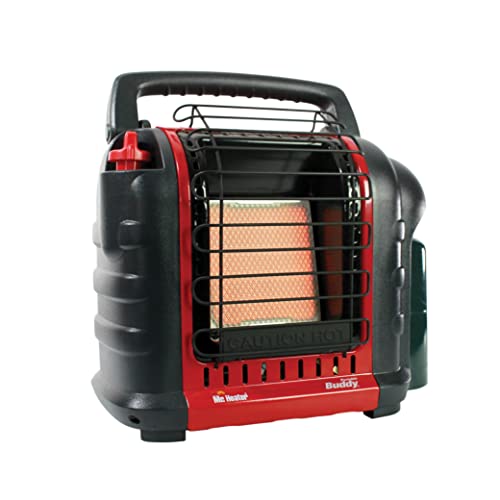
The Mr. Heater Portable Buddy MH9BX is a propane-powered radiant heater that produces direct, sun-like warmth. It is often chosen for remote job sites, workshops without 240V power, and outdoor-covered areas.
Call 888-896-7031 for Free Local HVAC Quotes – Compare and Save Today!
- Powerful Radiant Heat: Infrared technology radiates heat to objects and people; adjustable between 4,000 and 9,000 BTU, suitable for spaces up to about 225 sq. ft.
- Improved Safety: A tip-over safety switch is designed to engage audibly if the unit tips or is jarred, adding a layer of protection during use.
- Reliable Ignition: A durable Piezo igniter provides match-free lighting; no external flame or separate batteries required.
Considerations: propane units require proper ventilation and fuel management. This model is useful where electric supply is limited, or when rapid radiant heat is desired for small to medium spaces. Check local codes for indoor propane use before selecting.
NewAir 5600W Portable Electric Garage Heater

The NewAir 5600W heater is a high-output forced-air electric heater intended for larger garages, two-car bays, and substantial workshops. It focuses on delivering high wattage and durable construction.
- Powerful Fan-Forced Heating: 5,600 watts of output can heat areas up to approximately 600 square feet, suitable for larger enclosed workspaces.
- Rugged Exterior: Steel-bodied with a black powder-coated finish for scratch resistance, intended for garage and light industrial environments.
- Thermostat & Auto-Fan Control: Built-in thermostat and auto-fan temperature control maintain setpoints by cycling the fan as needed.
Ideal deployment: permanent or semi-permanent installation in a large garage or workshop where continuous higher output is required. Requires compatible electrical circuit capacity; verify circuit and breaker specifications before installation.
Dreo 1500W Space Heater With Thermostat And Oscillation

The Dreo 1500W heater is a compact PTC ceramic electric heater with smart features and multiple safety layers. It’s positioned for indoor multi-room use including garages that are part of the home envelope.
Call 888-896-7031 for Free Local HVAC Quotes – Compare and Save Today!
- ETL-Certified Safety: V0 flame-retardant materials and multiple protections such as tip-over, overheat protection, and an automatic power-off capability.
- Fast Ceramic Heating: 1500W PTC element heats quickly and is rated for areas up to roughly 200 sq. ft.; includes thermostat and 70° oscillation for wider coverage.
- Quiet Operation: Designed to operate with low noise (~34 dB), making it suitable for garages that are also used as offices, studios, or bedrooms adjacent to living spaces.
This model fits users who prioritize built-in safety certifications and quieter operation while still needing effective portable heat. The oscillation function helps distribute heat across a wider footprint compared to fixed directional heaters.
Dura Heat EUH1465 Electric Forced Air Heater
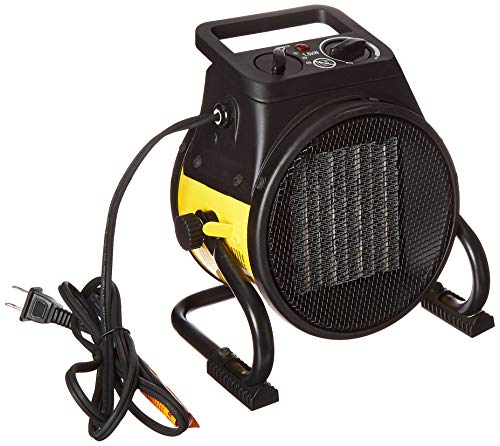
The Dura Heat EUH1465 is a robust forced air electric heater that aims to deliver quick warmth with durable construction for workshop environments.
- Powerful Forced Air: Delivers 1500W of PTC ceramic heating for quick spot warming in small to medium workspaces.
- Rugged Steel Construction: Durable steel body intended for garages, workshops, and commercial areas where equipment needs to withstand tougher conditions.
- Versatile Settings: Heat and fan-only modes provide flexibility as a heater or an air circulator depending on season and use-case.
Deployment notes: The pivoting base enables directional heat control for benches or staging areas. Suitable for users who want a balance of durability and small-footprint forced-air heating without high-voltage requirements.
Buying Guide: How To Choose The Right Portable Garage Heater
Selecting the best portable garage heater depends on space size, power availability, safety needs, and intended use. Below are the primary considerations to compare models effectively.
1. Heater Type And Heat Delivery
Electric ceramic/PTC heaters provide fast, quiet heat and are generally safer for enclosed spaces. Forced-air electric heaters move heated air quickly across larger volumes. Propane radiant heaters produce direct infrared warmth, warming people and objects rather than air, and perform well where electric supply is limited.
2. Coverage And Output
Match heater capacity to garage size: small heaters (~1500W / ~160 sq ft) for single workstations, mid-range for two-car garages or multi-zone spaces, and high-power units (multiple kW) for large workshops. For propane, compare BTU ranges with square footage guidance.
3. Power Source And Electrical Requirements
Confirm circuit capacity and plug type. High-output electric heaters may require dedicated circuits or 240V wiring. Propane options need fuel canisters and proper ventilation. Evaluate whether permanent installation or portable plug-and-play use is planned.
4. Safety Features
Look for overheat protection, tip-over switches, cool-to-touch housings, and certified safety listings (ETL, UL). For indoor propane use, check for CO detectors and follow manufacturer ventilation guidance. Safety certifications indicate additional testing and compliance.
5. Portability And Mounting Options
Portable units with handles, tilt heads, and compact footprints are ideal for temporary placement. Wall- or ceiling-mountable forced-air heaters suit permanent setup. Consider cord length, carry handle, and weight for frequent repositioning.
6. Noise, Controls, And Comfort Features
Ceramic and PTC heaters tend to be quieter. If noise matters, check decibel ratings. Thermostats, timers, oscillation, and multiple heat modes add control and efficiency. Remote controls and programmable timers support convenience.
7. Build Quality And Environmental Suitability
Steel-bodied units offer durability for garages and shops; plastic housings can be lighter for indoor living spaces. Consider moisture and dust exposure in workshop environments and select housings and IP ratings accordingly.
8. Energy Efficiency And Operating Cost
Compare wattage and heat delivery efficiency. Radiant heaters can feel warmer at lower energy inputs for occupants because they heat objects directly. For sustained heating of a large volume, higher-wattage electric units will consume more energy but may be necessary for required comfort levels.
9. Ventilation And Installation Requirements
Propane units require ventilation planning and safe fuel handling. Hardwired or permanently mounted electric heaters may need professional installation. Verify clearances from combustibles and follow manufacturer installation instructions.
10. Multi-Perspective Comparison Checklist
- Space Size Vs. Heater Output — match coverage to model specs.
- Availability Of Power — 120V, 240V, or propane supply considerations.
- Safety Features & Certifications — tip-over, overheat, ETL/UL listings.
- Portability vs. Permanence — carry handle versus wall/ceiling mount.
- Noise And Comfort Controls — thermostat, timer, oscillation.
- Durability For Workshop Use — steel body and protective finishes.
- Operating Environment — dust, moisture, and ventilation needs.
Use this guide to weigh tradeoffs: choose radiant propane for immediate warmth without electrical power, electric PTC/ceramic models for quieter, safer indoor use, and high-output forced-air units when heating larger garages is required. Cross-check electrical requirements and safety certifications before purchase.
Tips for Getting the Best HVAC Prices
- Prioritize Quality Over Cost
The most critical factor in any HVAC project is the quality of the installation. Don’t compromise on contractor expertise just to save money. - Check for Rebates
Always research current rebates and incentives — they can significantly reduce your overall cost. - Compare Multiple Quotes
Request at least three estimates before making your choice. You can click here to get three free quotes from local professionals. These quotes include available rebates and tax credits and automatically exclude unqualified contractors. - Negotiate Smartly
Once you've chosen a contractor, use the proven strategies from our guide — How Homeowners Can Negotiate with HVAC Dealers — to get the best possible final price.