
Quick Picks: This guide compares compact, vehicle-compatible, and workshop heaters suited for forklift cabs and nearby work areas. Below is a summary table of selected options and core features to help narrow choices at a glance.
| Product | Type | Key Advantage |
|---|---|---|
| Amazon Basics Ceramic Space Heater | Electric Ceramic | Very compact and lightweight |
| Dura Heat EUH1465 Forced Air Heater | Electric Forced Air | Rugged steel construction, PTC ceramic |
| Mr. Heater MH9BXRV Buddy | Propane Radiant | Indoor-safe radiant heat, auto-shutoff features |
| NewAir 5600W Garage Heater | High-Power Electric | High output for large workspaces |
| HCALORY 12V Diesel Heater | Diesel Air Heater (12V) | Direct 12V vehicle power, toolbox design |
Content Navigation
- Amazon Basics Ceramic Space Heater — Mini 500W
- Dura Heat EUH1465 Forced Air Heater — 1500W PTC
- Mr. Heater MH9BXRV Buddy — 4,000–9,000 BTU Radiant Heater
- NewAir 5600W Portable Electric Garage Heater — High Output
- HCALORY 12V Portable Diesel Heater — Toolbox 8KW 6L
- Buying Guide — How To Choose A Portable Heater For A Forklift
Amazon Basics Ceramic Space Heater — Mini 500W

This compact ceramic heater is designed for small enclosed spaces and offers immediate localized warmth using 500W ceramic coils. Its size and 1.4 lb weight make it easy to position inside a forklift cab or on a nearby shelf.
- Core Features: Compact design (5.8″ x 3.4″ x 6.0″), lightweight portability, 500W quick heat with ceramic coils.
- Use Case: Best for short bursts of supplemental heat in confined cabs or for operators who want a lightweight heater they can move between machines.
- Considerations: Requires mains power or an appropriate inverter; limited heating capacity compared to higher-watt or fuel-based units.
Dura Heat EUH1465 Forced Air Heater — 1500W PTC
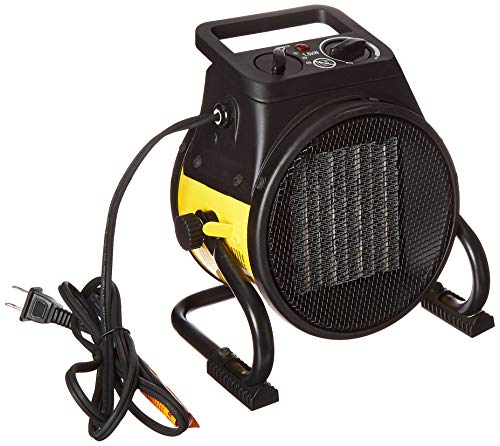
The Dura Heat EUH1465 is a forced-air PTC ceramic heater built with a steel body for durability. It offers a powerful 1500W heating element and selectable heat or fan-only modes, suitable for workshops and enclosed equipment bays.
- Core Features: 1500W PTC heating, rugged steel construction, pivoting base for directional airflow.
- Use Case: Appropriate for warming small to medium workspaces near forklifts or providing targeted heat to a cab area if mounted securely and powered correctly.
- Considerations: Requires AC power and mounting consideration; metal housing improves durability in rough environments.
Mr. Heater MH9BXRV Buddy — 4,000–9,000 BTU Radiant Heater
Call 888-896-7031 for Free Local HVAC Quotes – Compare and Save Today!
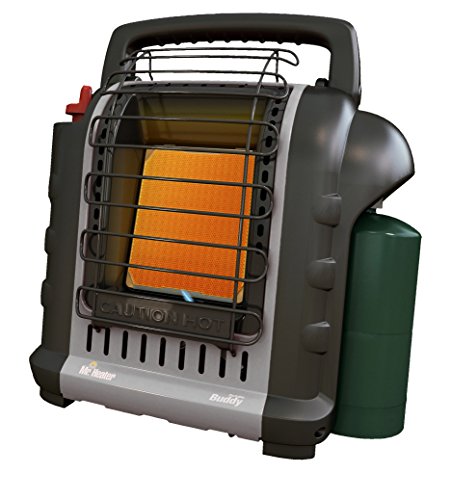
The Mr. Heater Buddy is a portable propane radiant heater designed for indoor/outdoor use and clean-burning operation. It offers high heat output suitable for quickly warming a cab or enclosed area up to its specified coverage.
- Core Features: 4,000–9,000 BTU range, indoor-safe design, auto shut-off for tip-over, pilot loss, and low oxygen.
- Use Case: Good when on-board fuel or external propane is preferred and ventilation/oxygen monitoring are in place. Radiant heat works well for direct operator warmth.
- Considerations: Propane combustion produces exhaust and requires ventilation and compliance with facility rules; check indoor fuel policies and CO/oxygen safety measures.
NewAir 5600W Portable Electric Garage Heater — High Output

The NewAir unit is a high-output electric garage heater built for larger areas. With 5,600W capacity and thermostat control, it maintains temperatures across a workshop or bay that houses forklifts and charging stations.
- Core Features: 5,600W fan-forced heating, steel body with powder coat finish, thermostat and auto-fan control.
- Use Case: Ideal for warming entire service bays, loading docks, or larger indoor areas rather than a single cab; keeps ambient workspace temperatures steady.
- Considerations: Requires substantial AC power and appropriate circuit capacity; not directly vehicle-mounted—best as facility-level heating.
HCALORY 12V Portable Diesel Heater — Toolbox 8KW 6L

The HCALORY 12V diesel air heater is designed for vehicle use, offering a compact toolbox form with a 6L tank and dual power modes. It runs on 12V/24V DC for direct forklift or vehicle compatibility.
- Core Features: 8KW heating capacity, built-in 6L tank, 12V/24V DC and 110V/220V AC support, app control, high-altitude capability.
- Use Case: Well-suited for forklifts with accessible 12V power and where on-board fuel is acceptable. Provides sustained warm airflow and integrates with vehicle electrical systems.
- Considerations: Installation involves fuel plumbing and exhaust routing; follow safety and carbon-monoxide mitigation best practices for enclosed spaces.
Buying Guide — How To Choose A Portable Heater For A Forklift
Selecting the right heater for a forklift cab involves assessing power source, safety, mounting, and ventilation. This guide compares options so you can match features to operational needs.
Call 888-896-7031 for Free Local HVAC Quotes – Compare and Save Today!
Power Source And Compatibility
- 12V/24V Diesel Or Electric Vehicle Heaters: Ideal for on-board heating without relying on facility AC. Require fuel plumbing, exhaust management, or direct DC wiring. Examples: diesel air heaters like HCALORY.
- AC Electric Heaters: Easy to use in facilities with sufficient circuits. Require inverter or shore power to use in a cab. Examples: Dura Heat, NewAir, Amazon Basics.
- Propane/Butane Heaters: High heat density and portability but produce combustion byproducts. Use only where ventilation, CO monitoring, and facility rules permit. Examples: Mr. Heater Buddy.
Safety Features To Prioritize
- Tip-Over Protection: Essential for portable units in mobile equipment.
- Low-Oxygen/CO Shutoff: Critical for any combustion heater used in semi-enclosed cabs or buildings.
- Overheat and Flame Retardant Materials: Improves operator and asset safety.
- Exhaust Routing And Ventilation: Combustion heaters must have planned exhaust and adequate airflow.
Mounting, Form Factor, And Durability
- Mounting Options: Check for brackets, pivoting bases, or toolbox designs that can be secured to a cab or chassis.
- Size And Weight: Compact units are easier to relocate; heavy-duty steel units offer durability in rough environments.
- Environmental Resistance: Powder-coated or steel housings resist abrasion and workplace wear.
Heat Output And Coverage
- Direct Radiant Heat: Effective for warming operators quickly (good for small cabs). Propane radiant units excel here.
- Forced-Air Or Ducted Air: Better for circulating warm air throughout a cab or workspace. Diesel air heaters and PTC forced-air units are examples.
- Wattage/BTU Match: Choose a unit whose output fits cab volume or the area you intend to warm; higher BTU/Wattage equals greater coverage but requires more power or fuel.
Power Supply Constraints And Installation
- Circuit Capacity: High-watt electric heaters need proper circuit breakers and wiring; plan electrical upgrades if necessary.
- Inverters: If using AC units on a forklift, select an inverter sized for heater start-up and continuous draw.
- Fuel Logistics: For diesel or propane options, consider storage, refueling workflows, and safety protocols.
Maintenance, Reliability, And Service
- Filter And Fuel System Maintenance: Diesel heaters require periodic servicing and fuel-filter checks.
- Element And Fan Durability: Fan-forced electric units should have robust motors for continuous use.
- Parts Availability: Pick brands with accessible replacement parts and documented installation guidance.
Comparison Perspectives
- Operator Comfort: Radiant heaters or directed forced-air units heat occupants quickly; evaluate warm-up time.
- Facility Safety: For indoor warehouses, electric or properly vented diesel systems reduce combustion risks compared with unvented propane.
- Mobility And Flexibility: Lightweight ceramic units are portable but limited in output; toolbox diesel heaters provide independence from AC but require installation.
Match the heater type to your operational priorities—on-board power independence, workspace heating capacity, or strict indoor safety rules—and ensure any installation follows manufacturer guidance and local safety codes.
Tips for Getting the Best HVAC Prices
- Prioritize Quality Over Cost
The most critical factor in any HVAC project is the quality of the installation. Don’t compromise on contractor expertise just to save money. - Check for Rebates
Always research current rebates and incentives — they can significantly reduce your overall cost. - Compare Multiple Quotes
Request at least three estimates before making your choice. You can click here to get three free quotes from local professionals. These quotes include available rebates and tax credits and automatically exclude unqualified contractors. - Negotiate Smartly
Once you've chosen a contractor, use the proven strategies from our guide — How Homeowners Can Negotiate with HVAC Dealers — to get the best possible final price.