
The guide below compares five powerful electric heaters suitable for homes, garages, and workspaces. Each selection focuses on heating performance, safety features, and portability so you can match a heater to your space and needs.
| Product | Brand | Key Feature |
|---|---|---|
| Remington 1500W Heavy-Duty Electric Heater | Remington | Designed For Garages/Worksites, Fast Heat |
| QOWETU 17″ Oscillating Space Heater | QOWETU | 70° Oscillation, Remote Control, ECO Mode |
| Dreo 1500W PTC Space Heater | Dreo | Advanced PTC System, Wide Temperature Range |
| Dura Heat EUH1465 Forced Air Heater | Dura Heat | Rugged Steel Body, Fan-Only Option |
| GiveBest Portable Ceramic Heater | GiveBest | Two Heat Levels, Thermostat Control |
Content Navigation
- Remington 1500W Heavy-Duty Heater
- QOWETU 17 Inch Oscillating Heater
- Dreo Space Heater With Advanced PTC
- Dura Heat Forced Air Heater
- GiveBest Portable Ceramic Heater
- Buying Guide: Choosing A Powerful Electric Heater
- Heat Output And Coverage
- Heating Technology: PTC Ceramic vs Forced Air vs Fan
- Controls, Precision, And Energy Management
- Safety Features And Certifications
- Durability And Build Quality
- Noise, Placement, And User Comfort
- Energy Efficiency And Operating Costs
- Matching Heater To Application
- Maintenance And Longevity
- Comparative Summary
Remington 1500W Heavy-Duty Heater

Overview: The Remington REM-222A-120 is a portable, heavy-duty 1500W room heater built to warm up to 165 sq ft, targeting garages, workshops, and jobsites.
Heating Performance: Two heat settings with an adjustable thermostat provide quick heat that the unit claims reaches the target space in seconds. The design emphasizes direct, concentrated warming rather than whole-home distribution.
Durability & Use Cases: Marketed for workshop and jobsite use, the heater’s build supports frequent transport and tougher environments. The compact form factor supports placement on floors or benches.
Safety & Controls: Basic controls include a thermostat and heat settings. Intended use in workspaces suggests the unit is optimized for localized heat where heavier construction is required.
Call 888-896-7031 for Free Local HVAC Quotes – Compare and Save Today!
QOWETU 17 Inch Oscillating Heater

Overview: QOWETU’s 17-inch PTC ceramic heater delivers 1500W power with 70° oscillation, a touchscreen, and a remote control for convenience up to 25 feet away.
Heating Coverage & Distribution: The 70° wide-angle oscillation increases coverage roughly 20%, making the heater suitable for rooms up to 200 sq ft. PTC ceramic elements enable rapid warm-up and stable output.
Energy & Modes: ECO mode automatically adjusts power based on the difference between set and ambient temperature for improved efficiency. A 12-hour timer and thermostat enable scheduled operation and temperature maintenance.
Safety & Portability: A hidden handle and a 6 ft cord support portability. The unit emphasizes quiet operation and is positioned for bedrooms, living rooms, offices, and similar indoor spaces.
Dreo Space Heater With Advanced PTC

Call 888-896-7031 for Free Local HVAC Quotes – Compare and Save Today!
Overview: Dreo’s 1500W PTC space heater features an updated heat funnel and Hyperamics system to increase warm air reach and deliver fast heating.
Performance & Control: The heater offers precise temperature control from 41–95°F in 1°F increments via an enhanced NTC chipset. This granularity supports energy-conscious temperature management.
Safety Features: Multiple protections include tilt-detection sensor, overheat protection, V0 flame retardant materials, and an ETL-certified safety plug. These features aim to reduce common heater hazards.
Design & Reach: The funnel design is intended to push heated air farther than standard heaters, improving circulation in medium-sized rooms and supporting quicker warm-up times.
Dura Heat Forced Air Heater
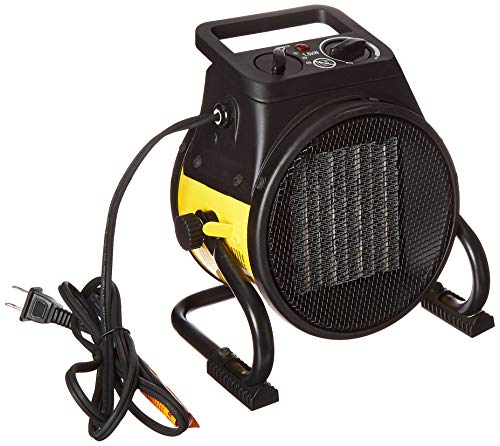
Overview: The Dura Heat EUH1465 combines a 1500W PTC ceramic element with a rugged steel body and a pivoting base for directional forced air heating.
Built For Tough Environments: Steel construction and a pivoting base make this model suited for garages, workshops, and commercial spaces where durability and directed airflow matter.
Functionality: Offers heat and fan-only settings, allowing use as a hot air circulator in winter or a fan in warmer months. The forced-air design supports rapid temperature rise in specific zones.
Application: Best used where localized, robust airflow and a durable housing are priorities, such as in workspaces requiring resilient equipment.
GiveBest Portable Ceramic Heater

Overview: GiveBest’s compact ceramic heater provides two heat levels (1500W/750W), a cool fan mode, and a thermostat adjustable from 0°F to 158°F.
Versatility: The 2-in-1 heater/fan design supports year-round use. Thermostat control cycles the unit on and off to maintain set temperatures, which can improve energy efficiency for focused heating.
Safety Systems: Includes flame-retardant materials, automatic overheat shutoff, and tip-over protection that restores operation when uprighted. The built-in handle enhances portability for targeted use.
Use Cases: Suited for offices, bedrooms, and desks where a compact, quiet unit with precise thermostat control and seasonal utility is preferred.
Buying Guide: Choosing A Powerful Electric Heater
Selecting the right electric heater requires balancing heat output, coverage, safety, efficiency, and application. The sections below examine these factors from multiple comparison perspectives.
Heat Output And Coverage
Look At The Wattage And Technology. Most portable room heaters rated as “powerful” are around 1500W, which is a common maximum for standard household circuits. PTC ceramic elements offer quick warm-up and stable output, while forced-air designs provide higher directional airflow.
Estimate Required Coverage. For general guidance, 1500W heaters commonly warm areas between 150–200 sq ft, depending on insulation, ceiling height, and outdoor temperature. Workspace heaters intended for garages may deliver more direct radiant warming but less even room distribution.
Heating Technology: PTC Ceramic vs Forced Air vs Fan
PTC Ceramic: Rapid heating, self-regulating element that reduces overheat risk and maintains consistent output. Good for bedrooms and living areas.
Forced Air (Fan-Driven): Provides powerful directional airflow, warming the air quickly and useful in workshops or zones requiring fast temperature changes.
Fan-Only Mode: Adds year-round utility; a heater with a fan-only option doubles as a circulator in warmer months.
Controls, Precision, And Energy Management
Thermostat Accuracy. Precise temperature control (for example, 1°F increments) improves comfort and reduces runtime. Units with ECO modes or smart power selection can lower energy use by matching output to the gap between set and ambient temperatures.
Timer And Remote Control. Timers support scheduled operation; remote controls add convenience for room use. Touchscreen interfaces are common on compact indoor models, while rugged workshop heaters favor simpler dials.
Safety Features And Certifications
Essential safety elements include tip-over protection, overheat shutoff, flame-retardant materials, and certified plugs (ETL or similar). For heaters used in workshops or near dust and debris, stronger tip-over sensors and durable housings are preferable.
Look For Third-Party Certification. ETL or UL listings indicate the unit has been tested to recognized safety standards.
Durability And Build Quality
Indoor Heater Construction. Plastic housings with V0 flame-retardant ratings are common for bedrooms and living areas. For garages and job sites, steel-bodied units with protective grilles and pivoting bases stand up better to physical stress.
Portability Considerations. Handles, compact footprints, and manageable cord lengths contribute to ease of placement. If moving between floors or rooms, a light but sturdy design is preferred.
Noise, Placement, And User Comfort
Noise Levels. PTC ceramic heaters are typically quieter than fan-only forced-air heaters. Consider bedroom use when quiet operation is a priority.
Placement Tips. Place heaters on level, non-combustible surfaces and away from flammable materials. Maintain unobstructed airflow around the intake and outlet to avoid overheating and maximize efficiency.
Energy Efficiency And Operating Costs
Understand Limits Of Portable Heaters. A 1500W heater draws about 12.5 amps on a 120V circuit; runtime and thermostat use determine operating costs. Using targeted heating in a single room is usually more efficient than heating the entire home.
Efficiency Features To Seek. ECO modes, accurate thermostats, and timers reduce wasted run time. Insulation and sealing drafts in the heated room will improve perceived warmth and lower runtime.
Matching Heater To Application
Bedrooms And Living Areas: Choose PTC ceramic models with quiet operation, precise thermostats, remote control, and timers.
Home Offices And Dorms: Compact form factor, portability, and safety features are priorities. Thermostatic control helps maintain comfort while minimizing energy use.
Garages And Workshops: Prioritize rugged construction, forced-air capability or focused radiant output, and stable bases. Look for units rated for heavier use and easy directional airflow.
Maintenance And Longevity
Basic Care. Keep air inlets clear of dust and debris, and inspect cords and plugs periodically. Units with durable elements and protective grilles generally require less frequent maintenance.
Expected Life Span. Ceramic PTC elements are typically long-lived with minimal degradation, while mechanical fans in forced-air units may require more attention over time.
Comparative Summary
- Best For Worksites: Rugged, forced-air units with steel housings deliver directional heat and durability.
- Best For Bedrooms/Offices: PTC ceramic models with quiet operation, precise thermostats, and ECO modes are ideal.
- Best All-Season Use: Heaters with fan-only modes add summer utility while providing winter heating.
Weigh the trade-offs among heat distribution, control precision, safety certifications, and build quality to select the heater that matches your space and usage patterns. Matching the appliance to the intended environment will maximize comfort and long-term performance.
Tips for Getting the Best HVAC Prices
- Prioritize Quality Over Cost
The most critical factor in any HVAC project is the quality of the installation. Don’t compromise on contractor expertise just to save money. - Check for Rebates
Always research current rebates and incentives — they can significantly reduce your overall cost. - Compare Multiple Quotes
Request at least three estimates before making your choice. You can click here to get three free quotes from local professionals. These quotes include available rebates and tax credits and automatically exclude unqualified contractors. - Negotiate Smartly
Once you've chosen a contractor, use the proven strategies from our guide — How Homeowners Can Negotiate with HVAC Dealers — to get the best possible final price.