
Choosing the right propane heater for construction sites requires balancing heat output, portability, and safety features. The table below summarizes five top options selected for job site and workshop use, highlighting their key specs to help you compare quickly.
| Product | Type | BTU | Coverage |
|---|---|---|---|
| Mr. Heater MH60QFAV | Forced Air | 30,000–60,000 | Up To Job Site Needs |
| Mr. Heater 125,000 Forced Air | High-Capacity Forced Air | 125,000 | Large Job Sites / Warehouses |
| Flame King 60,000 | Forced Air | 60,000 | Up To 1,500 Sq. Ft. |
| Mr. Heater MH25CVX | Convection | 25,000 | Up To 625 Sq. Ft. |
| Gasland MHA18BN | Radiant/Portable | 18,000 | Up To 450 Sq. Ft. |
Content Navigation
Mr. Heater 60,000 BTU Portable

This forced-air propane heater provides variable output from 30,000 to 60,000 BTU, suitable for medium to large job sites. It uses QBT (Quiet Burner Technology) to operate approximately 50% quieter than standard forced-air units. The unit can run for extended periods on a 20 lb tank, and its variable control helps match heat output to job conditions.
Key features: variable BTU output, quieter operation, and portability. This heater is designed for contractors who need a balance of high heat and manageable noise levels on-site. Ensure proper ventilation when used in semi-enclosed areas and follow manufacturer guidelines for fuel hose and regulator connections.
Mr. Heater 125,000 BTU Forced Air

This high-capacity forced-air heater is built for large construction areas and cold-weather job sites. With 125,000 BTU output it delivers powerful, rapid heating for expansive spaces and is suited for contractors needing a robust heat source during heavy-duty operations.
Call 888-896-7031 for Free Local HVAC Quotes – Compare and Save Today!
Key features listed include Quiet Burner Technology, a 10 ft hose and regulator, and a high-temperature limit switch. As with all high-output propane heaters, authoritative compliance with local ventilation and clearance requirements is necessary for safe operation.
Flame King 60,000 BTU Portable

The Flame King model is a stainless steel forced-air heater rated at 60,000 BTU with advertised coverage up to 1,500 square feet. It targets outdoor and semi-enclosed work areas where durable construction and continuous heat are required.
Safety features include a built-in safety fuel shutoff, a fire detection system, and a safety tilt shutoff. The unit also supplies auto piezo ignition and a gas control button for user-adjustable heat. For contractors, these built-in protections support safer operation in active jobsite environments.
Mr. Heater 25,000 BTU Convection
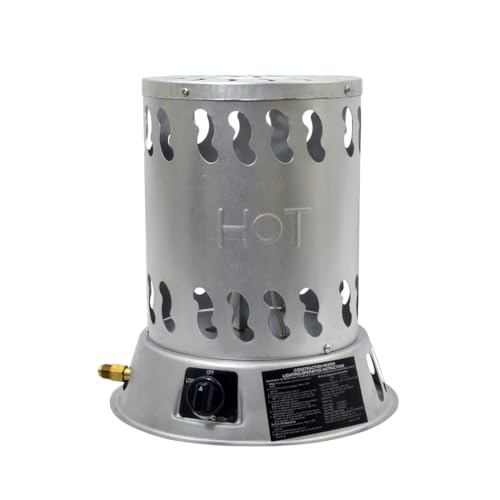
This convection propane heater produces 25,000 BTU and is engineered to warm enclosed workspaces such as garages and smaller job sites up to about 625 sq. ft. It runs without electricity using a standing pilot and thermo-electric safety valve, making it applicable where power may not be available.
Call 888-896-7031 for Free Local HVAC Quotes – Compare and Save Today!
Included accessories and features: 10 ft propane hose and regulator, P.O.L. tank connection, and Piezo ignition. The design emphasizes steady, distributed heat rather than focused radiant heat, which can be preferable for enclosed workshop heating.
Gasland 18,000 BTU Radiant Heater

The Gasland MHA18BN is a portable radiant propane heater rated at 18,000 BTU for smaller job sites, shops, and garages. It focuses on direct, sun-like warmth to heat people and objects within its effective area rather than heating large volumes of air.
Notable features: tip-over and low-oxygen shut-off, LP regulator hose included, and a mobile cabinet design with wheels and carry handle. This model suits contractors needing a highly portable, electricity-free heater for localized warmth and emergency use during power outages.
Buying Guide: How To Choose A Propane Construction Heater
Selecting the right propane heater for construction use involves multiple considerations: required heat output, duty cycle, portability, safety features, and fuel logistics. Below are key decision points and comparative perspectives to guide selection.
Determine Required BTU And Coverage
- Small Workshops And Closets: 10,000–25,000 BTU (radiant or convection) for targeted or enclosed spaces.
- Medium Job Sites Or Garages: 30,000–60,000 BTU (forced-air or convection) for broader coverage and faster temp rise.
- Large Warehouses Or Open Construction Areas: 60,000+ BTU (high-capacity forced-air) for rapidly warming large volumes of air.
Forced-Air Vs Convection Vs Radiant
- Forced-Air: Rapidly heats large areas; best for open or ventilated job sites. Consider noise level and exhaust clearance needs.
- Convection: Warms room air more evenly; suited for enclosed garages and workshops where sustained comfort is desired.
- Radiant: Heats objects and people directly; efficient for targeted workstations or when quick local warmth is required.
Portability And Fuel Considerations
- Tank Size And Runtime: Match heater runtime to your workflow. Large jobs may need frequent tank swaps or bulk supply.
- Weight And Handles: Look for integrated handles or wheels if moving between sites is frequent.
- Hose And Regulator: Confirm included hose length and regulator compatibility with local fittings and safety standards.
Safety Features And Compliance
- ODS And Low-Oxygen Shutoff: Essential for indoor or semi-enclosed use to prevent oxygen depletion.
- Tip-Over And Flame Failure Shutoff: Critical on busy job sites where units may be knocked over.
- High-Temperature Limits: Prevent overheating and protect internal components.
- Ventilation Requirements: Forced-air units typically require more ventilation; follow manufacturer clearances closely.
Noise, Duty Cycle, And Operational Considerations
- Noise Level: QBT or “quieter” technology can reduce worker disruption on-site.
- Continuous Operation: For extended shifts, choose units with proven run times and serviceability.
- Electrical Needs: Some heaters require electricity for fans or ignition; convection and radiant models may operate without power.
Installation, Maintenance, And Warranty
- Ease Of Setup: Models with included hoses, regulators, and clear instructions minimize downtime.
- Serviceability: Consider availability of replacement parts and field repairs for higher-use units.
- Manufacturer Support: Check warranty coverage and support channels for professional use cases.
Comparative Perspective: If you need quick, broad heating for open job sites, forced-air high-BTU units are optimal. For enclosed garages where fuel efficiency and stable temperatures matter, convection heaters work well. For targeted, mobile warmth or emergency scenarios, radiant portable heaters deliver direct comfort with lower power needs.
Tips for Getting the Best HVAC Prices
- Prioritize Quality Over Cost
The most critical factor in any HVAC project is the quality of the installation. Don’t compromise on contractor expertise just to save money. - Check for Rebates
Always research current rebates and incentives — they can significantly reduce your overall cost. - Compare Multiple Quotes
Request at least three estimates before making your choice. You can click here to get three free quotes from local professionals. These quotes include available rebates and tax credits and automatically exclude unqualified contractors. - Negotiate Smartly
Once you've chosen a contractor, use the proven strategies from our guide — How Homeowners Can Negotiate with HVAC Dealers — to get the best possible final price.