
Choosing The Right Propane Garage Heater requires balancing output, safety features, and thermostat control. The table below summarizes five relevant propane garage heaters with thermostats or thermostat-capable operation to help you compare coverage, BTU, and key safety features at a glance.
| Product | BTU / Coverage | Key Features |
|---|---|---|
| Mr. Heater MHVFGH30LPBT | 30,000 BTU / Up To 1,000 Sq. Ft. | Blue Flame, Thermostat, ODS, Electronic Ignition |
| Mr. Heater MHVFBF20LPT | 20,000 BTU / Up To 700 Sq. Ft. | Blue Flame, Thermostat, ODS, Wall Mount |
| ProCom ML300TBA-B | 30,000 BTU / Up To 1,400 Sq. Ft. | Blue Flame, Built-In Thermostat Control, Wall Mount/Base |
| Dyna-Glo 30,000 BTU Vent Free | 24,000–30,000 BTU / Up To 1,000 Sq. Ft. | Blue Flame, Variable Output, Wall Mount |
| Mr. Heater F260560 Big Maxx | 80,000 BTU / Up To 2,000 Sq. Ft. | High-Capacity Unit Heater, Natural Gas, Venting Options, LP Conversion Kit |
Content Navigation
- Mr. Heater 30,000 BTU Vent Free Propane
- Mr. Heater 20,000 BTU Blue Flame Wall Heater
- ProCom 30,000 BTU Ventless Propane Heater
- Dyna-Glo 30,000 BTU Vent Free Wall Heater
- Mr. Heater Big Maxx 80,000 BTU Unit Heater
- Buying Guide: How To Choose A Propane Garage Heater
- 1. Determine Required BTU And Coverage
- 2. Thermostat Type And Control
- 3. Venting: Vent-Free vs. Vented
- 4. Safety Features
- 5. Installation And Mounting
- 6. Fuel Supply And Conversion
- 7. Efficiency And Runtime
- 8. Noise, Maintenance, And Durability
- 9. Local Codes And Indoor Use Considerations
- Comparison Perspectives
Mr. Heater 30,000 BTU Vent Free Propane

This 30,000 BTU Blue Flame vent-free propane heater is designed to warm spaces up to approximately 1,000 square feet. It includes a built-in thermostat for maintaining set temperatures and a battery-powered electronic ignition for easier starts. The heater incorporates an oxygen depletion sensor (ODS) that shuts the unit off if oxygen levels drop below a safe threshold.
Additional technical points: fuel consumption at max output is specified, and the unit is rated to operate reliably at elevations up to 4,500 feet. The design supports continuous or intermittent operation with accurate thermostat control suitable for garages, cold rooms, cabins, and sunrooms.
Mr. Heater 20,000 BTU Blue Flame Wall Heater
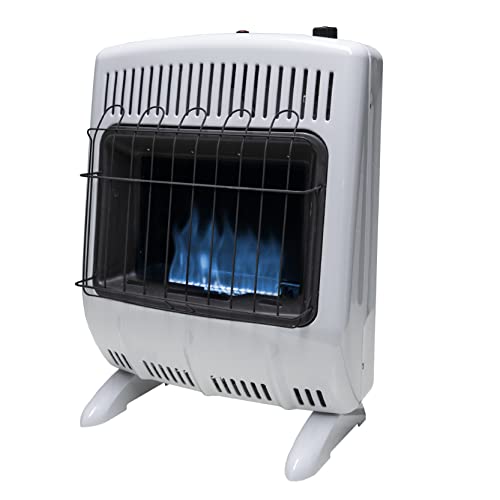
The 20,000 BTU vent-free wall heater provides a lower-output option for smaller garages, workspaces, or insulated single-car bays, covering up to about 700 square feet. It features a thermostat for accurate temperature control and a battery-powered electronic ignition for reliable starts.
Call 888-896-7031 for Free Local HVAC Quotes – Compare and Save Today!
Safety is emphasized through the factory-standard oxygen depletion sensor (ODS). Fuel use is specified per hour at maximum output, and the unit is rated for consistent performance at elevations up to 4,500 feet. The wall-mounted format conserves floor space, and the white finish suits common garage interiors.
ProCom 30,000 BTU Ventless Propane Heater

The ProCom 30,000 BTU Blue Flame mini heater is positioned for residential use but also suits insulated garages. The unit lists a thermostat with High/Medium/Low control settings and can be mounted on a wall or placed on the floor with included base feet.
Design notes include a slim profile for tighter spaces and flexibility in installation. The manufacturer rates this heater for up to 1,400 square feet depending on insulation and ambient conditions. Thermostat control and multiple heat settings can help reduce runtime and fuel consumption when used as a zonal garage heater.
Dyna-Glo 30,000 BTU Vent Free Wall Heater

The Dyna-Glo vent-free blue flame heater offers variable heat output from 24,000 to 30,000 BTU and is rated to warm spaces up to approximately 1,000 square feet. It uses convective heat distribution similar to central heating and installs as a wall-mounted unit.
Call 888-896-7031 for Free Local HVAC Quotes – Compare and Save Today!
Features emphasize the blue flame combustion method and suitability for rooms where vent-free operation is permitted. The product is listed as liquid-propane ready. Review installation clearances and local codes before selecting vent-free units for enclosed garage spaces.
Mr. Heater Big Maxx 80,000 BTU Unit Heater
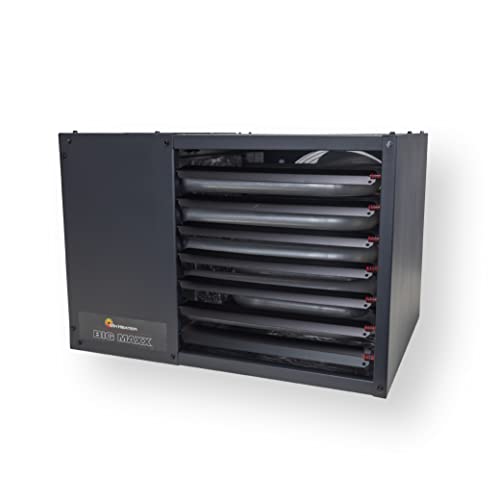
The Big Maxx unit heater is a high-capacity option designed for large garages and workshops up to about 2,000 square feet. It ships with angle brackets and an LP conversion kit; thermostat, hose, and regulator are not included with the basic package.
Key technical points: it operates on natural gas but includes conversion provisions for propane, requires clearances (minimum 8 ft. from floor to base), and supports venting categories 1 and 3 depending on installation. This unit is intended for larger, unobstructed spaces where forced heat output is required.
Buying Guide: How To Choose A Propane Garage Heater
Selecting the proper propane garage heater with thermostat involves matching heat output, installation type, safety systems, and local code compliance to your garage’s needs.
1. Determine Required BTU And Coverage
- Measure the garage volume (square feet × ceiling height). Use BTU-per-square-foot estimates: roughly 25–50 BTU per sq. ft. depending on insulation and climate.
- Choose a higher BTU if ceilings are high, doors leak, or insulation is minimal. For insulated single-car garages, 10,000–30,000 BTU is common; larger uninsulated spaces need higher outputs or multiple units.
2. Thermostat Type And Control
- Built-In Thermostat provides direct onboard control for setpoint maintenance and can reduce fuel use by cycling the unit.
- External Thermostat Compatibility allows placement of the sensor where you need it most (near the workspace rather than beside the heater).
- Look for units with adjustable settings (High/Medium/Low) for flexible heat management.
3. Venting: Vent-Free vs. Vented
- Vent-Free (Blue Flame or Infrared) offers high efficiency and easy installation but requires adherence to local codes and proper ventilation practices. These rely on ODS safety devices.
- Direct Vent / Unit Heaters vent combustion products outside and may be required or preferred in certain jurisdictions or for attached garages sharing living space.
4. Safety Features
- Oxygen Depletion Sensor (ODS) is essential on vent-free units to shut down the heater if oxygen falls too low.
- Flame Failure And Overheat Protection help prevent unsafe operation.
- Check clearances and combustible material distances in product specs and installation manuals.
5. Installation And Mounting
- Wall-Mounted Units save floor space and are typical for blue flame and radiant wall heaters.
- Ceiling Or Floor Clearance requirements affect where you can place the heater—verify minimum clearances before purchase.
- Professional installation is recommended for direct vent and high-BTU natural gas units; some vent-free models may be DIY-friendly if local codes permit.
6. Fuel Supply And Conversion
- Propane Cylinder Access and hose/regulator compatibility are practical considerations for portable or temporary setups.
- Some units ship as natural gas but include LP conversion kits; confirm conversion requirements and parts needed.
7. Efficiency And Runtime
- Check listed fuel consumption at maximum BTU to estimate runtime against cylinder size.
- Thermostat control and zoning reduce runtime and fuel use versus continuous operation.
8. Noise, Maintenance, And Durability
- Blue Flame Convection Heaters are generally quieter and rely on air convection; radiant and unit heaters may create different sound profiles.
- Regular maintenance includes checking burners, pilot systems, and connections for leaks or soot.
9. Local Codes And Indoor Use Considerations
- Confirm whether vent-free propane heaters are allowed in garages in your city or state and whether your garage shares air with living areas.
- Ensure carbon monoxide and smoke detectors are present and functioning when using combustion appliances in or near living spaces.
Comparison Perspectives
- Small Garage/Workshop: Consider 10k–30k BTU vent-free wall heaters with thermostat control for easy zoning and efficient operation.
- Large Or High-Ceiling Garage: High-capacity unit heaters (60k–80k BTU) or multiple wall units are appropriate; venting and professional installation may be necessary.
- Intermittent Use: Units with fast ignition and accurate thermostats minimize fuel waste and warm spaces on demand.
- Permanent Attached Garage Or Shared Airspace: Favor vented/direct vent solutions to avoid indoor combustion byproducts entering living areas; check local codes.
Final Note: Verify product specifications, clearances, and local code compliance before purchase and installation. Professional advice or certified installers can ensure safe operation tailored to your garage layout and fuel supply.
Tips for Getting the Best HVAC Prices
- Prioritize Quality Over Cost
The most critical factor in any HVAC project is the quality of the installation. Don’t compromise on contractor expertise just to save money. - Check for Rebates
Always research current rebates and incentives — they can significantly reduce your overall cost. - Compare Multiple Quotes
Request at least three estimates before making your choice. You can click here to get three free quotes from local professionals. These quotes include available rebates and tax credits and automatically exclude unqualified contractors. - Negotiate Smartly
Once you've chosen a contractor, use the proven strategies from our guide — How Homeowners Can Negotiate with HVAC Dealers — to get the best possible final price.