
Choosing the right propane heater for a garage or workshop balances output, safety features, installation, and ventilation. Below is a quick comparison of top propane heaters suited for enclosed or semi-enclosed workspaces to help you evaluate options by capacity, portability, and safety.
| Product | Type | Heat Output | Coverage |
|---|---|---|---|
| Mr. Heater Propane Unit Heater MHU80LP | Ceiling/Unit Heater | 80,000 BTU | Up To ~1000 Sq. Ft. |
| Mr. Heater Portable Buddy MH9BX | Portable Radiant Heater | 4,000–9,000 BTU | Up To ~225 Sq. Ft. |
| Mr. Heater MHVFBF20LPT Blue Flame | Wall-Mounted Vent-Free | 20,000 BTU | Up To ~700 Sq. Ft. |
| Mr. Heater 4000–18000 BTU Portable LP Heater | Portable Cabinet Heater | 4,000 / 9,000 / 18,000 BTU | Up To ~450 Sq. Ft. |
| Gasland MHA18BN Propane Radiant Heater | Portable Radiant Cabinet | 18,000 BTU | Up To ~450 Sq. Ft. |
Content Navigation
- Mr. Heater Propane Unit Heater MHU80LP
- Mr. Heater Portable Buddy MH9BX
- Mr. Heater MHVFBF20LPT 20,000 BTU Blue Flame
- Mr. Heater 4000–18000 BTU Portable LP Heater
- Gasland MHA18BN Propane Radiant Heater
- Buying Guide: Choosing A Propane Heater For Garage Or Workshop
- 1. Match Heat Output To Space
- 2. Installation Type: Portable, Wall, Or Ceiling Unit
- 3. Safety Features To Prioritize
- 4. Venting And Indoor Combustion Considerations
- 5. Fuel Supply And Hose/Regulator Compatibility
- 6. Portability Versus Permanence
- 7. Thermostat And Control Requirements
- 8. Noise, Air Movement, And Comfort Type
- 9. Safety Equipment And Monitoring
- 10. Code, Insurance, And Local Regulations
- Comparison Perspectives
Mr. Heater Propane Unit Heater MHU80LP

This 80,000 BTU ceiling-mounted propane unit heater is designed for workshop or garage spaces where permanent heating is preferred. It includes two angle brackets for mounting and a spark ignition with a self-diagnostic control module for reliable starts.
Key features from the listing indicate it heats up to approximately 1,000 square feet and is intended for fixed installation. Because it’s a unit heater, expect professional-grade airflow distribution, making it suitable for open bays and workshops with higher ceilings.
Installation requires proper venting, fuel hookup, and clearance considerations. The heater’s design favors garages used for extended work periods where centralized, high-output heat and ceiling mounting reduce floor clutter.
Mr. Heater Portable Buddy MH9BX
Call 888-896-7031 for Free Local HVAC Quotes – Compare and Save Today!
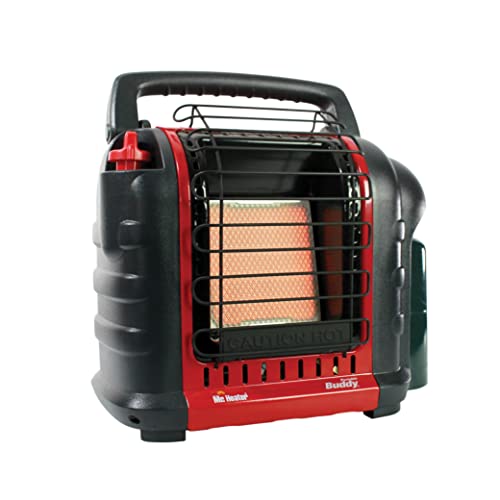
The Portable Buddy MH9BX is a compact radiant propane heater delivering 4,000 to 9,000 BTU. It employs infrared technology to heat objects and people directly rather than heating air, which is efficient for spot heating near a workbench or a mechanic’s bay.
Safety features include an improved tip-over switch and a durable Piezo igniter for matchless starts. The listing cites suitability for spaces up to 225 sq. ft., making this model useful for individual workstations, small workshops, or garage corners where intermittent warmth is needed.
Because it’s portable and small, ventilation and CO monitoring remain critical when used in enclosed garages. This unit is best used for targeted heating rather than as a primary whole-garage system.
Mr. Heater MHVFBF20LPT 20,000 BTU Blue Flame
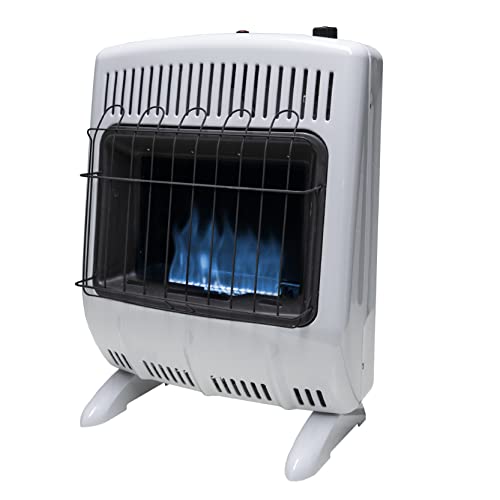
This 20,000 BTU vent-free blue flame wall heater is designed to warm enclosed rooms up to roughly 700 sq. ft. It features an electronic ignition (battery included) and a thermostat for temperature control.
Safety is addressed with an Oxygen Depletion Sensor (ODS), which shuts down the unit if air quality or oxygen levels fall below safe thresholds. The unit is specified for indoor use and for elevations up to 4,500 feet.
Call 888-896-7031 for Free Local HVAC Quotes – Compare and Save Today!
As a vent-free option, the heater is attractive for garages or workshops seeking wall-mounted permanent heat without a flue. However, use requires adherence to ventilation guidance, local codes, and monitoring for safe indoor combustion byproducts.
Mr. Heater 4000–18000 BTU Portable LP Heater
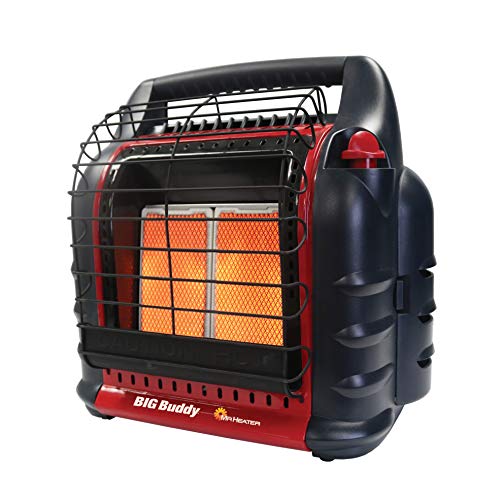
This variable-output cabinet heater supports 4,000, 9,000, or 18,000 BTU settings and can run on a standard propane cylinder or larger tanks with an added hose. The listing notes coverage up to 450 sq. ft. on higher settings.
Features include a simple single-knob control, piezo ignition, and automatic safety shutoff upon tip-over. The design is portable yet robust enough for workshop use where flexibility between small- and medium-area heating is useful.
Because multiple heat levels are available, this heater is practical for garages that require varying warmth across seasons or for moving between indoor projects and covered outdoor tasks.
Gasland MHA18BN Propane Radiant Heater

The Gasland MHA18BN is an 18,000 BTU portable radiant cabinet heater offering mobility and a self-contained propane tank housing. The listing highlights built-in tip-over and low-oxygen shutoff systems for safety during garage or workshop use.
Its cabinet format with wheels and an easy-carry handle is intended for moving the heater between work areas. The unit is described as not requiring electricity, which is advantageous during power outages or in locations where cord management is a concern.
Radiant heating characteristics make it effective for localized warmth, and the enclosed tank reduces visual clutter while keeping the fuel source protected during movement in a work environment.
Buying Guide: Choosing A Propane Heater For Garage Or Workshop
Selecting a propane heater for a garage or workshop requires evaluating heat output, safety features, installation type, ventilation needs, and usage patterns. The following considerations help match a unit to your space and use case.
1. Match Heat Output To Space
Estimate the garage or workshop area in square feet and consider ceiling height and insulation. As a rule of thumb, low-output portable units (4,000–9,000 BTU) are for spot heating and small spaces. Mid-range units (18,000–20,000 BTU) suit medium garages or single-bay workshops. High-output unit or forced-air heaters (80,000 BTU and above) are designed for large, open-bay spaces.
2. Installation Type: Portable, Wall, Or Ceiling Unit
- Portable Radiant/Cabinet Heaters — Good for spot heating and flexibility; easier to move but require careful ventilation and CO monitoring.
- Wall-Mounted Vent-Free Units — Provide clean installation without flues but require adequate fresh air and adherence to local codes.
- Ceiling/Unit Heaters — Provide broad distribution for larger spaces; usually require professional installation and proper venting and fuel connections.
3. Safety Features To Prioritize
Look for tip-over switches, low-oxygen/ODS sensors, automatic shutoff valves, and reliable ignition systems. For permanent installations, ensure certification and compliance with local building codes. For portable units, tip-over protection and low-oxygen shutoff are vital in enclosed garages.
4. Venting And Indoor Combustion Considerations
Propane combustion produces water vapor and trace gases. Vent-free appliances are convenient but depend on adequate air exchange. Consider installing carbon monoxide detectors and providing periodic fresh air. For larger forced-air or natural gas conversions, professional venting may be required.
5. Fuel Supply And Hose/Regulator Compatibility
Confirm compatibility with standard propane cylinders versus permanent tank hookups. Some units allow dual-tank or larger-tank connections for extended runtime. Check whether a regulator, hose, or conversion kit is included or required.
6. Portability Versus Permanence
Choose portability when you need to move heat between workstations or outbuildings. For a dedicated shop that needs consistent ambient heat, wall or ceiling-mounted units provide more even coverage and reduce trip hazards.
7. Thermostat And Control Requirements
Thermostatic control improves efficiency for longer run times. Simple manual knobs can be fine for intermittent use, while programmable thermostats or digital controls provide better temperature management and fuel savings for main-shop use.
8. Noise, Air Movement, And Comfort Type
Radiant heaters directly heat people and objects and are often quieter. Forced-air propane heaters offer rapid distribution but can circulate dust and create more noise. Consider the comfort profile you need for tasks requiring precision or quiet.
9. Safety Equipment And Monitoring
Always pair propane combustion devices with carbon monoxide detectors, adequate ventilation, and adherence to manufacturer clearances. For garages used as workspaces, maintain routine checks on connections, hoses, and detector batteries.
10. Code, Insurance, And Local Regulations
Check local building codes for vent-free appliances and fuel-burning equipment. Some jurisdictions limit vent-free use in certain occupancies. Insurance policies may require certified installation or restrict certain heater types—verify before purchase or installation.
Comparison Perspectives
- For Spot Heating Near A Bench: Portable radiant units like the Portable Buddy or small cabinet heaters are efficient and flexible.
- For Whole-Garage Warmth In A Small To Medium Shop: Vent-free wall heaters or larger portable cabinet heaters provide broader coverage with thermostat control.
- For Large Open Bays Or Commercial Workshops: Ceiling-mounted unit heaters or high-output forced-air propane units offer the capacity needed for larger volumes.
- For Intermittent Use Or Power Outages: Non-electric propane models that don’t rely on house power (or with battery ignition) maintain heat during outages.
By matching the heater’s BTU output, installation style, and safety features to the size and ventilation of your garage or workshop, you can select a model that efficiently meets heating needs while maintaining safe indoor air quality and operational convenience.
Tips for Getting the Best HVAC Prices
- Prioritize Quality Over Cost
The most critical factor in any HVAC project is the quality of the installation. Don’t compromise on contractor expertise just to save money. - Check for Rebates
Always research current rebates and incentives — they can significantly reduce your overall cost. - Compare Multiple Quotes
Request at least three estimates before making your choice. You can click here to get three free quotes from local professionals. These quotes include available rebates and tax credits and automatically exclude unqualified contractors. - Negotiate Smartly
Once you've chosen a contractor, use the proven strategies from our guide — How Homeowners Can Negotiate with HVAC Dealers — to get the best possible final price.