
Choosing the right propane heater for a garage depends on space, ventilation, and heating goals. Below is a concise comparison of selected propane heaters suited to garages, followed by detailed product sections and a comprehensive buying guide.
| Product | Type | BTU | Coverage |
|---|---|---|---|
| Mr. Heater Propane Unit Heater MHU80LP | Wall/Ceiling Unit | 80,000 BTU/hr | Up To ~1,000 sq ft (manufacturer guidance) |
| Mr. Heater MH60QFAV 60,000 BTU | Portable Forced-Air | 30,000–60,000 Variable BTU | Medium Garages, Workshops |
| Mr. Heater 125,000 BTU Forced Air F271390 | High-Capacity Forced-Air | 125,000 BTU/hr | Large Garages, Shop Spaces |
| Mr. Heater MHVFBF20LPT 20,000 BTU Blue Flame | Vent-Free Wall Heater | 20,000 BTU/hr | Up To ~700 sq ft |
| Modine Hot Dawg Propane 75,000 BTU | Unit Heater (Power Vented) | 75,000 BTU Input | Garage/Shop Use |
Content Navigation
- Mr. Heater Propane Unit Heater 80,000 BTU/Hr. MHU80LP
- Mr. Heater MH60QFAV 60,000 BTU Portable Propane Forced Air Heater
- Mr. Heater 125,000 BTU Forced Air Propane Heater F271390
- Mr. Heater MHVFBF20LPT 20,000 BTU Blue Flame Vent Free Propane Heater
- Modine Hot Dawg Gas Fired Unit Heater Propane 75000 BTU
- Buying Guide: How To Choose A Propane Heater For Your Garage
Mr. Heater Propane Unit Heater 80,000 BTU/Hr. MHU80LP

This 80,000 BTU propane unit heater is designed for mounting to a ceiling or wall in garages and workshops. The unit includes two angle brackets for installation and features a spark ignition with a self-diagnostic control module to assist in reliable startups.
- Heating Capacity: Rated to heat up to roughly 1,000 sq ft depending on insulation and climate.
- Mounting: Includes angle brackets for secure ceiling mount installations to distribute heat downward.
- Controls & Safety: Spark ignition and self-diagnostic control module improve reliability; typical installations require separate thermostat and regulator.
- Best Use: Garages and shops needing a permanently mounted propane heating solution with high output.
Mr. Heater MH60QFAV 60,000 BTU Portable Propane Forced Air Heater

The MH60QFAV is a portable forced-air propane heater with variable output between 30,000 and 60,000 BTU. It uses QBT technology for reduced noise and runs on standard 20 lb propane tanks for flexible placement in garages and job sites.
- Variable Output: Allows tailoring heat output to conditions, improving efficiency and runtime on a single tank.
- Quieter Operation: QBT (Quiet Burner Technology) reduces noise compared to standard forced-air models.
- Runtime: Can run up to around 14 hours on low setting with a 20 lb tank, depending on use.
- Best Use: Garages needing a portable, high-output heater that can be moved where heat is required.
Mr. Heater 125,000 BTU Forced Air Propane Heater F271390

Call 888-896-7031 for Free Local HVAC Quotes – Compare and Save Today!
The F271390 is a high-capacity forced-air propane heater intended for the largest garages, workshops, or commercial bays. It emphasizes robust airflow and long hose/regulator accessories for flexible installation and fuel connection.
- High Output: 125,000 BTU suitable for large, poorly insulated spaces or multi-bay garages.
- Accessories: Includes a 10 ft hose and regulator for remote tank placement and safer setups.
- Safety Features: High-temperature limit switch and Quiet Burner Technology to moderate noise and heat limits.
- Best Use: Large garages or workshop bays that require rapid, high-volume heating.
Mr. Heater MHVFBF20LPT 20,000 BTU Blue Flame Vent Free Propane Heater
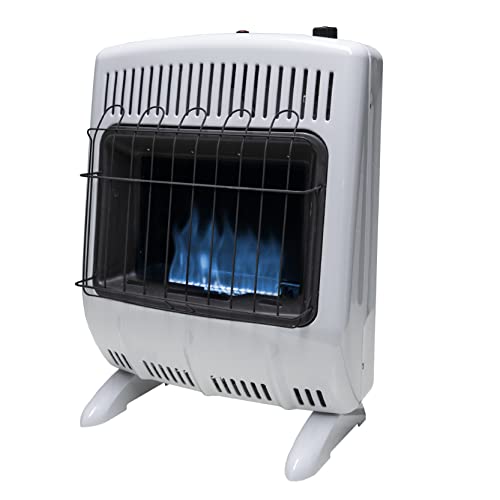
The MHVFBF20LPT is a vent-free blue flame wall heater that delivers steady, wall-mounted heat with an onboard thermostat and an Oxygen Depletion Sensor (ODS) for safety. Vent-free units require attention to ventilation and are best used in well-managed spaces.
- Output & Coverage: Up to 20,000 BTU designed to warm rooms up to roughly 700 sq ft under ideal conditions.
- Controls: Built-in thermostat and battery-powered electronic ignition simplify operation.
- Safety: Includes ODS (automatic low oxygen shut-off) to stop operation if oxygen levels fall.
- Best Use: Smaller garages or attached workspaces where vent-free operation is allowed and ventilation can be controlled.
Modine Hot Dawg Gas Fired Unit Heater Propane 75000 BTU

The Modine Hot Dawg is a power-vented unit heater commonly used in garages and commercial spaces. It offers an input around 75,000 BTU with high efficiency and a design focused on ducted or vented installations.
- Power Vented Design: Suitable when combustion products must be vented to the outdoors to meet codes or indoor air quality requirements.
- Efficiency: Designed for efficient heat delivery in garage and shop environments.
- Application: Well-suited to garages where venting is feasible and code-compliant installations are required.
- Best Use: Garages that require combustion venting and prefer a unit-style heater from a known HVAC brand.
Buying Guide: How To Choose A Propane Heater For Your Garage
Selecting a propane heater for a garage requires balancing heat output, ventilation, installation, and safety. This guide covers key factors that affect performance and compliance.
Call 888-896-7031 for Free Local HVAC Quotes – Compare and Save Today!
1. BTU Output And Garage Size
Estimate the square footage of your garage and typical insulation level. As a rough guide:
- 10,000–30,000 BTU: Small insulated garages or targeted spot heating.
- 30,000–80,000 BTU: Medium to large single-car or two-car garages.
- 80,000–125,000+ BTU: Large shops, multi-bay garages, or poorly insulated spaces.
Always consider local climate and desired indoor temperature when sizing equipment.
2. Venting: Vent-Free Vs Vented Unit Heaters
- Vent-Free (Blue Flame): No external exhaust; efficient and easy to install but requires careful ventilation and code compliance. Best where indoor air quality and regulations allow.
- Power Vented / Direct Vent: Requires ducting or venting to the outside; preferred where combustion exhaust must be removed for safety or code reasons.
- Forced-Air Propane Heaters: Often portable and may not require external venting but produce exhaust and should be used in well-ventilated spaces or outdoors unless specified for indoor use.
3. Installation And Mounting Options
- Ceiling/Wall-Mounted Unit Heaters: Permanently installed, distribute heat broadly, and free up floor space.
- Portable Forced-Air Heaters: Offer flexibility to move heat where needed; secure placement and clearance are essential.
- Clearance Requirements: Check manufacturer minimum clearances from combustibles and minimum floor/ceiling distances before installation.
4. Safety Features And Code Compliance
- ODS (Oxygen Depletion Sensor): Required on vent-free units to shut off on low oxygen conditions.
- Tip-Over Switches: Important for portable units to prevent accidents.
- High Temperature Limit Switch: Shuts the unit down if overheating occurs.
- Local Codes: Verify local building codes and fire codes regarding indoor propane appliance use and required venting.
5. Fuel Supply And Placement
Decide whether a portable tank (20 lb) or a permanent bulk propane hookup is appropriate. Consider hose length, regulator specifications, and safe tank placement away from doors and ignition sources.
6. Noise, Controls, And Runtime
- Noise Level: Forced-air models can be loud; QBT or quiet burner technologies reduce noise.
- Thermostat Compatibility: Some units require external thermostats for precise control; others have onboard thermostats.
- Runtime: Variable output and tank size influence how long a unit runs between refills.
7. Maintenance And Durability
- Service Access: Choose units with accessible components for routine maintenance and inspection.
- Durable Construction: Commercial-grade heaters often have longer lifespans in demanding garage environments.
- Parts Availability: Ensure replacement parts like regulators, hoses, or ignition modules are available from the manufacturer.
8. Comparison Perspectives
Compare units across multiple perspectives to match your needs:
- Performance: BTU output versus actual space and insulation.
- Safety & Venting: Whether vent-free operation is acceptable or external venting is required.
- Portability vs Permanent Install: Deciding between flexible temporary heating and a hard-mounted permanent heater.
- Operational Costs: Fuel consumption rates at typical settings, and expected runtime on a standard tank.
Using these factors, select a propane heater that meets your garage size, local regulations, and daily usage. Proper installation and adherence to safety guidelines will ensure effective and safe heating performance.
Tips for Getting the Best HVAC Prices
- Prioritize Quality Over Cost
The most critical factor in any HVAC project is the quality of the installation. Don’t compromise on contractor expertise just to save money. - Check for Rebates
Always research current rebates and incentives — they can significantly reduce your overall cost. - Compare Multiple Quotes
Request at least three estimates before making your choice. You can click here to get three free quotes from local professionals. These quotes include available rebates and tax credits and automatically exclude unqualified contractors. - Negotiate Smartly
Once you've chosen a contractor, use the proven strategies from our guide — How Homeowners Can Negotiate with HVAC Dealers — to get the best possible final price.