
Choosing the right propane heater regulator affects safety, heat output, and appliance compatibility. The following selection highlights common regulator types, fittings, and hose setups suited for grills, fire pits, patio heaters, and generators.
| Product | Type / Feature | Best For |
|---|---|---|
| GasOne 5 Feet Propane Regulator Fire Pit Grill Heater Replacement Propane Hose | Low-pressure hose, QCC-1, 80,000 BTU | Grills, fire pits needing flexible hose |
| Mr. Heater F276136 Propane Low Pressure Regulator | Low-pressure P.O.L. soft nose fitting | BBQ grills and low-pressure appliances |
| 3 Feet Propane Regulator Hose With Tank Gauge (DOZYANT) | QCC-1 hose, built-in gauge, 3/8″ female flare | Replacement hoses for Weber/Camp Chef and similar |
| Azdele Two Stage Propane Regulator With Gauge | Two-stage regulator, gauge, POL inlet | Applications needing steady pressure: generators, ranges |
| SHINESTAR 5 FT Propane Regulator And Hose With Gauge | Stainless braided hose, QCC-1, built-in gauge | Patio heaters, grills where hose protection is desired |
Content Navigation
- GasOne 5 Feet Propane Regulator Fire Pit Grill Heater
- Mr. Heater F276136 Propane Low Pressure Regulator
- 3 Feet Propane Regulator Hose With Propane Tank Gauge
- Azdele Two Stage Propane Regulator With Gauge
- SHINESTAR 5 FT Propane Regulator And Hose With Gauge
- Buying Guide: How To Choose A Propane Heater Regulator
- Regulator Type: Single-Stage Vs Two-Stage
- Pressure Classification: Low Pressure Vs High Pressure
- Fittings And Compatibility
- BTU Capacity And Flow
- Hose Length And Construction
- Gauges And Monitoring
- Certifications And Safety
- Installation And Maintenance
- Comparison Perspectives
- Common Mistakes To Avoid
- Final Selection Checklist
GasOne 5 Feet Propane Regulator Fire Pit Grill Heater
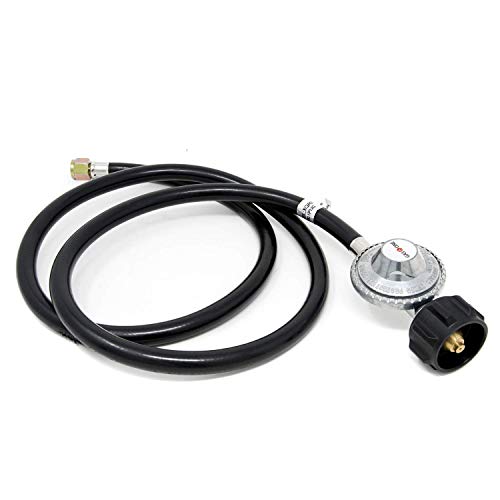
This kit is described as a low-pressure propane regulator and hose rated up to 80,000 BTU. It features fiber-reinforced hose material, brass fittings, and a Type-1 (QCC-1) propane tank connection. The hose uses a 3/8-inch inside flare fitting and an outside diameter of 5/8 inches and measures 5 feet.
- Compatibility: Suits many grills, fire pit tables, and heaters using QCC-1 style tanks.
- Durability: Rubber hose with brass connections for a leak-resistant connection.
- Capacity: Manufacturer-stated max of 80,000 BTU—suitable for most patio appliances.
Mr. Heater F276136 Propane Low Pressure Regulator

The Mr. Heater F276136 is a straightforward low-pressure regulator with a soft-nose P.O.L. fitting and a 3/8″ female pipe thread by POL interface. This style is typical for backyard grills and many low-pressure appliances.
- Fittings: P.O.L. soft-nose for tank-side connection, common on older or heavier tanks.
- Use Case: Designed for BBQ grills and low-pressure appliances where a simple, proven regulator is required.
- Simplicity: Minimal features—no gauge or two-stage control—useful when matching OEM replacement specs.
3 Feet Propane Regulator Hose With Propane Tank Gauge

Call 888-896-7031 for Free Local HVAC Quotes – Compare and Save Today!
This DOZYANT 3-foot kit combines a QCC-1 hose and regulator with an integrated tank gauge and 3/8″ female flare nut. It is marketed as compatible with many Weber Genesis models, Camp Chef griddles, Blackstone griddles, Pit Boss, and other portable grills.
- Gauge: Built-in gauge lets users check tank pressure/level visually, useful for monitoring fuel.
- Compatibility Notes: Designed for Type-1 (QCC-1) cylinders and appliances that accept a 3/8″ female flare fitting.
- Installation: Tool-less attachment to tank simplifies replacement; typical resonance noise in the regulator is mentioned as normal.
Azdele Two Stage Propane Regulator With Gauge

The Azdele unit is a two-stage regulator with a standard P.O.L. inlet and an included gauge. Two-stage regulators reduce pressure in two steps, producing steadier outlet pressure under variable tank conditions and large flow demands.
- Two-Stage Design: Smoother, more consistent gas flow compared to single-stage regulators—helpful for sensitive appliances or high-demand uses.
- Inlet/Outlet: POL tank connection at the inlet; outlet is a 3/8″ inside flare with 5/8″ OD hose—fits many grills, heaters, and generators.
- Capacity: Manufacturer-stated BTU capacity often cited around higher ranges (example: 150,000 BTU/hr), indicating suitability for larger appliances.
SHINESTAR 5 FT Propane Regulator And Hose With Gauge

SHINESTAR pairs a stainless braided hose with a built-in gauge and QCC-1 to 3/8″ female flare fittings. The braided exterior offers improved abrasion resistance and rodent protection compared with plain rubber hoses.
- Hose Construction: Stainless braid enhances durability and resists chewing or cuts.
- Gauge Function: Gauge allows checking for leaks or fuel level at a glance; also useful for troubleshooting appliance performance.
- Compatibility: Fits many patio heaters, grills and fire pits that use QCC-1 tank threads and 3/8″ female flare inlets.
Buying Guide: How To Choose A Propane Heater Regulator
Selecting the right regulator means matching regulator type, pressure rating, fittings, and safety certifications to your appliance. Below are the most important considerations.
Call 888-896-7031 for Free Local HVAC Quotes – Compare and Save Today!
Regulator Type: Single-Stage Vs Two-Stage
Single-stage regulators reduce tank pressure to operating pressure in one step. They are common, compact, and fine for many grills and small heaters. Two-stage regulators reduce pressure in two steps to maintain a more stable outlet pressure under varying tank pressures and high flow. For larger appliances, multiple burners, or generators, two-stage regulators help keep performance steady.
Pressure Classification: Low Pressure Vs High Pressure
Appliances specify whether they require low-pressurehigh-pressure
Fittings And Compatibility
- QCC-1 (Type-1): Common for North American portable propane cylinders (screw-on tanks used with many grills and patio appliances).
- P.O.L. (POL): Older style left-hand threaded connection common on fixed tanks and certain large bottles.
- 3/8″ Female Flare: Common outlet to connect to appliance hoses; confirm flare or NPT requirement on your appliance.
- Adapters: Adapters may exist but confirm thread types and do not mix incompatible fittings without approved adapters.
BTU Capacity And Flow
Regulators and hoses have flow capacities often stated in BTU/hr. Match or exceed your appliance’s combined BTU rating to avoid flow restriction. If you have multiple burners or high-BTU devices on a single regulator, ensure the regulator’s capacity can handle the combined demand.
Hose Length And Construction
Choose a hose length that provides a secure, unobstructed routing without strain. Stainless braided hoses
Gauges And Monitoring
Regulators equipped with gauges help monitor tank pressure or detect leaks. Gauges can be valuable for troubleshooting sudden performance drops and for verifying fuel level. Note that not all gauges read tank content precisely; some indicate pressure under load rather than exact fuel amount.
Certifications And Safety
Look for regulators and assemblies certified by recognized testing bodies (CSA, UL, etc.). Certified products have been tested for leak resistance, pressure integrity, and construction standards. Safety features include leak-proof fittings, durable hose materials, and properly rated relief valves where applicable.
Installation And Maintenance
- Installation: Many hose/regulator kits are tool-less for tank connection, but tightening appliance-side fittings may require a wrench. Follow torque recommendations and apply thread sealant only where manufacturer permits.
- Leak Testing: Always perform a soap-and-water leak test after installation; never use an open flame to check for leaks.
- Inspection: Periodically check hoses for cracking, kinks, abrasion, or chewing. Replace if any damage or excessive wear is found.
Comparison Perspectives
When comparing options, consider these perspectives:
Tips for Getting the Best HVAC Prices
- Prioritize Quality Over Cost
The most critical factor in any HVAC project is the quality of the installation. Don’t compromise on contractor expertise just to save money. - Check for Rebates
Always research current rebates and incentives — they can significantly reduce your overall cost. - Compare Multiple Quotes
Request at least three estimates before making your choice. You can click here to get three free quotes from local professionals. These quotes include available rebates and tax credits and automatically exclude unqualified contractors. - Negotiate Smartly
Once you've chosen a contractor, use the proven strategies from our guide — How Homeowners Can Negotiate with HVAC Dealers — to get the best possible final price.
- Performance Focus: Two-stage regulators and larger diameter hoses give more stable output under high demand.
- Durability Focus: Stainless braided hoses and brass fittings resist environmental wear and animals.
- Convenience Focus: Built-in gauges and tool-less connections simplify monitoring and replacement tasks.
- Compatibility Focus: Ensure the regulator’s inlet/outlet threads match tank and appliance or that approved adapters are available.
Common Mistakes To Avoid
- Using a high-pressure regulator on a low-pressure appliance or vice versa.
- Ignoring fitting types—mixing POL and QCC without the correct adapter leads to poor seals.
- Choosing insufficient BTU capacity for combined appliance load.
- Failing to inspect hoses for damage or neglecting routine leak testing after installation.
Final Selection Checklist
- Confirm appliance regulator pressure requirement (low vs high).
- Match tank inlet type (QCC-1 vs POL) to regulator inlet.
- Verify outlet fitting type and hose ID for your appliance.
- Check BTU/hr capacity against appliance demand.
- Prefer CSA/UL certified options where available and consider a gauge if monitoring is desired.