
Choosing the right propane radiant heater for a garage requires balancing output, safety features, portability, and installation type. The following selections focus on common garage needs: reliable radiant heat, indoor-safe operation where applicable, and options for mounted or portable delivery. A quick comparison table of the selected heaters is below to help you scan core specs at a glance.
| Product | BTU | Coverage | Type | Notable Features |
|---|---|---|---|---|
| Mr. Heater Vent Free Radiant Propane Heater | 30,000 | Up to 1,000 sq. ft. | Wall-mounted (vent-free) | Infrared radiant, high efficiency, fuel efficient |
| Gasland MHA18BN Portable Radiant Heater | 18,000 | Up to 450 sq. ft. | Portable cabinet heater | Tip-over & low-oxygen shutoff, wheels, no electricity |
| Mr. Heater Portable Buddy MH9BX | 4,000–9,000 | Up to 225 sq. ft. | Portable buddy heater | Adjustable BTU, piezo igniter, tip-over safety |
| Dyna-Glo IR30PMDG-1 Infrared Vent Free Wall Heater | 6,000–30,000 | Up to 1,000 sq. ft. | Wall-mounted (vent-free) | Variable output, infrared technology |
| 15,000 BTU Single Tank Top Portable Heater | 10,000–15,000 | Portable, single-tank coverage moderate areas | Tank-top portable | Mounts to 20 lb tank, 3-level regulator, tip-over shutoff |
Content Navigation
- Mr. Heater 30,000 BTU Vent Free Radiant Propane Heater For Garage
- Gasland MHA18BN 18,000 BTU Portable Propane Radiant Heater For Garages
- Mr. Heater Portable Buddy MH9BX Indoor-Safe Propane Radiant Heater
- Dyna-Glo IR30PMDG-1 30,000 BTU Liquid Propane Infrared Vent Free Wall Heater
- 15,000 BTU Single Tank Top Portable Propane Radiant Heater
- Buying Guide: How To Choose The Right Propane Radiant Heater For Your Garage
- 1. Determine Required Heat Output (BTU) And Coverage
- 2. Radiant Versus Convection In Garage Use
- 3. Vent-Free Wall Units Versus Portable Cabinet Or Tank-Top Models
- 4. Safety Systems And Indoor Use Ratings
- 5. Fuel Efficiency And Runtime Considerations
- 6. Installation And Mounting Logistics
- 7. Noise, Mobility, And Workspace Impact
- 8. Control Options And Thermostat Integration
- 9. Environmental And Air Quality Factors
- 10. Matching Heater Type To Typical Use Cases
- Maintenance, Spare Parts, And Longevity
Mr. Heater 30,000 BTU Vent Free Radiant Propane Heater For Garage

This vent-free wall-mounted propane heater delivers 30,000 BTU and uses advanced infrared technology to directly warm objects and people rather than just air. The design makes it suitable for heating larger garage spaces up to approximately 1,000 sq. ft. The unit describes itself as fuel efficient, consuming about 1.389 lbs of propane per hour at maximum output and offering extended runtime on a standard cylinder.
Key functional points include use of multiple burner tiles to harness radiant heat and the ability to provide consistent supplemental warmth in garages, additions, and detached workshops. As a vent-free product, it relies on conditioning indoor air and is subject to local codes and ventilation considerations for indoor use.
Gasland MHA18BN 18,000 BTU Portable Propane Radiant Heater For Garages

The Gasland MHA18BN is a portable cabinet-style propane radiant heater that offers 18,000 BTU of heat for spaces up to about 450 sq. ft. It operates without electricity, drawing heat directly from a 20 lb LP cylinder. Mobility features—rolling wheels and an easy-carry handle—support repositioning inside a ventilated garage or workshop.
Call 888-896-7031 for Free Local HVAC Quotes – Compare and Save Today!
Safety features include tip-over and low-oxygen shut-off protections; the tank is enclosed in the cabinet for a neater footprint. Because it uses no electrical components, the unit is suited to situations where power outages are a concern or electric infrastructure is limited.
Mr. Heater Portable Buddy MH9BX Indoor-Safe Propane Radiant Heater
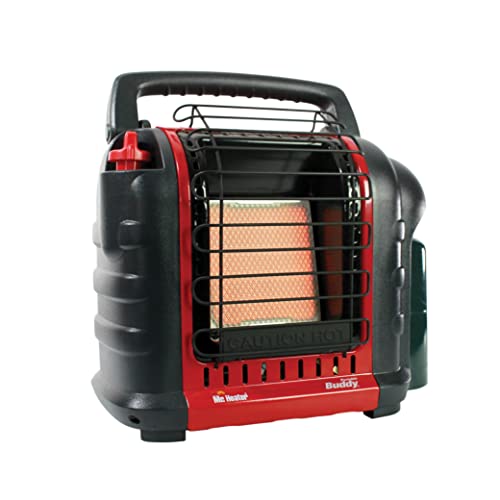
The Portable Buddy MH9BX is a compact radiant propane heater offering adjustable output from 4,000 to 9,000 BTU, intended for small garages, workshops, or detached spaces up to about 225 sq. ft. It emphasizes portability and immediate radiant warmth.
Safety and usability features include an enhanced tip-over safety switch that audibly engages if the unit is jolted, plus a Piezo igniter for quick spark ignition without matches or batteries. Because of its size and heat range, it is often used as a spot heater or for short-term localized heating inside ventilated garages or nearby work areas.
Dyna-Glo IR30PMDG-1 30,000 BTU Liquid Propane Infrared Vent Free Wall Heater

The Dyna-Glo IR30PMDG-1 is a vent-free infrared wall heater with variable output from 6,000 to 30,000 BTU. It radiates heat similar to the sun, warming objects and people directly and is intended to cover up to 1,000 sq. ft. The unit is designed for liquid propane and does not permit fuel conversion.
Call 888-896-7031 for Free Local HVAC Quotes – Compare and Save Today!
Advantages for garage applications include adjustable heat range to match intermittent needs and the ability to provide consistent long-wave infrared heating. As a vent-free model, installation and local regulations should be reviewed before indoor garage placement.
15,000 BTU Single Tank Top Portable Propane Radiant Heater

This tank-top portable radiant heater mounts directly to a 20 lb propane cylinder for simple deployment in workshops and garages. It provides stepped output settings—15,000, 12,500, and 10,000 BTU—through a high-medium-low regulator and includes a tip-over safety shut-off switch.
The product’s portability and direct tank mount make it a practical spot or zone heater for garages where a temporary or movable heat source is preferred. Its design trades some of the continuous runtime advantages of larger cabinet systems for convenience and quick setup.
Buying Guide: How To Choose The Right Propane Radiant Heater For Your Garage
Selecting a propane radiant heater for a garage involves assessing space size, ventilation, installation type, safety features, and use patterns. The following considerations provide multiple comparison perspectives to guide a practical purchase decision.
1. Determine Required Heat Output (BTU) And Coverage
Calculate the garage’s volume rather than floor area for a realistic heat estimate, especially if ceiling height exceeds typical 8–10 feet. Radiant heaters are often rated by square footage coverage; higher BTU units (20,000–30,000) are suited for larger or poorly insulated garages. For spot heating or small garages, lower BTU portable units (4,000–15,000) can be more efficient.
2. Radiant Versus Convection In Garage Use
Radiant heaters warm objects and people directly and are efficient for areas with open doors or intermittent use. They work well when you need immediate warmth where you stand or work. Convection heaters
3. Vent-Free Wall Units Versus Portable Cabinet Or Tank-Top Models
- Vent-Free Wall Units: Offer high BTU and wide coverage; ideal for permanently mounted garage heating. Require code compliance and good ventilation; they may raise indoor humidity or condensation in cold climates.
- Portable Cabinet Heaters: Combine mid-range BTU with mobility. Often house the tank internally and include wheels or handles, suitable for multi-use garages and workshops.
- Tank-Top Portable Heaters: Fast setup and direct tank mount make these convenient for temporary tasks or spot heating. They have limited runtime but excel at portability.
4. Safety Systems And Indoor Use Ratings
Look for tip-over shutoff, low-oxygen (ODS) sensors, and certifications for indoor-safe use. Vent-free appliances must meet local and state regulations; certain jurisdictions restrict or prohibit vent-free gas appliances in sleeping areas or specific room sizes. For attached garages, ensure carbon monoxide and combustion byproduct considerations are addressed through ventilation and CO monitoring.
5. Fuel Efficiency And Runtime Considerations
Compare fuel consumption rates and how long a given cylinder will last at different outputs. Cabinet units that accept 20 lb tanks and operate at medium BTU may provide longer runtime between refills than high-output tank-top models. If power outages or off-grid use is a factor, non-electric ignition or piezo igniters provide added resilience.
6. Installation And Mounting Logistics
Wall-mounted vent-free units require secure mounting, proper clearances to combustibles, and potentially professional installation depending on local code. Portable units minimize installation but require safe placement away from flammable materials and sufficient airflow around the heater.
7. Noise, Mobility, And Workspace Impact
Consider whether wheels, handles, or a compact footprint are needed for frequent repositioning. Cabinet heaters may be quieter and less obtrusive; smaller portable units can be slightly louder but are more flexible. Think about where the heater will sit relative to workbenches and vehicles.
8. Control Options And Thermostat Integration
Some wall units and higher-end models support thermostatic control or remote operation for consistent temperature management. For garages where the heater will be used regularly as a primary source, thermostat capability can reduce fuel usage through automatic cycling.
9. Environmental And Air Quality Factors
Vent-free propane heaters produce water vapor as a byproduct and may increase humidity; in tightly sealed garages, condensation risk can rise. Maintain adequate ventilation when running gas heaters and consider supplemental ventilation or dehumidification if moisture becomes noticeable.
10. Matching Heater Type To Typical Use Cases
- Intermittent Spot Work (mechanic, hobbyist): Choose a portable radiant unit with focused output and fast warm-up (buddy heaters or tank-top models).
- Regular Use, Whole Garage Warmth: Consider vent-free wall-mounted heaters with sufficient BTU capacity and a thermostat.
- Mobile Workshops or Job Sites: Portable cabinet heaters with internal tank storage and mechanical safety features are practical.
- Power Outage Resilience: Select non-electric ignition heaters or piezo igniters and units that run directly from propane cylinders.
Maintenance, Spare Parts, And Longevity
Regularly inspect burners, pilot assemblies, hoses, and regulators for wear, debris, or corrosion. For tank-mounted and portable models, check regulator settings and O-rings. For vent-free wall heaters, keep clearances and airflow unobstructed and schedule periodic professional inspections if used frequently.
Use the product comparison above to match your garage size, ventilation constraints, and mobility needs. Consider safety system redundancy and local codes when choosing a vent-free wall unit versus a portable cabinet or tank-top heater. Proper selection and responsible operation will maximize the effectiveness and safety of propane radiant heating in garage environments.
Tips for Getting the Best HVAC Prices
- Prioritize Quality Over Cost
The most critical factor in any HVAC project is the quality of the installation. Don’t compromise on contractor expertise just to save money. - Check for Rebates
Always research current rebates and incentives — they can significantly reduce your overall cost. - Compare Multiple Quotes
Request at least three estimates before making your choice. You can click here to get three free quotes from local professionals. These quotes include available rebates and tax credits and automatically exclude unqualified contractors. - Negotiate Smartly
Once you've chosen a contractor, use the proven strategies from our guide — How Homeowners Can Negotiate with HVAC Dealers — to get the best possible final price.