
Choosing the right radiant heater fan depends on room size, installation type, fuel source, and safety features. Below is a concise comparison of top picks to help identify units that deliver radiant warmth, integrated fans for distribution, or hybrid functionality for year-round use.
| Product | Type | Notable Feature |
|---|---|---|
| Dreo Tower Fan and Heater Combo | PTC Electric Heater + Fan | Auto-shift tech, fast PTC heating, wide oscillation |
| BLACK+DECKER Infrared Radiant Quartz Tower Heater | Infrared Quartz Tower | Dual quartz tubes with fan, compact footprint |
| Comfort Zone Infrared Quartz Radiant Heater | Infrared Quartz + Fan Assist | Dual quartz tubes, fan-assisted distribution |
| Lasko Oscillating Hybrid Fan And Heater (FHV820) | High-Velocity Fan + Electric Heater | High CFM fan, adjustable thermostat, remote |
| Mr. Heater Vent Free Radiant Propane Heater | Radiant Propane Heater | High BTU radiant output for larger spaces |
Content Navigation
Dreo Tower Fan And Heater Combo

Type: PTC Electric Heater With Fan
Key Features: Auto-shift tech that switches between a 5-level 1500W PTC heater and 12 cooling fan speeds; upgraded DC motor with high airflow; ultrawide 120° oscillation; precise temperature control (41–95°F) with ECO mode and ±1.5°F accuracy.
This tower model integrates a rapid PTC heating element with a powerful fan to distribute air across larger distances. The unit’s auto-shift technology makes it suitable for seasonal use, converting to a multi-speed fan when heating is not needed. Its fast warm-up and wide oscillation are designed to move heat throughout medium to large rooms, and the ECO temperature control supports steady setpoint maintenance.
BLACK+DECKER Infrared Radiant Quartz Tower Heater

Call 888-896-7031 for Free Local HVAC Quotes – Compare and Save Today!
Type: Infrared Quartz Radiant Tower
Key Features: Dual quartz tubes for infrared radiant heat, integrated fan for heat dispersion, two power settings (750W / 1500W), adjustable thermostat, overheat and tip-over protections, compact design for offices or bedrooms.
The BLACK+DECKER tower uses infrared quartz elements to warm people and nearby objects directly, rather than only heating air. The small built-in fan helps spread that warmth and improves perceived comfort across the immediate area. Safety features include overheat shutoff and tip-over protection, important for portable use in homes with pets or children.
Comfort Zone Indoor Tower Radiant Heater

Type: Infrared Quartz Radiant Heater With Fan Assist
Key Features: Dual quartz tubes for rapid radiant heat, fan-assisted distribution, coverage of about 200–300 sq ft when used as directed, top-mounted control knobs for thermostat and heat settings.
Call 888-896-7031 for Free Local HVAC Quotes – Compare and Save Today!
Designed to offer focused radiant warmth, this tower heater warms objects and people in front of it quickly. The optional fan-assisted mode supports more even heat distribution in small to medium rooms. Controls are manual and straightforward, providing simplicity for bedrooms, offices, or personal workspaces.
Lasko Oscillating Hybrid Fan And Space Heater (FHV820)
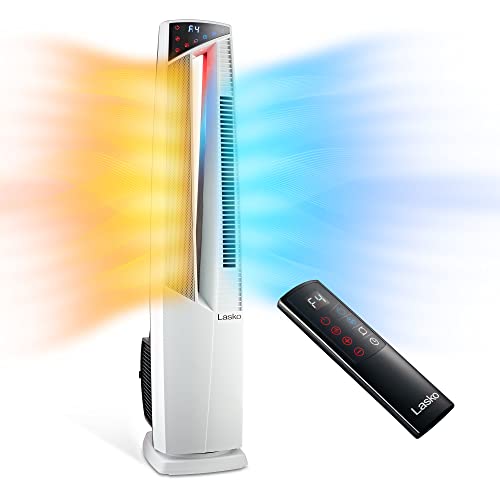
Type: High-Velocity Fan With Built-In Heater
Key Features: High velocity fan with 4 speeds plus 3 heat settings; integrated AutoEco thermostat; widespread oscillation; remote control; tip-over switch and 8-hour timer.
This hybrid unit emphasizes air movement alongside heating, providing a high-CFM fan that can ventilate or distribute heated air more effectively than low-speed tower fans. The AutoEco thermostat aims to regulate temperature while conserving energy. Its combination of fan and heater modes supports both cooling and supplemental heating in multi-season use.
Mr. Heater Vent Free Radiant Propane Heater

Type: Vent-Free Radiant Propane Heater
Key Features: 30,000 BTU radiant burner, propane-fueled, heats up to roughly 750 sq. ft., radiant burner design, quiet integrated blower for gentle air circulation.
This high-output radiant unit uses propane to deliver strong radiant heat suitable for garages, workshops, or large open spaces where vent-free propane operation is appropriate and allowed. The integrated blower provides some heat distribution, but the device primarily radiates heat to objects and occupants. Propane models require adherence to local codes and good ventilation practices.
Buying Guide: Choosing The Right Radiant Heater Fan
Selecting a radiant heater fan involves evaluating heating method, room requirements, safety, and operating cost. Below are key considerations and comparison perspectives to guide a purchase decision.
Tips for Getting the Best HVAC Prices
- Prioritize Quality Over Cost
The most critical factor in any HVAC project is the quality of the installation. Don’t compromise on contractor expertise just to save money. - Check for Rebates
Always research current rebates and incentives — they can significantly reduce your overall cost. - Compare Multiple Quotes
Request at least three estimates before making your choice. You can click here to get three free quotes from local professionals. These quotes include available rebates and tax credits and automatically exclude unqualified contractors. - Negotiate Smartly
Once you've chosen a contractor, use the proven strategies from our guide — How Homeowners Can Negotiate with HVAC Dealers — to get the best possible final price.
Heating Method
- Infrared Radiant (Quartz Tubes): Heats objects and people directly; effective for spot heating and rapid comfort in small to medium rooms.
- PTC Ceramic / PTC Elements: Provide fast, self-regulating heat; often quieter and more efficient for maintaining set temperatures with fan distribution.
- Propane Radiant: High BTU output for large or poorly insulated spaces; requires fuel and consideration of indoor air quality and local codes.
Distribution And Fan Performance
- Built-In Fans: Improve perceived warmth by moving heated air; look for oscillation and airflow (CFM or distance coverage) if you need room-wide comfort.
- High-Velocity Fans: Better at circulating air across larger spaces; useful when you need both cooling and heating functions.
- Quiet Operation: For bedrooms or offices, seek units with low dB ratings or noted quiet operation to avoid sleep or work disruption.
Room Size And Heating Capacity
- Small Rooms (up to ~200 sq ft): Infrared quartz towers and compact PTC heaters typically suffice.
- Medium Rooms (200–400 sq ft): Larger tower units with fan-assisted distribution or higher-watt PTC models are better choices.
- Large/Open Spaces: Consider high-BTU propane radiant units or electric units with high airflow and broad oscillation.
Energy Efficiency And Operating Cost
- Wattage: Electric radiant heaters commonly operate at 750–1500W; higher wattage equals faster heat but higher electricity use.
- PTC And ECO Modes: Automatic regulation can reduce cycling and save energy compared with constant full-power operation.
- Fuel Costs: Propane provides high heat per hour but requires fuel supply and can be cost-effective in off-grid scenarios.
Safety Features
- Overheat Protection: Ensures the element shuts off if internal temperatures get too high.
- Tip-Over Switch: Critical for portable units used near furniture, rugs, or in households with pets.
- Cool-Touch Housing: Important for units placed in multi-use rooms or near children.
- Vent-Free Propane Considerations: Check for oxygen depletion sensors (ODS) and follow local codes for indoor propane use.
Installation And Placement
- Portable Tower Units: Require no installation, best for renters or temporary heating needs.
- Ceiling Or Wall Heaters: Permanently installed options like ceiling heaters require professional installation and are good for bathroom or hallway spot heating.
- Vent-Free Wall Or Ceiling Propane: Ensure adequate fresh air and compliance with local safety standards.
Controls And Convenience
- Thermostat Precision: Look for digital or accurate thermostats for stable room temperatures.
- Remote And Timer: Remote control and programmable timers add convenience for scheduling and energy savings.
- Portability: Built-in handles and lightweight designs improve usability across rooms.
Comparison Perspectives
- Spot vs Whole-Room Heating: Infrared is more effective for spot heating; PTC with fan or high-BTU propane is better for heating whole rooms.
- Electric Convenience vs Fuel Independence: Electric units are safe for indoor use without combustion byproducts; propane models are useful where electricity is limited or for higher output needs.
- Noise Levels vs Air Movement: High airflow fans move heat further but may produce more noise; for bedrooms, prioritize quieter designs and lower-sones ratings.
- Safety vs Power: High-output units increase the need for monitoring and proper clearance; prioritize safety interlocks when choosing powerful heaters.
Maintenance And Lifespan
- Element Type: Quartz tubes may need replacement over many years; PTC elements are generally robust with minimal maintenance.
- Fans And Motors: Keep intake grills clean to preserve airflow and prevent motor strain; follow manufacturer maintenance guidance.
- Propane Systems: Require periodic checks of connections, hoses, and vent-free system sensors.
Final Considerations
- Match heater type to where you plan to use it: portable rooms, permanent bathrooms, garages, or large open areas.
- Factor in safety features, noise, and control options to match household needs and schedules.
- Confirm local codes for vent-free propane use and ensure adequate ventilation where required.