
Recessed baseboard heaters provide low-profile, wall-level warmth suitable for many rooms. This guide compares popular electric baseboard heaters and compatible covers to help you choose. The table below summarizes the five selected products covered in detail.
| Product | Type | Key Feature |
|---|---|---|
| Cadet F Series 72 In. Electric Baseboard Heater (6F1500-1W) | Electric Baseboard Heater | 120V, 1500W Continuous Heat |
| Cadet F Series 36″ Electric Baseboard Heater (3F750-1W) | Electric Baseboard Heater | 750W, Requires Thermostat |
| KING 4K1210BW K Series Baseboard Heater (4′ / 1000W) | Electric Baseboard Heater | Aluminum Ribbon Fin, Safety Cutout |
| EZ-HEAT 1,500 Watt Baseboard Space Heater (CZ600) | Electric Baseboard Heater | Adjustable Thermostat, Safety Features |
| Baseboarders Basic Series 5 Ft Galvanized Steel Cover | Baseboard Heater Cover (Hydronic) | Galvanized Steel Slip-On, Rust Protection |
Content Navigation
- Cadet F Series 72 In. Electric Baseboard Heater (6F1500-1W)
- Cadet F Series 36″ Electric Baseboard Heater (3F750-1W)
- KING 4K1210BW K Series Baseboard Heater 4′ / 1000W
- EZ-HEAT 1,500 Watt Baseboard Space Heater With Thermostat
- Baseboarders Basic Series 5 Ft Galvanized Steel Cover For Hydronic Systems
- Buying Guide: How To Choose A Recessed Baseboard Heater
Cadet F Series 72 In. Electric Baseboard Heater (6F1500-1W)

The Cadet F Series 72″ model is a long, continuous baseboard heater designed for sustained room heat. Its listed features note 120V operation and 1500W output suitable for medium to large spaces where a continuous heat source is desirable. The product description states the heater transmits heat continuously, indicating convection-style warmth distribution along the element. Manufacturing origin is listed as China.
Installation expectations: this model is typically hard-wired to line voltage and intended for fixed mounting along baseboard channels. The extended 72-inch length can help reduce the number of units required for long walls. Consider wiring capacity and circuit protection when integrating into an existing electrical system.
Cadet F Series 36″ Electric Baseboard Heater (3F750-1W)
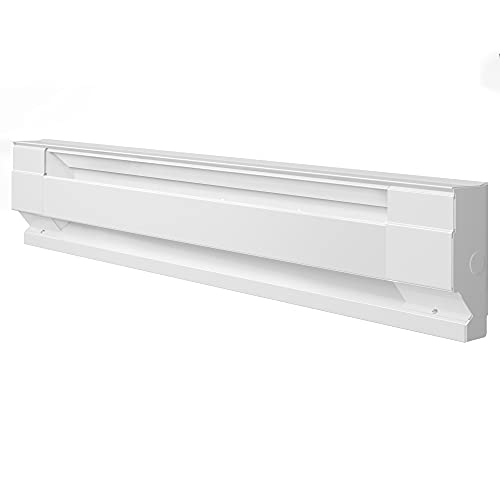
This 36″ Cadet F Series model provides 750W at 120V with an output of approximately 2560 BTU. The manufacturer lists that this heater requires a thermostat, which means room temperature control is not built into the unit and a compatible wall thermostat or line-voltage control is needed for effective temperature regulation.
Call 888-896-7031 for Free Local HVAC Quotes – Compare and Save Today!
Construction notes include 25 gauge steel for the cabinet and a 20 gauge junction box with ground, indicating an all-metal assembly with powder-coat finish. This unit is suitable where a compact, low-profile heater is needed and where thermostat integration is planned. Verify thermostat compatibility (line-voltage vs low-voltage) before installation.
KING 4K1210BW K Series Baseboard Heater 4′ / 1000W

The KING K Series 4′ model is a 1000W hard-wired baseboard heater built for standard 120V circuits. Its features highlight an aluminum ribbon fin element, which supports efficient heat transfer and lightweight construction. The unit includes a full length safety cutout to limit overheating along the element.
This model is specified as not a plug-in and requires direct wiring. The aluminum ribbon fin design aims to balance rapid warm-up with consistent convection flow. Safety cutouts and element protections are important when comparing long-run reliability and compliance with local codes.
EZ-HEAT 1,500 Watt Baseboard Space Heater With Thermostat

The EZ-HEAT CZ600 model is described as a 1500W convection baseboard heater for medium rooms and includes an adjustable thermostat, two heat settings, and multiple safety features. The listed safety elements include tip-over switch, overheat protection, and a stay-cool body for safer handling.
Call 888-896-7031 for Free Local HVAC Quotes – Compare and Save Today!
Additional notes indicate whisper-quiet operation, dent-proof end panels, and a design aimed at portable or semi-permanent placements. Unlike strictly hard-wired recessed units, models emphasizing tip-over protection and stay-cool housing are often designed for flexible installation scenarios. Check mounting requirements and whether the model supports recess or wall integration for a recessed baseboard application.
Baseboarders Basic Series 5 Ft Galvanized Steel Cover For Hydronic Systems

This product is a 5 ft galvanized steel slip-on cover intended for hydronic (water) baseboard systems. The listing explicitly states do not use as a cover on electric baseboard heaters, which is an essential safety and compatibility note when planning recessed or updated installations.
The Basic Series cover features lifetime protection against rust under normal use, and is aimed at replacing old or corroded covers to improve appearance and airflow. For recessed electric installations, confirm compatibility: hydronic covers may not match the clearance, heat transfer characteristics, or safety requirements of electric units.
Buying Guide: How To Choose A Recessed Baseboard Heater
Choosing a recessed baseboard heater involves electrical, thermal, physical, and regulatory considerations. Use the categories below to compare units and covers across performance and safety perspectives.
Heating Capacity And Sizing
- Wattage And Room Size: Match wattage to room area. Higher wattage yields faster heat but requires adequate circuit capacity. Typical recommendations: 10–15 watts per square foot as a starting point for sizing.
- Length And Distribution: Longer baseboards (e.g., 72″) distribute heat more evenly. Fewer long units may be preferable to multiple short units in continuous spaces.
Power Supply And Wiring
- Hard-Wired vs Plug-In: Most recessed or built-in baseboards are hard-wired (line-voltage) and require proper circuit breakers and wiring. Confirm whether a model is plug-in or requires electrical hard-wiring.
- Thermostat Compatibility: Some units require an external thermostat. Confirm whether the thermostat type is line-voltage or low-voltage and select a matching control for accurate temperature regulation.
Safety Features And Materials
- Overheat Protection & Safety Cutouts: Look for full-length cutouts or overheat sensors that disable the unit if temperatures exceed safe limits.
- Enclosure Construction: Gauge of steel or aluminum fins influences durability and heat transfer. Powder-coated finishes and galvanized steel covers resist rust in humid spaces like bathrooms.
- Compatibility Warnings: Covers made for hydronic systems should not be used on electric heaters unless explicitly rated; doing so can create fire or performance risks.
Installation And Maintenance
- Recessed Installation Requirements: Recessed installs need clearance and possibly framing modifications. Verify depth and mounting requirements before purchase.
- Access For Servicing: Choose designs that allow access to junction boxes and elements for inspection and repair without full disassembly.
- Cover Fit And Airflow: Slip-on covers should maintain airflow around heating elements; restrictive covers can reduce efficiency and trigger safety devices.
Efficiency And Heat Transfer
- Element Type: Aluminum ribbon fins provide lightweight, responsive heat; steel elements may offer durability. Consider element material relative to desired response time and longevity.
- Continuous vs Zoned Heat: Some baseboards transmit continuous convection heat while thermostatic zoning allows targeted temperature control for efficiency.
Compatibility Perspectives
- Electric Versus Hydronic Systems: Electric baseboards require electrical ratings and clearances distinct from hydronic systems. Confirm whether covers or replacement parts are intended for electric or hydronic use.
- Room Use Cases: For bathrooms or moisture-prone areas, prioritize rust-resistant covers and corrosion-rated elements. For bedrooms or living rooms, thermostat integration and quieter operation may be more important.
- Regulatory And Local Code: Ensure installations conform to local electrical codes. Hard-wired units often require licensed electricians for safe, code-compliant installs.
Comparing Models: Practical Trade-Offs
- Long Unit Versus Multiple Units: Longer units reduce the number of electrical terminations but may be less flexible for zoning. Multiple shorter units enable room zoning but increase wiring complexity.
- Built-In Thermostat Versus External Control: Integrated thermostats simplify control but can limit placement options. External line-voltage thermostats offer central control and better room-level management.
- Cover Aesthetics Versus Airflow: Decorative or slip-on covers improve aesthetics but must preserve convective air channels. Choose covers designed to maintain element clearance and ventilation.
Final installation decisions should balance wattage, wiring, thermostat type, safety features, and cover compatibility. When in doubt, consult product documentation and local electrical professionals to ensure a safe, effective recessed baseboard heater installation.
Tips for Getting the Best HVAC Prices
- Prioritize Quality Over Cost
The most critical factor in any HVAC project is the quality of the installation. Don’t compromise on contractor expertise just to save money. - Check for Rebates
Always research current rebates and incentives — they can significantly reduce your overall cost. - Compare Multiple Quotes
Request at least three estimates before making your choice. You can click here to get three free quotes from local professionals. These quotes include available rebates and tax credits and automatically exclude unqualified contractors. - Negotiate Smartly
Once you've chosen a contractor, use the proven strategies from our guide — How Homeowners Can Negotiate with HVAC Dealers — to get the best possible final price.