
The following selection highlights recessed wall heaters and compact wall-mounted units often used as electric alternatives to recessed hydronic systems. This guide compares capacity, installation depth, thermostat options, and safety features so you can match a unit to your space and wiring. Below is a quick comparison table of the five products reviewed.
| Product | Type | Power Options | Key Feature |
|---|---|---|---|
| Broan-NuTone White Grille Heater | Recessed/Wall | 750/1500W (120/240V) | Front Adjustable Thermostat |
| Stelpro ARWF1001TW | Recessed Insert Fan Heater | 500/1000W (120V) | Built-In Thermostat, Low Depth |
| Broan-NuTone 198 High Capacity | High-Capacity Recessed | 2000/4000W (120/240V) | 18-Gauge Steel Grille, High Output |
| Cadet RMC162W Register Series | Recessed Register Unit | 700/900/1600W (208/240V) | Multi-Watt, Safety Shut-Off |
| Cadet CSC101TW Com-Pak | Compact Recessed Com-Pak | 1000W (120V) | Fast Heating Dual Coil Element |
Content Navigation
Broan-NuTone Wall Heater With Thermostat

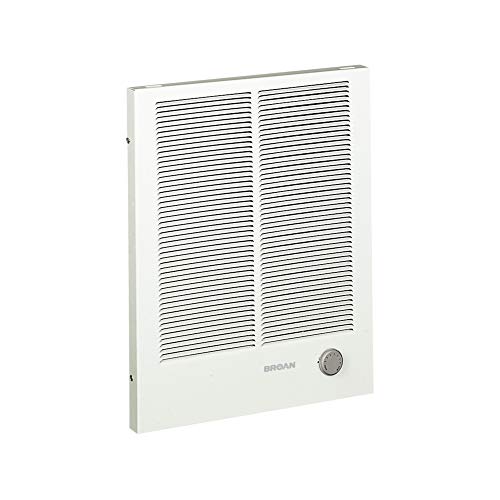
This Broan-NuTone recessed wall heater offers 750/1500W configurations and supports 120/240V operation. The white grille with downflow louvers directs heat toward the floor, promoting more even room warming for small spaces.
- Installation & Size: Housing 10 1/4″ x 7 3/4″ x 3 3/4″ with 12″ x 9 1/4″ cover; suitable for recessed mounting where wall depth and wiring permit.
- Controls: Front-mounted adjustable thermostat simplifies temperature control without additional wiring for remote thermostats.
- Durability: One-piece baked enamel grille resists yellowing and supports long-term appearance retention.
- Use Case: Works as a targeted supplemental heater for bathrooms, dens, or workspaces where hydronic hookups are not available.
Stelpro ARWF1001TW Recessed Fan Heater Insert

The Stelpro ARWF series is a low-depth recessed fan heater insert designed for hardwired, permanent installation. It supports 500 or 1000 watts at 120 volts and requires a minimum wall depth of 2 3/8″.
- Compact Recessed Fit: Shallow housing makes it a fit for thin partition walls where deeper recessed units would not install.
- Built-In Thermostat: Integrated thermostat controls maintain room temperature without external controls.
- Fan-Assisted Output: Fan improves heat distribution versus simple radiant or convective grills, which can be beneficial in rooms that need quicker warm-up.
- Application: Good choice for small bedrooms or bathrooms that need a neat recessed solution and minimal visual impact.
Broan-NuTone High Capacity Wall Heater 198
Call 888-896-7031 for Free Local HVAC Quotes – Compare and Save Today!
The Broan-NuTone 198 is designed for higher-heat needs with 2000/4000W capacity and 240/120V selectable operation. It uses a heavy-duty 18-gauge steel grille and downflow louvers for robust performance.
- High Output: Suitable where greater heat output is required, such as larger rooms or colder climates where a hydronic wall unit might otherwise be considered.
- Durability: Steel grille and baked enamel finish add resilience for long service life in frequent-use areas.
- Thermostat: Front-mounted adjustable thermostat for simple occupant control.
- Consideration: Higher wattage requires appropriate circuit capacity and adherence to local electrical codes for installation.
Cadet Register Series Recessed Electric Heater RMC162W
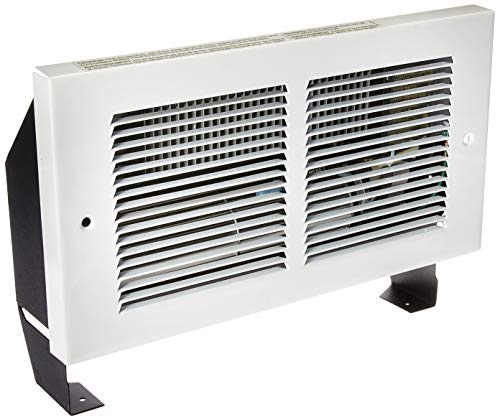
Cadet’s Register Series RMC162W offers multi-watt functionality (700/900/1600W) on 208/240V circuits and is built for recessed installation with simple one-screw mounting into a recessed wall can.
- Multi-Watt Flexibility: Multiple watt settings allow tailoring output to room size and circuit limitations.
- Safety: Includes a high-temperature safety shut-off to prevent overheating.
- Quiet Operation: Designed for quiet air circulation appropriate for bedrooms or living spaces.
- Application: An option where variable output can match fluctuating heating loads or when retrofitting into existing register locations.
Cadet Com-Pak Compact Recessed Heater CSC101TW
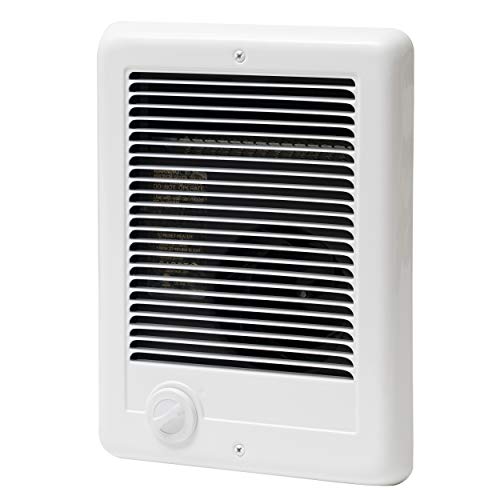
The Cadet Com-Pak CSC101TW is a compact recessed heater with a 1000W 120V dual-coil element designed for fast heating and discreet recessed mounting to preserve living space aesthetics.
- Fast Warm-Up: Dual coil element provides rapid heat-up for spaces up to roughly 200 sq. ft., depending on insulation and climate.
- Safety Features: Automatic shut-off protects against excessive temperatures.
- Compact Design: Low-profile recessed mounting keeps the unit unobtrusive while delivering effective localized warmth.
- Use Case: Ideal for smaller rooms, additions, or remodels where a compact recessed option is preferred.
Buying Guide For Recessed Wall Heaters And Hydronic Alternatives
This guide outlines key factors when choosing a recessed wall heater or electric alternative to a hydronic wall unit. Compare from multiple perspectives—installation complexity, energy source, distribution, and safety.
Call 888-896-7031 for Free Local HVAC Quotes – Compare and Save Today!
Heat Source And Performance
Electric vs Hydronic: Hydronic (hot-water) recessed wall heaters rely on plumbing and a boiler or hot-water system, offering even radiant heat and low operating noise. Electric recessed units are simpler to install where plumbing is not available, provide quicker warm-up, and require appropriate circuit capacity.
Wattage And Room Size
Select Wattage Based On Room Load: Estimate heat load by square footage and insulation. Lower-watt models (500–1500W) suit small rooms and bathrooms. Higher-watt models (2000–4000W) are better for larger rooms or colder locations. Multi-watt models provide flexibility when wiring or panel capacity is limited.
Installation Depth And Mounting
Wall Depth Matters: Confirm minimum cavity depth for insertion. Some fan-insert models like the Stelpro require shallow depths, while high-capacity units need more space and often a dedicated recessed can.
Electrical Requirements
Circuit Capacity And Voltage: Verify available voltage (120V, 208V, 240V) and dedicated circuit needs. High-watt units can require double-pole breakers and larger gauge wiring. Always follow local electrical code and consult an electrician for hardwired installations.
Thermostat And Controls
Built-In Thermostats provide simple front-mounted control for localized comfort. If central control or programmable schedules are needed, check compatibility with external thermostats or smart adapters.
Distribution Method
Fan-Assisted Vs Convection: Fan-assisted inserts distribute heat faster and more evenly, helpful in larger or oddly shaped rooms. Downflow louvers on convection units direct heat toward occupied zones for floor-level warming.
Safety Features
Overheat Shut-Off And Thermal Cutouts are essential. For homes with children or pets, prioritize models with proven safety mechanisms. Ensure compliance with UL or equivalent safety standards.
Durability And Finish
Grille Material: Steel grilles and baked enamel finishes resist warping and discoloration. For humid environments like bathrooms, corrosion-resistant finishes are beneficial.
Noise Considerations
Motor Noise: Fan models may introduce low-level noise. Choose quiet-rated fans for bedrooms or media rooms. Pure convection units are generally silent but slower to respond.
Maintenance And Serviceability
Access For Cleaning: Recessed units should allow grille removal for filter/coil access or fan cleaning. Check whether elements and fans are replaceable and the availability of replacement parts.
Tips for Getting the Best HVAC Prices
- Prioritize Quality Over Cost
The most critical factor in any HVAC project is the quality of the installation. Don’t compromise on contractor expertise just to save money. - Check for Rebates
Always research current rebates and incentives — they can significantly reduce your overall cost. - Compare Multiple Quotes
Request at least three estimates before making your choice. You can click here to get three free quotes from local professionals. These quotes include available rebates and tax credits and automatically exclude unqualified contractors. - Negotiate Smartly
Once you've chosen a contractor, use the proven strategies from our guide — How Homeowners Can Negotiate with HVAC Dealers — to get the best possible final price.
Comparative Perspectives
- Cost To Install: Electric recessed units usually have lower initial installation complexity than hydronic systems, which require plumbing and boiler integration.
- Operational Cost: Hydronic systems can be more efficient in whole-house setups when paired with efficient boilers. Electric units are often more expensive to operate per hour but are simpler for isolated space heating.
- Retrofit Versus New Construction: Electric recessed heaters are often preferred for retrofits and single-room solutions. Hydronic is commonly chosen in new construction or whole-house renovation when a central boiler is already present.
Final Selection Tips
- Measure wall cavity depth and available voltage before choosing a model.
- Match wattage to room heat loss calculations rather than relying solely on square footage.
- Prioritize safety features and certified listings for permanent installations.
- Consult a licensed electrician for hardwired installations and to verify breaker/wiring needs.
- Consider fan-assisted models for faster distribution and convection models for silent, gradual warmth.