
Choosing the right reptile heater with thermostat ensures stable basking and safe ambient temperatures for reptiles, amphibians, and incubations. Below is a compact comparison table of the five selected options covered in this guide, followed by focused product sections and a practical buying guide.
| Product | Type | Control | Notable Feature |
|---|---|---|---|
| BN-LINK Digital Heat Mat Thermostat Controller | Controller | Digital, 40–108°F | ETL Listed, probe sensor |
| BN-LINK Reptile Heating Pad Combo | Under Tank Heater + Controller | Digital, 2–3°F buffer | 6″ x 8″ pad, extended cords |
| REPTIZOO Dimming Thermostat (PID) | Dimming Thermostat | PID, 41–140°F | Designed for heat lamps, memory function |
| REPTI ZOO 8″ x 12″ Reptile Heat Pad | Heat Pad | Adjustable Thermostat, 68–122°F | Carbon fiber fast heating, waterproof PVC |
| Simple Deluxe 150W Heat Bulb + Thermostat | Heat Bulb + Controller | Digital, 40–108°F display | Infrared/no visible light option, E26 base |
Content Navigation
- BN-LINK Digital Heat Mat Thermostat Controller
- BN-LINK Reptile Heating Pad 6″ x 8″ Combo Set
- REPTIZOO Dimming Thermostat With PID Control
- REPTI ZOO 8″ x 12″ Reptile Heat Pad With Adjustable Thermostat
- Simple Deluxe 150W Reptile Heat Bulb And Digital Thermostat
- Buying Guide: How To Choose A Reptile Heater With Thermostat
BN-LINK Digital Heat Mat Thermostat Controller

This unit is a dedicated heating controller designed for heat mats and similar resistive heating devices. The controller supports a temperature range of 40–108°F and uses a wired probe to monitor target temperature. The interface uses three buttons for easy setup and allows switching between Fahrenheit and Celsius.
Key design points include an ETL listing for safety, a hanging tab for placement flexibility, a bright display with LED heating and power indicators, and a 3.94 ft power cord paired with a 4.92 ft temperature probe for versatile installation. The device is explicitly intended only for heating devices, not cooling or mixed-mode appliances.
BN-LINK Reptile Heating Pad 6″ x 8″ Combo Set

This combo bundles a 6″ x 8″ under-tank heat pad with a digital thermostat controller. The controller features a simple 3-button interface and supports Fahrenheit and Celsius. The system includes a buffer behavior—typically a 2–3°F hysteresis—so the controller cycles the pad on and off to maintain target temperature.
Call 888-896-7031 for Free Local HVAC Quotes – Compare and Save Today!
Practical features include long cord lengths (6 ft for the probe and grounded 3-prong plug), LED indicators for power and heating status, and a rugged plastic housing with a hanging tab. The kit is positioned for small terrariums serving turtles, lizards, frogs, and similar species.
REPTIZOO Dimming Thermostat With PID Control
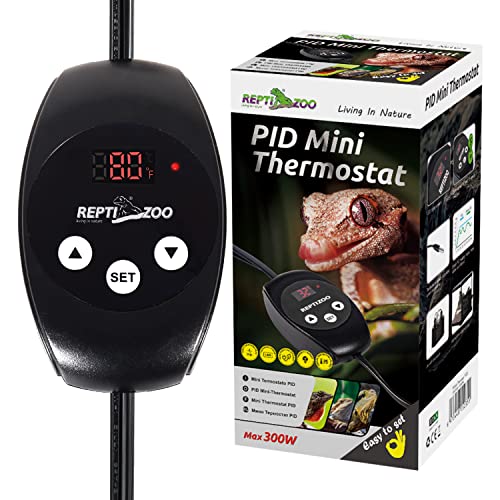
This dimming thermostat uses PID (proportional–integral–derivative) control to modulate power to heat bulbs and certain heaters. PID control provides finer regulation than simple on/off relays, which can reduce temperature swings and extend bulb life when used with compatible heat lamps.
The unit supports a broad temperature range (about 41–140°F display range) and includes memory function for stored settings. It is designed primarily for heat lamps rather than sunlamps and includes a precise sensor for responsive adjustments. Operation uses a simple button interface and LED display.
REPTI ZOO 8″ x 12″ Reptile Heat Pad With Adjustable Thermostat

This 24W 8″ x 12″ heat pad uses carbon fiber heating tech for faster, more uniform heating. The pad’s PVC surface is waterproof and insulated for durability. The advertised thermostat range reaches 68–122°F, suitable for many species and incubation tasks.
Call 888-896-7031 for Free Local HVAC Quotes – Compare and Save Today!
Design highlights include rapid heat-up, an adjustable thermostat for precise setpoints, and robust construction for daily use. The product is offered for use under tanks and for small to medium terraria where even heat distribution is a priority.
Simple Deluxe 150W Reptile Heat Bulb And Digital Thermostat

This kit combines a 150W heat bulb (E26 base) and a digital thermostat controller that displays temperatures between 32–140°F and controls between 40–108°F. The heat bulb option includes models that emit no visible light, useful for maintaining night cycles for nocturnal reptiles.
The thermostat uses a simple three-button interface with LED indicators and supports general-purpose heating control. The bulb is ceramic with NiCrAl components and requires safe handling due to high operating temperatures; the controller includes protective indicators and basic operational guidance.
Buying Guide: How To Choose A Reptile Heater With Thermostat
Selecting the best heater with thermostat requires matching equipment to an animal’s thermal needs, enclosure size, and safety requirements. Below are key considerations and comparison perspectives to guide a purchase.
Types Of Heaters
- Under-Tank Heaters (UTH / Heat Pads) — Provide belly heat and are ideal for species that thermoregulate from below (geckos, snakes). Use with a thermostat to avoid overheating and always follow manufacturer mount recommendations.
- Heat Lamps / Bulbs — Provide localized basking spots and visual light. Pair with dimming thermostats or PID controllers for smoother temperature control and bulb lifespan benefits.
- Ceramic Heat Emitters (CHE) — Provide infrared heat without visible light. Use with thermostats and fixtures rated for the wattage.
- Combined Systems — Some kits include both the heat source and controller; these can simplify setup but verify compatibility and sensor placement.
Control Method And Accuracy
- On/Off (Relay) Controllers — Simple and commonly used with heat mats; can result in small temperature oscillations due to hysteresis (often 1–3°F).
- PID / Dimming Controllers — Offer finer power modulation for heat bulbs; reduce overshoot and maintain steady basking temperatures.
- Digital Display & Sensor — Look for easy-to-read displays, switchable °F/°C, and a sensor probe long enough to place where the animal actually basks.
Safety And Certifications
- Prefer products with safety listings (e.g., ETL) and grounded plugs when required.
- Check cord length and routing to avoid chew hazards and to keep electronics dry.
- Follow manufacturer warnings about mounting surfaces (some pads should not be used on certain plastics or acrylics).
Size, Wattage, And Heating Performance
- Match pad size and wattage to enclosure footprint; underpowered pads may fail to reach target temps while oversized pads can create hot zones.
- Heat lamps are selected by wattage and fixture depth; deeper domes concentrate heat. Dimming / PID control improves lamp performance and longevity.
- Carbon-fiber pads and PTC materials can provide faster and more uniform heating than older resistive pads.
Placement And Sensor Location
- Place the sensor probe at the animal’s typical basking location or ambient location you want to maintain, not just near the controller.
- For under-tank pads, follow recommendations for glass vs. plastic bases and whether to mount on the outside bottom or inside the tank.
- Ensure adequate ventilation if using heat lamps to prevent hotspots.
Reliability, Maintenance, And Compatibility
- Verify replacement probe availability and whether controller firmware or settings persist (memory function) through power cycles.
- Consider the durability of pad surfaces (waterproof PVC vs. adhesive-backed pads) and whether pads include mounting feet to allow heat escape.
- Confirm compatibility between controller type and heating device — dimming controllers are preferable for lamps; standard relay controllers are typical for resistive pads.
Comparison Perspectives
- Best For Precision: PID dimming controllers reduce overshoot for lamps and are useful when precise basking temperatures are required.
- Best For Simplicity: Basic digital on/off controllers and combo kits provide straightforward setup for beginners.
- Best For Durability: Waterproof, insulated pads with robust PVC surfaces and carbon-fiber elements offer longer service life in humid environments.
- Best For Nocturnal Species: Infrared or no-visible-light bulbs paired with thermostats allow heating without disrupting sleep cycles.
When evaluating options, prioritize safety certifications, accurate sensing, appropriate control method, and installation guidance that matches your enclosure materials and species needs. Proper thermostat pairing and probe placement are as important as the heat source itself for maintaining healthy, stable temperatures.
Tips for Getting the Best HVAC Prices
- Prioritize Quality Over Cost
The most critical factor in any HVAC project is the quality of the installation. Don’t compromise on contractor expertise just to save money. - Check for Rebates
Always research current rebates and incentives — they can significantly reduce your overall cost. - Compare Multiple Quotes
Request at least three estimates before making your choice. You can click here to get three free quotes from local professionals. These quotes include available rebates and tax credits and automatically exclude unqualified contractors. - Negotiate Smartly
Once you've chosen a contractor, use the proven strategies from our guide — How Homeowners Can Negotiate with HVAC Dealers — to get the best possible final price.