
Choosing the right heater for a resin 3D printer improves print reliability, reduces failed layers, and stabilizes resin viscosity in cooler environments. The table below summarizes five compact heater and heater-plus-features products suited to most LCD/MSLA/DLP resin printers.
| Product | Brand | Main Function |
|---|---|---|
| Youyoute Mini Heater For 3D Printer | YOUYOUTE | Temperature Controller / Continuous Operation |
| ANYCUBIC Mini Purifier & Heater | ANYCUBIC | Preheating + Air Purification |
| ELEGOO Smart Mini Heater | ELEGOO | Intelligent Temperature Control + Filtration |
| Chitu Systems Upgraded Mini Heater | chitu systems | High Power, Wide Temp Control |
| ELEGOO Mini Heater For Saturn/Mars | ELEGOO | Smart Thermostat For Specific Models |
Content Navigation
Youyoute Mini Heater For 3D Printer

Design And Intended Use: This compact heater is designed specifically for resin 3D printers to raise resin and chamber temperature in cold environments and to maintain a target temperature between 10°C and 50°C.
Key Features: Buttons allow direct setting of the target temperature; the unit is rated for continuous 24/7 operation with a dual-sided PCB and professional wiring for durability.
Performance Notes: The heater targets resin thermal stability (common suggestion: around 30°C for many resins). The device differs from some units that default to cooling near 25°C by allowing explicit temperature adjustment.
Compatibility & Installation: Intended for small resin printer chambers; installation is typically non-invasive but verify clearance and mounting options for your specific model.
Call 888-896-7031 for Free Local HVAC Quotes – Compare and Save Today!
ANYCUBIC Mini Purifier & Heater
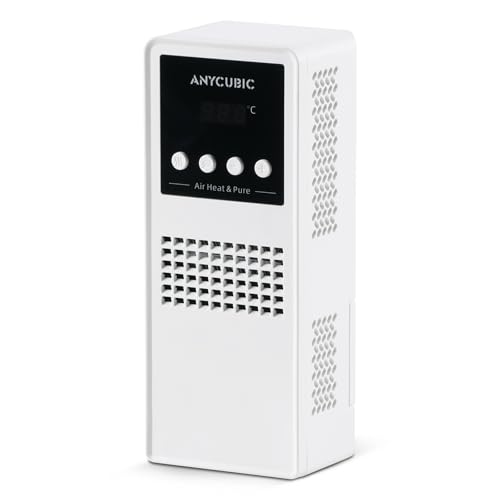
Design And Intended Use: A combined preheater and air purifier that targets printer chamber temperatures below 25°C, offering dual independent controls for heating and purification.
Key Features: Integrated industrial temperature sensor with 0.1°C precision, a 55W heater for rapid warming, and intelligent power adjustment above 40°C to conserve energy while maintaining heat.
Performance Notes: The higher wattage supports faster ramp-up in cooler rooms to reduce print failures caused by low resin viscosity or model detachment from the build plate.
Compatibility & Installation: Small form factor intended as an accessory replacement for Photon Mono M5s Pro/M5s/M5/M7 and compatible printers; confirm mounting and airflow direction before installation.
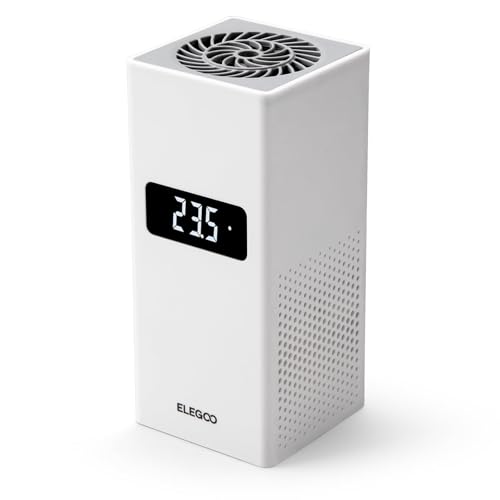
ELEGOO Smart Mini Heater
Call 888-896-7031 for Free Local HVAC Quotes – Compare and Save Today!
Design And Intended Use: An intelligent heater aimed at reducing common resin printing problems—mid-print detachment, warping, and adhesion inconsistencies—by maintaining stable chamber temperatures.
Key Features: Precise temperature control, PTC rapid heating element for self-regulation to avoid overheating, and integrated air filtration to maintain a cleaner chamber environment.
Performance Notes: The PTC element offers predictable ramp-up and safety via self-limiting heating. Air filtration mitigates particulate and odors in the immediate workspace, contributing to cleaner prints.
Compatibility & Installation: Marketed as compatible with most MSLA/DLP/LCD printers from ELEGOO and other brands; verify connector type and mounting for your printer model.
Chitu Systems Upgraded Mini Heater

Design And Intended Use: A compact, versatile heating module with a focus on higher maximum power and wide temperature control, meant to fit most LCD 3D printers without modifications.
Key Features: Adjustable temperature range, maximum power up to 200W, quiet operation with a high-performance fan, and overheat protection. Designed for easy installation and tidy cable routing.
Performance Notes: The higher power capability allows faster warming of larger chambers or colder environments. Overheat protection and quiet fan operation aim to balance safety and user comfort.
Compatibility & Installation: Advertised to require no drilling or casing modification, but check physical dimensions and cable routing relative to your printer’s interior layout.
ELEGOO Mini Heater For Saturn/Mars
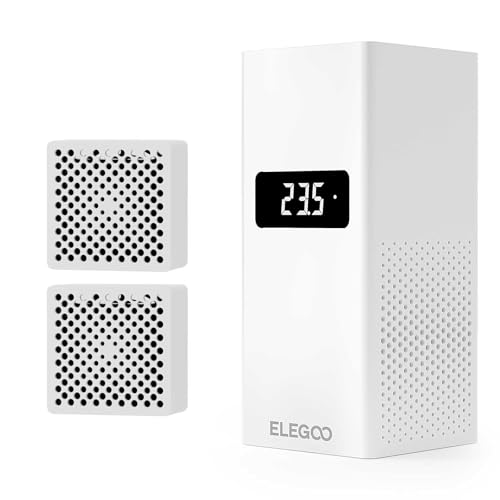
Design And Intended Use: A model-targeted heater optimized for ELEGOO Saturn Series, Mars Series, and Jupiter SE, with an automated thermostat calibrated around 25°C operating point.
Key Features: Automatic heating below 25°C and automatic stop above 25°C, PTC heating technology paired with a high-speed fan for rapid, even chamber warming, and built-in air filtration.
Performance Notes: The thermostat target designed to maintain 25°C helps prevent temperature-related print failures. PTC heating plus a high-RPM fan supports quick and uniform heat distribution inside the printer.
Compatibility & Installation: Marketed as compatible with specific ELEGOO models; check connector and footprint for your specific printer to ensure seamless integration.
Buying Guide: How To Choose A Resin Printer Heater
Purpose And Use Case: Identify whether you need a simple resin warmer, a chamber heater, or a combined heater-filter. A warmer raises resin viscosity; chamber heaters stabilize the entire print environment. Purifiers add an air-quality benefit.
Temperature Range And Control: Look for precise control and the ability to set target temperatures appropriate for your resins (common recommended ranges: 25–30°C for many standard resins). Units with digital setpoints or fine increments offer better repeatability.
Heating Technology: PTC elements self-regulate and reduce overheating risk; resistive heaters can be effective but require reliable thermostats. Higher wattage enables faster warm-up but may need more careful placement to avoid hot spots.
Power And Ramp-Up Time: Consider wattage relative to chamber volume. Faster ramp-up reduces time-to-print in cold environments. For small printers, 40–60W can suffice; larger chambers may require higher-rated modules.
Safety Features: Overheat protection, automatic shutoff, and thermistor feedback reduce risk. Continuous 24/7 rated components matter if you run long prints overnight or in cold rooms.
Air Filtration: Integrated filtration can reduce odors and particulates. If air quality in your workspace matters, choose a combined heater/purifier unit or add external filtration.
Compatibility And Mounting: Confirm that the heater’s form factor, connector type, and mounting method match your printer. Non-invasive installation prevents voiding warranties or requiring case modifications.
Control Integration: Some units are standalone controllers; others interface with printer electronics. Decide whether you want a self-contained accessory or one integrated into your printer’s control system.
Noise And Fan Performance: Fans are necessary for even heat distribution; check reported RPM and noise levels if sound is a concern. Ducting and fan placement also influence how heat circulates within the chamber.
Durability And Duty Cycle: If you run continuous prints, choose controllers and PCBs rated for long-term operation. Look for dual-sided PCB and professionally routed wiring for longevity.
Resin-Specific Considerations: Some resins are more temperature-sensitive. If you use specialty or high-temperature resins, choose a heater with a suitable temperature ceiling and stable control to avoid curing or degradation in the bottle or vat.
Multiple Perspectives For Comparison:
- Performance vs. Power: Higher wattage speeds warm-up but needs careful placement. Balance wattage to chamber volume.
- Precision vs. Simplicity: Digital thermostats and sensors increase control; simple heaters may be easier to install but less accurate.
- Filtration vs. Cost: Purifier-equipped units add air quality benefits but can increase complexity and price.
- Compatibility vs. Universal Fit: Model-specific heaters usually fit cleanly; universal heaters require validation of mounting and connections.
Installation Checklist:
- Confirm physical fit and cable routing inside your printer.
- Verify connector compatibility or plan for secure wiring adaptations.
- Place sensors away from direct fan blasts to measure chamber air, not localized hot spots.
- Test heater operation without resin present to validate control and safety features.
Maintenance Tips:
Tips for Getting the Best HVAC Prices
- Prioritize Quality Over Cost
The most critical factor in any HVAC project is the quality of the installation. Don’t compromise on contractor expertise just to save money. - Check for Rebates
Always research current rebates and incentives — they can significantly reduce your overall cost. - Compare Multiple Quotes
Request at least three estimates before making your choice. You can click here to get three free quotes from local professionals. These quotes include available rebates and tax credits and automatically exclude unqualified contractors. - Negotiate Smartly
Once you've chosen a contractor, use the proven strategies from our guide — How Homeowners Can Negotiate with HVAC Dealers — to get the best possible final price.
- Periodically inspect wiring and mounts for loose connections or wear.
- Clean or replace filters on purifier-equipped units according to manufacturer guidance.
- Monitor temperature stability over multiple prints to detect drift or sensor issues.