
Finding a safe space heater means balancing reliable thermal performance with built-in protections like tip-over shutoff, overheat sensors, flame-retardant materials, and ground-fault or ALCI plugs for wet spaces. Below is a quick comparison of highly rated, safety-focused space heaters available on Amazon that are designed for indoor use.
| Product | Key Safety Features | Power |
|---|---|---|
| Dreo Space Heater (Digital Display) | Tilt-detection, V0 flame-retardant, overheat protection, ETL | 1500W |
| Dreo 25″ Ceramic Tower Heater | 45° tip-over, child lock, V0 materials, ETL | 1500W |
| Dreo Bathroom/ALCI Heater | ALCI safety plug, oscillation, detachable filter, ETL | 1500W |
| Dreo 1500W Adjustable Tilt Heater | Tilt protection, V0 materials, overheat protection, ETL | 1500W |
| GiveBest Portable Ceramic Heater | Tip-over shutoff, overheat auto-off, flame-retardant housing | 1500W / 750W |
Content Navigation
- Dreo Space Heater With Digital Thermostat
- Dreo 25″ Ceramic Tower Heater
- Dreo Bathroom And Indoor Heater With ALCI
- Dreo 1500W Portable Tilt-Adjust Heater
- GiveBest Portable Ceramic Heater With Thermostat
- Buying Guide: How To Choose The Safest Space Heater
- 1. Required Safety Certifications
- 2. Tip-Over And Overheat Protection
- 3. Construction And Materials
- 4. Thermostat Precision And Controls
- 5. Placement, Size, And Heating Method
- 6. Noise And Motor Type
- 7. Maintenance And Lifespan Considerations
- 8. Energy Management And Modes
- 9. Household Considerations
- 10. Placement Safety Tips
- Multiple Comparison Perspectives
Dreo Space Heater With Digital Thermostat

This Dreo model uses a 1500W PTC Hyperamics system and a heat funnel design to accelerate warm-air delivery and extend reach beyond typical portable heaters. The unit offers precise thermostat control from 41–95°F in 1°F increments, a digital display, remote control, and a 12-hour timer with five modes.
Safety features listed include an innovative tilt-detection sensor for improved tip-over protection, V0 flame-retardant materials, overheat protection, and a safety plug. ETL certification is noted. These protections target common failure modes—tip-over and overheating—and the V0 materials reduce fire propagation risk.
Use scenarios: intended for bedrooms, offices, and living rooms where precise temperature control and rapid, directed heat are beneficial. The combination of precise thermostat and advanced safety sensors supports consistent operation with fewer manual interventions.
Dreo 25″ Ceramic Tower Heater

Call 888-896-7031 for Free Local HVAC Quotes – Compare and Save Today!
This 25″ tower-style heater emphasizes longer-range warm-air delivery using an extended impeller and upgraded Hyperamics thermal design. The motor and airflow design claim reduced noise down to as low as 32 dB, making it suitable for quiet spaces.
Stated safety measures include V0 flame-retardant construction, reinforced plug, 45° tip-over protection, overheat protection, and an ETL certification. A child lock setting is available to help prevent accidental changes to settings in households with children.
Use scenarios: larger rooms where extended airflow and quieter operation are important. The combination of tip-over protection and a child lock adds layers of protection for family and multi-user environments.
Dreo Bathroom And Indoor Heater With ALCI
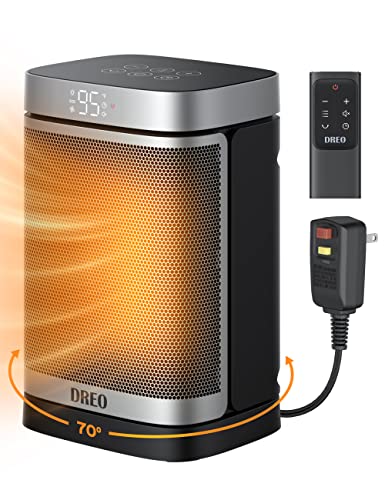
This Dreo heater is configured specifically for use in damp spaces, featuring an ALCI safety plug that shuts off power if a short or water contact is detected. It also offers 70° oscillation, a detachable filter for cleaning, and multiple energy-efficient modes.
Other protective elements include overheat protection, V0 flame-retardant components, and ETL certification. The unit claims rapid heating from PTC ceramics and quiet operation from a brushless DC motor.
Call 888-896-7031 for Free Local HVAC Quotes – Compare and Save Today!
Use scenarios: bathrooms, laundry rooms, and other locations where ground-fault/ALCI protection is a priority. The detachable filter offers maintenance benefits for consistent performance and air quality.
Dreo 1500W Portable Tilt-Adjust Heater

This Dreo variant emphasizes directional warming with a vertical tilt adjustment up to 60° to direct heat toward seated or standing areas. The Hyperamics tech claims quick warm air delivery and increased heated air volume vs. traditional heaters.
Safety features include advanced tip-over protection, V0 flame-retardant materials, overheat protection, a safety plug, and ETL certification. The tilt and sensor systems are presented as complementary safeguards to reduce ignition and burn hazards due to improper placement.
Use scenarios: desks, near seating, or multi-use rooms where directional warmth reduces the need to heat entire spaces. The tilt capability allows targeted heating without repositioning the entire unit.
GiveBest Portable Ceramic Heater With Thermostat

The GiveBest space heater offers dual power settings (1500W/750W) plus a fan-only mode and a thermostat adjustable from 0–158°F. It includes a carry handle for transport and is sized for personal or small-room use.
Safety features listed include flame-retardant housing, automatic overheat shutoff, and tip-over protection that automatically cuts power if knocked over. The thermostat cycles power to maintain set temperatures, which can reduce continuous high-power operation.
Use scenarios: dorm rooms, small offices, or desks where compact footprint and basic safety protections are desired. The two power levels give flexibility for energy management and quieter, lower-power operation when full heat isn’t necessary.
Buying Guide: How To Choose The Safest Space Heater
When selecting the safest space heater, consider device features, certifications, intended location, and usage habits. Below are the key areas to evaluate and how they compare across models.
1. Required Safety Certifications
- ETL or UL Listing: Indicates the heater meets independent safety standards for electrical devices. Most reputable models will list ETL/UL or equivalent certification.
- ALCI/GFCI Protection: Critical if you plan to place a heater in bathrooms, laundry rooms, or other damp environments. ALCI plugs detect ground faults and cut power.
2. Tip-Over And Overheat Protection
- Tip-Over Shutoff: A mechanical or electronic sensor that turns the heater off when tilted or knocked over. Essential for floor units and in homes with pets or children.
- Overheat Sensors: Internal thermostats and thermal cutoffs prevent prolonged overheating if airflow is blocked or the internal components run too hot.
3. Construction And Materials
- Flame-Retardant Housing: V0-rated materials or flame-retardant plastics reduce fire spread risk in worst-case failure scenarios.
- Reinforced Plugs and Wiring: Heavy-duty cords and reinforced plugs reduce the chance of contact failures and shorts; look for reinforced or grounded plugs when possible.
4. Thermostat Precision And Controls
- Adjustable Thermostat: Allows the heater to cycle on/off rather than run continuously—this saves energy and reduces stress on internal components.
- Digital Readouts & Remote Controls: Digital control with fine increments improves stability and lowers runtime, indirectly enhancing safety by avoiding continuous max-power operation.
5. Placement, Size, And Heating Method
- PTC Ceramic vs. Exposed Coil: PTC ceramic heaters typically heat more uniformly and are less likely to cause ignition from direct contact than exposed coil heaters.
- Tower vs. Compact: Tower units with oscillation spread heat over larger areas and usually sit upright—ensure robust tip-over protection. Compact desktop units are easier to place but should not be used near combustible materials.
6. Noise And Motor Type
- Brushless DC Motors: Tend to be quieter and more durable than AC motors; quieter operation suits bedrooms and offices where disturbance must be minimized.
7. Maintenance And Lifespan Considerations
- Filters & Detachable Parts: Removable filters and easy-to-clean grills maintain airflow and reduce internal overheating risk from dust buildup.
- Serviceability: Units with accessible components or reputable brand support can be safer over the long term because worn parts can be replaced or serviced.
8. Energy Management And Modes
- Multiple Power Levels: Allow operation at lower wattage when full output is unnecessary, reducing continuous stress and energy draw.
- Eco Modes & Timers: Help prevent unnecessary runtime and allow the heater to shut off automatically after a set period.
9. Household Considerations
- Pets And Children: Prioritize tip-over protection, cool-touch housings, and child-lock features. Mounting or elevated placement must still comply with tilt/overheat protections.
- Small Children Or Mobility Issues: Use models with stable bases and consider devices with guard grills to prevent direct contact with heating elements.
10. Placement Safety Tips
- Keep at least 3 feet clearance from combustible materials (drapes, paper, bedding) and avoid placing on uneven surfaces.
- Never leave portable heaters unattended near sleeping children or while you sleep unless the unit is specifically rated for unattended continuous use by the manufacturer and local code allows it.
- Plug directly into wall outlets instead of extension cords or power strips when possible; if you must use a cord, use a heavy-duty cord rated for the heater’s amperage.
Multiple Comparison Perspectives
- Performance vs. Safety Trade-Off: Higher airflow and power yield faster warming but increase mechanical complexity. Look for models balancing robust sensors (tip-over, overheat) with efficient heat delivery (PTC ceramics, directed airflow).
- Room Size vs. Heater Type: Tower heaters better for larger rooms; compact ceramic models suit personal zones. Select a model whose wattage and claimed coverage align with intended room size.
- Wet-Location Safety: Only use ALCI or GFCI-equipped devices in bathrooms or areas with water exposure; otherwise, avoid placing heaters near sinks or tubs.
- Long-Term Reliability: Brands with replaceable filters, documented certifications, and robust customer support reduce lifecycle risk and may imply safer long-term operation.
When comparing models, prioritize the combination of independent safety certification, multiple redundant protections (tip-over + overheat + flame-retardant housing), and features matched to your use case (ALCI for bathrooms, quiet models for bedrooms, or child-locks for family homes). Review installation and user manual guidance for placement and cord use to ensure the safest operation.
Tips for Getting the Best HVAC Prices
- Prioritize Quality Over Cost
The most critical factor in any HVAC project is the quality of the installation. Don’t compromise on contractor expertise just to save money. - Check for Rebates
Always research current rebates and incentives — they can significantly reduce your overall cost. - Compare Multiple Quotes
Request at least three estimates before making your choice. You can click here to get three free quotes from local professionals. These quotes include available rebates and tax credits and automatically exclude unqualified contractors. - Negotiate Smartly
Once you've chosen a contractor, use the proven strategies from our guide — How Homeowners Can Negotiate with HVAC Dealers — to get the best possible final price.