
Finding a safe, compact space heater for your office matters for comfort and risk reduction. The products below focus on safety features such as overheat protection, tip-over shutoff, and certified flame-retardant materials while offering thermostat control and quiet operation suitable for workspaces.
| Product | Brand | Key Safety Feature |
|---|---|---|
| GiveBest Portable Electric Space Heater | GiveBest | Tip-Over & Overheat Shutoff, Flame-Retardant Housing |
| Dreo Space Heater | Dreo | ETL-Certified, Tip-Over & Overheat Protection, Timer |
| BLACK+DECKER Portable Space Heater | BLACK+DECKER | Adjustable Thermostat, Compact Design for Desk Use |
| VOCRS Small Portable Space Heater | VOCRS | Digital Controls, Timer, Remote |
| Aikoper PTC Ceramic Space Heater | Aikoper | PTC Ceramic Element, Adjustable Thermostat |
Content Navigation
- GiveBest Portable Electric Space Heater With Thermostat
- Dreo Space Heater With 70° Oscillation And Timer
- BLACK+DECKER Portable Room Space Heater With Carry Handle
- VOCRS Portable Heater With Remote And 12H Timer
- Aikoper PTC Ceramic Room Heater With Thermostat
- Buying Guide: Choosing The Safest Space Heater For Your Office
- 1. Safety Certifications And Build
- 2. Overheat Protection And Tip-Over Shutoff
- 3. Thermostat Control And Timers
- 4. Heating Technology: PTC Ceramic vs. Coil
- 5. Noise Level And Airflow
- 6. Size, Placement And Portability
- 7. Energy Use And Heat Settings
- 8. Controls And Accessibility
- 9. Cord And Plug Considerations
- 10. Office Policy And Shared Workspace Guidelines
- Comparison Perspectives
- Safety Checklist Before Use
GiveBest Portable Electric Space Heater With Thermostat

The GiveBest ceramic heater offers two heat levels (1500W/750W) and a cool-fan mode for year-round use. It includes a thermostat adjustable from 0°F to 158°F that cycles the unit on and off to maintain a set temperature, which helps prevent unnecessary runtime.
- Safety Systems: Flame-retardant materials, automatic overheat shutoff, and tip-over protection that restarts when upright.
- Design: Compact with a built-in carry handle for desk-to-desk portability in office settings.
- Best For: Users seeking a small desk heater with multiple modes and basic safety redundancies.
Feature list emphasizes multi protection and thermostat-controlled cycling to keep both energy use and surface temperatures controlled.
Dreo Space Heater With 70° Oscillation And Timer

Dreo centers its offering on a safety-first build: ETL certification, V0 flame-retardant materials, tip-over and overheat protection, a 12-hour timer, and automatic power-off features. The unit also warns against using extension cords and recommends direct wall connection.
Call 888-896-7031 for Free Local HVAC Quotes – Compare and Save Today!
- Heating Performance: 1500W PTC ceramic element for rapid warmth and coverage up to 200 sq. ft.
- Noise: Operates at approximately 34 dB, suitable for quiet office environments.
- Controls: Thermostat, timer, and oscillation improve distribution for shared desk or small open office areas.
Given multiple certified safety measures and quiet operation, the Dreo model targets offices where both safety certification and low noise are priorities.
BLACK+DECKER Portable Room Space Heater With Carry Handle

The BLACK+DECKER small heater focuses on portability and user control with an adjustable thermostat and three operating modes: low (750W), high (1500W), and fan. Its lightweight form factor and handle make it easy to move between workspaces.
- Practicality: Compact dimensions designed for desktop or under-desk use where space is limited.
- Control: Simple, user-friendly settings for fast selection with a 6-foot power cord for placement flexibility in offices.
- Safety Notes: The unit is marketed as a personal heater suitable for close proximity, emphasizing careful placement on stable surfaces.
The BLACK+DECKER model suits users who prioritize a straightforward, portable heater with reliable thermostat control for individual workstations.
VOCRS Portable Heater With Remote And 12H Timer

The VOCRS heater emphasizes digital control and convenience with a remote, HD digital display, and a 1–12 hour timer. It offers three heating modes (700W/1000W/1500W) to tailor output to room size and energy needs.
Call 888-896-7031 for Free Local HVAC Quotes – Compare and Save Today!
- Convenience: Remote control adjusts temperature and modes from a distance—useful for office desks where mobility is limited.
- Safety Features: Timer auto-shutoff reduces unattended runtime; thermostat control and multiple modes support energy-conscious operation.
- Use Case: Offices where scheduled operation and remote adjustments reduce interruptions during focused work.
Digital controls and timer functionality provide a balance between safety and ease of use for shared or private office settings.
Aikoper PTC Ceramic Room Heater With Thermostat
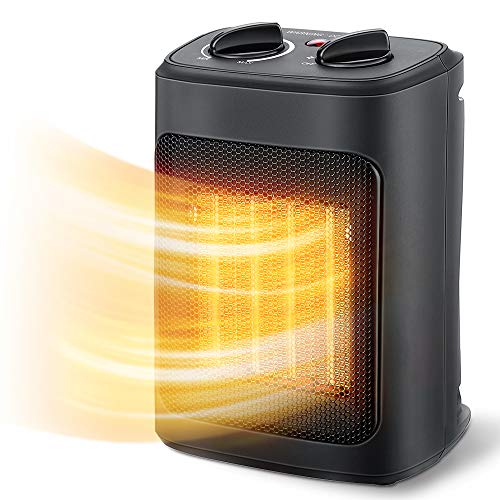
Aikoper’s PTC ceramic heater uses fast PTC heating technology and an efficient fan to heat quickly and distribute warmth more evenly. It includes three heat settings plus a fan-only mode, and an adjustable thermostat to maintain target temperatures.
- Efficiency: Designed to warm small offices quickly while providing options to lower power consumption by choosing lower heat settings.
- Thermostat Control: Maintains consistent comfort without continuous high-watt operation.
- Practical Safety: The product description highlights energy efficiency and temperature control rather than advanced certifications, which is a consideration in some workplace environments.
Aikoper suits buyers prioritizing rapid heat-up and adjustable output in compact workspaces, with the thermostat helping prevent long unattended runtime.
Buying Guide: Choosing The Safest Space Heater For Your Office
Selecting an office heater requires balancing safety features, heating performance, noise level, and controls. Below are key considerations and comparison perspectives to guide the decision.
1. Safety Certifications And Build
Look for recognized safety certifications such as ETL or UL where possible. Certified units have undergone electrical and fire-safety testing. Flame-retardant housings (V0 rating mentioned on some models) and robust housing materials reduce fire risk.
2. Overheat Protection And Tip-Over Shutoff
Automatic overheat shutoff and tip-over protection are essential for office use where the heater may be near paper, cables, or other combustibles. Tip-over shutoff that restarts only when upright reduces nuisance restarts and hazards.
3. Thermostat Control And Timers
A built-in adjustable thermostat maintains a set temperature and avoids continuous high-wattage operation. Programmable timers or auto-shutoff options provide additional safety for unattended use, reducing continuous runtime and energy waste.
4. Heating Technology: PTC Ceramic vs. Coil
PTC ceramic elements heat quickly and often provide safer surface temperatures than exposed coils. Ceramic heaters also tend to include auto-regulating behavior—when the room warms, the element reduces draw—helpful for offices sensitive to overheating.
5. Noise Level And Airflow
Office heaters should be quiet to avoid disrupting work. Look for manufacturers that publish noise levels (dB). Oscillation and fan design affect evenness of heat and perceived distraction; low-noise fans with oblique airflow are preferable for shared spaces.
6. Size, Placement And Portability
Compact, lightweight heaters with handles make it easy to move units between desks. For under-desk or desktop use, ensure the heater’s orientation and clearance match the intended placement and maintain manufacturer-recommended distances from combustible materials.
7. Energy Use And Heat Settings
Multiple heat settings (e.g., 700W/1000W/1500W) and eco modes help tailor energy consumption to actual needs. Lower wattage settings reduce circuit load and can be safer in older office wiring.
8. Controls And Accessibility
Digital displays, remote controls, and simple dials affect usability. Remote controls and timers reduce the need to frequently move the heater, while clear displays help confirm settings at a glance—useful in a busy office.
9. Cord And Plug Considerations
Check cord length and plug type. Some manufacturers caution against using extension cords; follow those guidelines to avoid voltage drop or overheating risks. Flat, grounded cords and adequate length for proper placement are safer.
Many offices restrict personal heaters due to fire-safety codes or insurance policies. Verify workplace rules before purchase. If allowed, opt for units with the strongest safety feature sets and documented certifications.
Comparison Perspectives
- Safety-First: Models with ETL/UL certification and explicit flame-retardant housings (e.g., Dreo) are preferable for stricter safety needs.
- Quiet Office: Choose heaters with published low dB or quiet fan designs for minimal distraction (Dreo lists ~34 dB).
- Portability: Lightweight units with handles (BLACK+DECKER, GiveBest) suit users who move heaters between rooms.
- Convenience & Scheduling: Digital timers and remote controls (VOCRS, Dreo) help automate operation and limit unattended runtime.
- Energy Conscious: PTC ceramic technology and ECO/thermostat modes (Aikoper, MoreNTO-style ECO modes) support lower energy use while maintaining comfort.
Safety Checklist Before Use
- Place the heater on a flat, stable surface away from paper, fabric, and cords.
- Keep at least the manufacturer-recommended clearance on all sides.
- Avoid using extension cords unless explicitly allowed by the manufacturer.
- Verify the heater’s certification and ensure your office policy permits personal heaters.
- Set timers and thermostats to limit continuous unattended operation.
Using these criteria and comparisons will help you select a safe and effective office space heater that matches your workspace size, noise tolerance, and safety requirements while offering the convenience features you need.
Tips for Getting the Best HVAC Prices
- Prioritize Quality Over Cost
The most critical factor in any HVAC project is the quality of the installation. Don’t compromise on contractor expertise just to save money. - Check for Rebates
Always research current rebates and incentives — they can significantly reduce your overall cost. - Compare Multiple Quotes
Request at least three estimates before making your choice. You can click here to get three free quotes from local professionals. These quotes include available rebates and tax credits and automatically exclude unqualified contractors. - Negotiate Smartly
Once you've chosen a contractor, use the proven strategies from our guide — How Homeowners Can Negotiate with HVAC Dealers — to get the best possible final price.