
Choosing a slim baseboard heater means balancing heat output, installation type, safety features, and a low-profile design that fits under windows or in tight spaces. Below is a quick summary of the most relevant slim electric baseboard heaters and cover options selected from Amazon listings for practical comparison.
| Product | Type / Wattage | Key Feature |
|---|---|---|
| Cadet F Series 36″ Electric Baseboard Heater | 750W / 120V | All-metal, powder-coated; requires a thermostat |
| EZ-HEAT 1500W Baseboard Space Heater (CZ600) | 1500W / Electric | Adjustable thermostat, safety sensors, stay-cool body |
| Comfort Zone CZ650B 1500W With Digital Thermostat | 1500W / Electric | Digital thermostat, dent-proof panels, overheat protection |
| KING 4K1210BW K Series 4′ Baseboard Heater | 1000W / 120V | Aluminum ribbon fin element, full-length safety cutout |
| Cadet F Series 24″ Electric Baseboard Heater | 350W / 240V (also 208V option) | Compact steel construction for smaller zones |
Content Navigation
Cadet F Series 36″ Electric Baseboard Heater
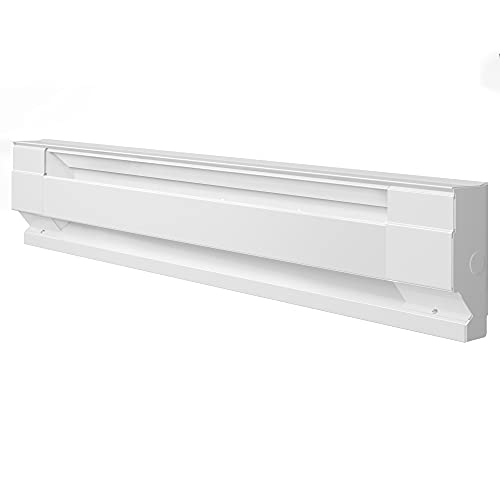
This Cadet F Series 36″ model is a wall-mounted, low-profile electric baseboard heater rated at 750 watts, 120 volts. The unit uses 25-gauge steel for the cabinet with a 20-gauge junction box and powder-coated finish for durability. It is an all-metal design intended for hard-wiring and requires a separate thermostat to control temperature.
Notable practical details include a grounded junction box and a design meant for permanent installation rather than plug-in use. The model is suitable where a slim, lower-wattage solution is needed for small rooms or supplemental heat. Installation considerations include wiring to an existing thermostat circuit or installing a new one wired to the heater.
EZ-HEAT 1500 Watt Baseboard Space Heater

The EZ-HEAT 1500W baseboard heater is designed for medium-sized rooms and emphasizes ease of temperature control with an adjustable thermostat and two heat settings. The product description highlights a stay-cool body, dent-proof end panels, and safety systems such as overheat protection and a tip-over switch. These safety features are beneficial when installing in multi-use spaces.
Call 888-896-7031 for Free Local HVAC Quotes – Compare and Save Today!
The manufacturer lists whisper-quiet convection heating operation to avoid noise in bedrooms or living areas. Since the product is provided as an electric baseboard unit, confirm whether the model requires hard-wire installation or comes with a plug-in cord depending on the listing and local electrical codes. Use of the adjustable thermostat allows more precise room control compared with fixed-output baseboards.
Comfort Zone CZ650B With Digital Thermostat

The Comfort Zone CZ650B is a 1500-watt convection baseboard heater equipped with a digital adjustable thermostat and a clear temperature display. The unit lists two heat settings and safety measures including overheat protection, a tip-over switch, and a stay-cool body. Its construction includes dent-proof end panels intended to reduce visible wear in high-traffic areas.
Its digital thermostat provides more granular control than mechanical dials, useful for maintaining targeted room temperatures. The stated silent operation and safety sensors make the CZ650B suitable where occupant comfort and safety are priorities. Check whether the particular SKU matches required wiring (hard-wired vs plug-in) and local code requirements prior to installation.
KING 4K1210BW K Series 4′ Baseboard Heater

The KING 4K1210BW is a 4-foot (1000W) hard-wired baseboard unit designed for permanent installation. It features an aluminum ribbon fin element for efficient heat transfer and a full-length safety cutout that reduces risk from localized overheating. The unit is not plug-in and requires direct wiring to the home electrical system.
Call 888-896-7031 for Free Local HVAC Quotes – Compare and Save Today!
With a focus on reliable core heating components, KING models are often used where dependable convection heating is needed in a slim housing. The aluminum element aims to maintain consistent distribution along the length of the heater, which can be beneficial under windows or in long cavity spaces where a narrow profile is necessary.
Cadet F Series 24″ Electric Baseboard Heater
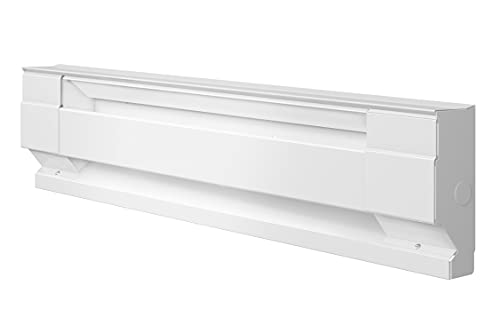
The Cadet F Series 24″ baseboard heater is a compact 350-watt option available in 240/208 volt configurations. Built from steel with a white finish, this small unit is suited for tight zones, bathrooms, or hallways where limited wattage and a narrow housing are required. Its smaller footprint allows installation in spaces where longer units would be impractical.
The listing identifies the product material and power source as electric. Because it operates at higher voltage in this configuration, ensure compatibility with your existing wiring and thermostat controls. For supplemental heat or for modest-sized rooms, a 24-inch slim heater can provide targeted warmth without occupying significant baseboard space.
Buying Guide: How To Choose A Slim Baseboard Heater
Selecting a slim baseboard heater requires evaluating room size, electrical supply, safety features, and installation constraints. Below are the key considerations to compare models objectively.
Tips for Getting the Best HVAC Prices
- Prioritize Quality Over Cost
The most critical factor in any HVAC project is the quality of the installation. Don’t compromise on contractor expertise just to save money. - Check for Rebates
Always research current rebates and incentives — they can significantly reduce your overall cost. - Compare Multiple Quotes
Request at least three estimates before making your choice. You can click here to get three free quotes from local professionals. These quotes include available rebates and tax credits and automatically exclude unqualified contractors. - Negotiate Smartly
Once you've chosen a contractor, use the proven strategies from our guide — How Homeowners Can Negotiate with HVAC Dealers — to get the best possible final price.
Heat Output And Room Size
- Wattage vs Room Area: Higher wattage provides more heat. Typical guidance is 10 watts per square foot for average insulation—adjust as needed for ceiling height and windows.
- Single-Room vs Supplemental: Use lower-watt models (300–800W) for small baths or hallways; 1000–1500W units are common for medium rooms.
Voltage And Installation Type
- Hard-Wired vs Plug-In: Many baseboards, especially slim permanent models, require hard-wiring and professional installation. Confirm whether the unit is plug-in or requires electrical work.
- Voltage Requirements: Models can be 120V, 208V, or 240V. Match heater voltage to your circuit and panel capacity.
Controls And Thermostats
- Built-In Thermostats: Units with digital or adjustable thermostats allow direct control at the heater. These are useful if there is no central thermostat.
- External Thermostat Compatibility: Some slim models require a separate wall thermostat. Verify compatibility and wiring needs before purchase.
Safety Features
- Overheat Protection: Prevents excessive temperatures and reduces fire risk.
- Tip-Over Switch: Relevant for freestanding units; less common on hard-wired baseboards but useful for portable slim models.
- Stay-Cool Body: Reduces burn risk on external surfaces, important for homes with children or pets.
Construction And Durability
- Material: Steel housings with powder-coat finishes resist rust and dents. Aluminum ribbon elements provide efficient heat transfer.
- End Panels And Covers: Dent-proof end panels extend aesthetic life in high-traffic spaces. Separate front covers are available for refurbishment or style upgrades.
Noise And Comfort
- Convection Quietness: Most slim baseboards use convection and are quiet compared to forced-air systems. If silence is crucial, look for listings that call out whisper-quiet operation.
- Even Heat Distribution: Longer elements distribute heat more evenly; shorter slim units concentrate heat in a smaller zone.
Installation Constraints And Code
- Clearance And Mounting: Check manufacturer recommendations for floor clearance, wall mounting, and distance from drapes or furniture.
- Local Codes: Electrical codes determine permitted wiring methods. Hard-wired units may require a licensed electrician and proper circuit sizing.
Maintenance And Upgrades
- Ease Of Cleaning: Slim, sealed housings reduce dust accumulation inside the element area. Removable covers simplify cleaning.
- Cover Replacements: If appearance is a concern, aftermarket slip-on covers exist to refresh older units without replacing the heater core.
Comparison Perspectives
- Performance: Compare watt-per-foot and listed element types (aluminum ribbon vs nichrome) to gauge efficiency and responsiveness.
- Control Options: Digital thermostats provide tighter control and easier monitoring than simple two-stage switches.
- Safety & Warranty: Inspect manufacturer safety features and warranty terms to assess long-term reliability and support.