
Choosing the right space heater often comes down to BTU output and how that output matches your room size and safety needs. Below is a quick comparison of five space heaters spanning portable propane, natural gas, and electric PTC/ceramic types to help match heating power, coverage, and features to common household and workspace scenarios.
| Product | Type | BTU / Watt Rating | Recommended Use |
|---|---|---|---|
| Mr. Heater Portable Buddy MH9BX | Propane Radiant | 4,000–9,000 BTU | Camping, small shops, patios, garages |
| HiCFM 1500W Electric Utility Heater | Electric PTC / Ceramic | Approx. 5,120 BTU (1500W) | Bedrooms, offices, small rooms |
| Mr. Heater Convection Heater (30–80K BTU) | Propane Convection | 30,000–80,000 BTU | Large shops, garages, workspaces |
| ProCom MN300TBA-B Blue Flame | Natural Gas Blue Flame | 30,000 BTU | Home or office wall-mounted heating |
| Dreo 1500W Electric Space Heater | Electric PTC / Ceramic | Approx. 5,120 BTU (1500W) | Bedrooms, offices, living rooms |
Content Navigation
- Mr. Heater Portable Buddy Heater MH9BX 4,000-9,000 BTU
- HICFM 1500W Electric Utility Space Heater BTU 5120 With Thermostat
- Mr. Heater Convection Heater 30-80K BTU/HR
- ProCom MN300TBA-B Ventless Natural Gas Blue Flame Space Heater
- Dreo Space Heater 1500W PTC Ceramic With Thermostat
- Buying Guide — How To Choose The Right BTU Space Heater
- 1. Understand BTU And Wattage Equivalents
- 2. Match Output To Space Size
- 3. Fuel Type And Ventilation
- 4. Heat Delivery Style: Radiant vs Convection vs Blue Flame
- 5. Safety Features To Prioritize
- 6. Controls, Thermostat, And Convenience
- 7. Mobility, Installation, And Fuel Logistics
- 8. Efficiency, Operating Cost, And Use Case
- 9. Noise, Airflow, And Indoor Air Quality
- 10. Regulations And Code Compliance
Mr. Heater Portable Buddy Heater MH9BX 4,000-9,000 BTU
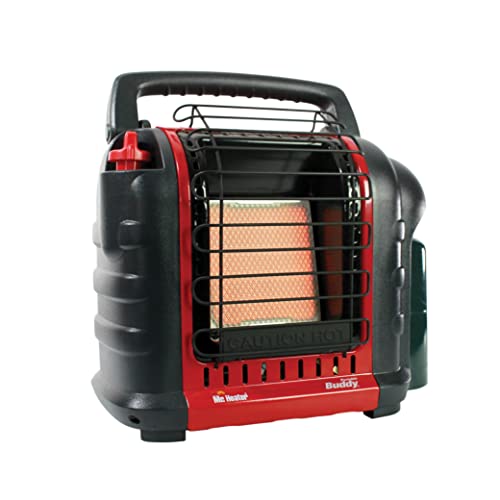
This portable propane radiant heater offers adjustable output from 4,000 to 9,000 BTU, suitable for warming areas up to about 225 sq. ft. It uses infrared-style radiant heat to directly warm people and objects rather than primarily heating air, which can feel quicker in open or drafty spaces.
- Powerful Radiant Heat: Advanced infrared-style technology for localized warmth.
- Coverage: Up to ~225 sq. ft. at max output (manufacturer guidance).
- Safety Features: Enhanced tip-over safety switch with audible engagement.
- Ignition: Durable Piezo igniter—no matches, lighters, or batteries required.
- Portability: Compact design intended for camping, patios, and job sites.
As a propane radiant unit, this heater is optimized for targeted, quick warmth and is commonly chosen for areas where electric power may not be available. Users should observe propane safety practices and ensure proper ventilation when used outside of well-ventilated spaces.
HICFM 1500W Electric Utility Space Heater BTU 5120 With Thermostat

This electric PTC heater converts 1500 watts into heat, roughly equivalent to 5,120 BTU. It’s designed for fast heat-up and includes a thermostat, two power settings, and a fan-only mode for year-round use.
Call 888-896-7031 for Free Local HVAC Quotes – Compare and Save Today!
- Heating Technology: PTC element with fast heat response—warms within seconds.
- Safety: Auto overheat protection, tip-over switch, power indicator, and UL safety approval.
- Controls: Adjustable thermostat knob for basic temperature control.
- Portability: Built-in carrying handle for moving between rooms.
Electric 1500W heaters are common for indoor rooms where plug-in convenience and built-in safety certifications (UL) are priorities. They are zero-emissions at point of use, making them suitable for bedrooms and offices.
Mr. Heater Convection Heater 30-80K BTU/HR
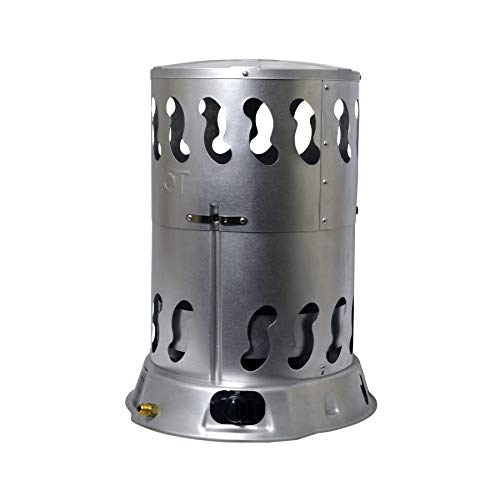
This propane convection heater delivers between 30,000 and 80,000 BTU per hour, intended for large spaces such as big garages, warehouses, or commercial work areas. Convection heaters warm air which then circulates to raise ambient temperature across a large area.
- High Output: 30,000–80,000 BTU suitable for spaces up to ~2,000 sq. ft. (manufacturer guidance).
- Fuel: Propane-powered, designed to operate for extended durations on large tanks.
- Safety: Standing pilot for continuous, reliable ignition and built-in safety controls.
This style is selected for heating large volume spaces where sustained ambient warmth is required. Proper ventilation and fuel storage practices are essential when operating high-BTU propane equipment indoors or in semi-enclosed spaces.
ProCom MN300TBA-B Ventless Natural Gas Blue Flame Space Heater

The ProCom Blue Flame heater provides a 30,000 BTU natural gas output and is designed as a ventless wall- or floor-mounted unit for residential use. Blue flame units heat room air directly and can be efficient for steady background heating.
Call 888-896-7031 for Free Local HVAC Quotes – Compare and Save Today!
- Output & Coverage: 30,000 BTU for areas up to ~1,400 sq. ft. according to manufacturer specs.
- Controls: High/Medium/Low thermostat control for modulated output.
- Installation: Includes wall-mount hardware and base feet for placement flexibility.
- Design: Slim profile intended to integrate into living spaces.
Ventless blue flame heaters are effective at warming air across rooms but rely on indoor combustion; they typically require CO monitoring and adherence to local building codes regarding ventless appliances.
Dreo Space Heater 1500W PTC Ceramic With Thermostat

The Dreo portable electric heater uses a 1500W PTC ceramic system, offering fast warm-air circulation and a digital thermostat with precise temperature increments. Its safety features include tilt detection, overheat protection, and flame-retardant materials.
- Heating Performance: Rapid heat delivery with enhanced funnel design for extended reach.
- Control: Digital display, 12-hour timer, remote control, and wide temperature range with 1°F increments.
- Safety: Tilt-detection sensor, ETL certification, V0 flame-retardant materials, and safety plug.
This unit targets users who want accurate thermostat control, programmable scheduling, and modern safety features for bedrooms and living areas. As a 1500W electric heater, it matches typical plug-in circuit limits and offers consistent, emission-free operation.
Buying Guide — How To Choose The Right BTU Space Heater
Selecting the appropriate heater involves matching BTU output (or wattage) to room size, fuel availability, safety requirements, and intended use. Below are practical considerations and comparison perspectives to guide selection.
1. Understand BTU And Wattage Equivalents
BTU (British Thermal Unit) measures heat energy per hour. For electric heaters, 1,000 watts ≈ 3,412 BTU. A common 1500W electric heater equals roughly 5,120 BTU. Fuel-based outputs (propane/natural gas) are listed directly in BTU.
2. Match Output To Space Size
- Small Rooms (up to ~150–300 sq. ft.): 1,500W / ~5,000 BTU or a propane radiant 4,000–9,000 BTU unit can be sufficient.
- Medium Rooms (300–800 sq. ft.): Consider 8,000–20,000 BTU or combined electric units and improved insulation.
- Large Spaces (800+ sq. ft., garages, workshops): High-output units like 30,000–80,000 BTU convection or blue-flame heaters provide continuous ambient heat.
3. Fuel Type And Ventilation
- Electric (PTC/Ceramic): No combustion byproducts; safe for bedrooms; limited by circuit capacity (1500W common).
- Propane: Great for portability and outdoor/garage use; requires safe storage and ventilation for indoor use.
- Natural Gas (Blue Flame): Good for wall-mounted home heating and long-term operation; typically ventless but requires proper CO monitoring and adherence to local codes.
4. Heat Delivery Style: Radiant vs Convection vs Blue Flame
- Radiant: Heats objects and people directly—effective in open or drafty spaces and for spot heating.
- Convection: Warms air for even ambient temperature across larger areas but can be slower to feel warm.
- Blue Flame: Direct combustion heats air efficiently; often used for whole-room background heating but involves combustion products.
5. Safety Features To Prioritize
- Tip-Over Protection: Automatic shutoff if unit falls.
- Overheat Protection: Auto shutoff if internal temps exceed safety thresholds.
- Certifications: UL/ETL listings for electric units; follow manufacturer installation guidance for fuel-fired heaters.
- Ventilation & CO Detectors: Required for gas or propane use indoors; ensure adequate airflow.
6. Controls, Thermostat, And Convenience
Digital thermostats, timers, remote control, and precise temperature increments improve comfort and can reduce energy use. For larger or permanently installed units, integrated thermostats or room thermostats offer better regulation.
7. Mobility, Installation, And Fuel Logistics
- Portable Units: Electric PTC and small propane radiant heaters are easy to move between rooms.
- Permanently Installed Units: Natural gas or larger convection heaters may require professional installation and gas lines.
- Fuel Availability: Consider propane tank access or natural gas hookups versus the convenience of plug-in electric options.
8. Efficiency, Operating Cost, And Use Case
Electric heaters convert most input energy to heat at point of use, but operating costs depend on local electricity rates. Gas and propane typically have differing cost-per-BTU economics; compare local fuel prices and desired runtime.
9. Noise, Airflow, And Indoor Air Quality
- Fan-assisted units produce airflow and noise—suitable for circulated heating but consider lower-noise models for bedrooms.
- Combustion units produce moisture and potential combustion byproducts—monitor indoor air quality and humidity impacts.
10. Regulations And Code Compliance
For ventless gas and high-BTU installations, verify local building codes and carbon monoxide regulations. Professional installation is often recommended for natural gas and high-output propane convection heaters.
Use these criteria to prioritize which heater features matter most for your situation: coverage area, fuel type, mobility, safety certifications, and control precision. Comparing BTU output to room size and balancing that with ventilation and operating costs will help identify the most suitable option.
Tips for Getting the Best HVAC Prices
- Prioritize Quality Over Cost
The most critical factor in any HVAC project is the quality of the installation. Don’t compromise on contractor expertise just to save money. - Check for Rebates
Always research current rebates and incentives — they can significantly reduce your overall cost. - Compare Multiple Quotes
Request at least three estimates before making your choice. You can click here to get three free quotes from local professionals. These quotes include available rebates and tax credits and automatically exclude unqualified contractors. - Negotiate Smartly
Once you've chosen a contractor, use the proven strategies from our guide — How Homeowners Can Negotiate with HVAC Dealers — to get the best possible final price.