
Quiet space heaters are essential when you want targeted warmth without noise disruption in bedrooms, offices, or dorms. Below is a concise comparison followed by focused product reviews and a practical buying guide to help you choose the most suitable low-noise heater.
| Product | Brand | Key Noise Feature |
|---|---|---|
| GiveBest Portable Electric Space Heater | GiveBest | Compact design for localized quiet heating |
| Dreo Space Heater (Safe Quiet Room Heater) | Dreo | Marketed as a safe, quiet room heater with PTC tech |
| PELONIS PHTA1ABB Portable | PELONIS | Compact & Quiet; noise <50dB claimed |
| Pereysi 1000W Small Space Heater | Pereysi | Designed for quiet desktop/personal use |
| BLACK+DECKER Portable Space Heater | BLACK+DECKER | Compact fan/heat combo for personal spaces |
Content Navigation
- GiveBest Portable Electric Space Heater With Thermostat
- Dreo Space Heater For Indoor Use With Remote And Thermostat
- PELONIS PHTA1ABB Portable Quiet Cooling & Heating Space Heater
- 1000W Small Space Heaters For Indoor Use Pereysi Personal Heater
- BLACK+DECKER Portable Space Heater With Carry Handle
- Buying Guide: How To Choose A Quiet Space Heater
GiveBest Portable Electric Space Heater With Thermostat

This compact ceramic heater offers two heat levels (1500W and 750W) and a cool fan mode for year-round use. A built-in thermostat cycles power to maintain a preset temperature between 0°F and 158°F, reducing continuous run time and potential noise from repeated high-power cycling. Safety features include automatic overheat shutoff and tip-over protection that auto-resumes when uprighted.
For quiet-focused use, the small form factor and lower-watt option (750W) can keep background noise low while providing localized warmth at a desk or bedside. The unit’s fan-based ceramic system is typical of personal heaters and produces a soft airflow sound rather than high fan roar, making it suitable for small rooms and offices where silence is preferred.
Dreo Space Heater For Indoor Use With Remote And Thermostat
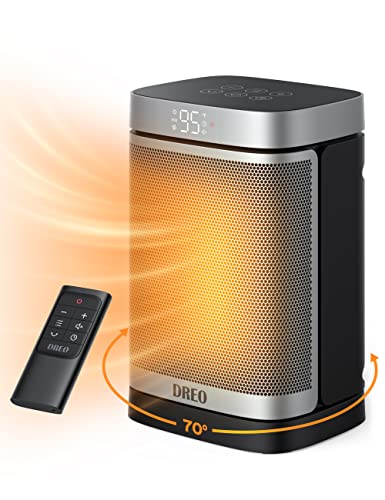
Dreo’s PTC ceramic heater emphasizes fast, efficient heating and safety. The product description highlights Shield360° protection with tip-over and overheat sensors and flame-retardant materials. The digital thermostat allows precise control and ECO modes that reduce run time and energy—features that can indirectly reduce audible operation by minimizing high-power fan cycles.
Call 888-896-7031 for Free Local HVAC Quotes – Compare and Save Today!
The design intention is a quiet room heater suitable for feet-level placement or desk use. PTC ceramic elements typically produce less mechanical noise than larger blower systems. Remote control and timer functions further support low-disturbance use by allowing adjustments from a distance without physically moving the unit.
PELONIS PHTA1ABB Portable Quiet Cooling & Heating Space Heater

PELONIS advertises compact and quiet operation with noise listed under 50dB. The 2-in-1 heater/fan functionality with 1500W/750W settings and PTC ceramic heating supports fast heat-up and lower-noise continuous operation. The small footprint (approx. 6″ x 7″ x 9″) suits placement on or under a desk.
Noise ratings under 50dB place this model near conversation-level sound, making it appropriate for bedrooms and office environments where low ambient noise is important. The combination of a high-speed fan element and ceramic heating allows efficient heat distribution with a quieter motor speed profile than larger space heaters.
1000W Small Space Heaters For Indoor Use Pereysi Personal Heater

Pereysi’s 1000W ceramic personal heater targets small, close-range warming needs with a focus on quiet desktop operation. It offers three operating modes—natural wind, low (700W), and high (1000W)—and a built-in adjustable thermostat for steady temperature control. Lower wattage modes typically produce less fan noise and fewer power cycling events.
Call 888-896-7031 for Free Local HVAC Quotes – Compare and Save Today!
This model’s compact design and lower maximum wattage make it appropriate for workstations, dorm rooms, or under-desk placement where noise-sensitive users require gentle, consistent warmth. As with other PTC heaters, mechanical noise is mainly from the fan and is generally lower than turbine-style units.
BLACK+DECKER Portable Space Heater With Carry Handle

BLACK+DECKER’s compact desktop heater is marketed as a portable solution for personal spaces, featuring three settings—fan, 750W, and 1500W—and an adjustable thermostat. The small size and lightweight design focus on targeted warmth with minimal disturbance. The 6-foot power cord and carry handle add usability across rooms.
For quiet needs, the lower heat setting reduces fan speed and audible output, making it suitable for office desks or bedside tables. The heater/fan combo provides versatility, but note that fan-only operation can still introduce a low-level background sound depending on the setting.
Buying Guide: How To Choose A Quiet Space Heater
Noise Level Metrics: Look for explicit noise ratings (dB) where provided. Values below 50 dB are typically considered quiet for household use. If dB is not listed, choose PTC ceramic models and lower-watt options for reduced mechanical noise.
Heating Technology: PTC ceramic heaters are common in quiet units because they warm quickly and rely on moderate-speed fans. Infrared and oil-filled radiators can be silent (no fan) but heat differently—infrared targets objects and people, while oil radiators provide steady convective warmth with almost no sound.
Wattage And Size Match: Higher wattage (1500W) offers faster heating for larger spaces but can mean stronger fans and more noise. For personal or small-room use, consider 700–1000W units that provide adequate warmth with lower fan speeds.
Thermostat And Power Cycling: Accurate digital thermostats reduce frequent on/off cycles and prevent high-power bursts that can increase audible fan activity. Units with ECO or auto modes help maintain temperature smoothly and quietly.
Fan Speed And Modes: Models with multiple fan speeds and a fan-only mode give flexibility. For quiet environments choose lower fan settings or models with variable-speed fans that ramp gradually rather than switching abruptly.
Placement And Distance: Position heaters under desks or beside seating when safe and recommended by the manufacturer to allow lower settings to be effective. Closer placement reduces required output and associated noise.
Safety Features: Tip-over protection and overheat shutoff are essential for any indoor heater. These features do not directly affect noise but are critical for unattended operation in bedrooms and offices.
Maintenance And Build Quality: Dust buildup increases fan noise over time. Choose units with easy access for cleaning and consider models with washable filters or simple grills for routine maintenance.
Comparison Perspectives:
- Personal/Desktop Use: Prefer compact PTC ceramic units with 700–1000W and low fan speeds (e.g., Pereysi, BLACK+DECKER).
- Small Room/Bedroom: Look for models with thermostat precision and ECO modes to minimize cycling noise (e.g., Dreo and PELONIS).
- All-Season Versatility: Units with fan-only modes and dual heating settings offer lower-noise summer use while providing heat in winter (e.g., GiveBest, PELONIS).
- Silent Heating Preference: If near-zero noise is a priority, consider oil-filled radiators or infrared panels (note: these were not among the products listed but are worth researching for silent operation).
Final Practical Tips: Measure the room or desk area and choose a heater rated for that coverage. Read product noise-related specs and customer reports when available. Use lower watt settings and thermostats to keep both energy use and noise levels down. Place the heater on stable, vibration-dampening surfaces to avoid resonance and rattling.
Tips for Getting the Best HVAC Prices
- Prioritize Quality Over Cost
The most critical factor in any HVAC project is the quality of the installation. Don’t compromise on contractor expertise just to save money. - Check for Rebates
Always research current rebates and incentives — they can significantly reduce your overall cost. - Compare Multiple Quotes
Request at least three estimates before making your choice. You can click here to get three free quotes from local professionals. These quotes include available rebates and tax credits and automatically exclude unqualified contractors. - Negotiate Smartly
Once you've chosen a contractor, use the proven strategies from our guide — How Homeowners Can Negotiate with HVAC Dealers — to get the best possible final price.