
Find reliable space heaters that can be scheduled to start heating at a set time. This guide compares five models with programmable timers, Wi‑Fi scheduling, thermostat auto‑on features, and safety systems so you can choose the right heater for bedrooms, offices, and small living spaces.
| Product | Type | Key Scheduling Feature |
|---|---|---|
| Heat Storm HS-1500-PHX-WIFI | Wall-Mounted Infrared | Wi‑Fi Phone Control / Remote Scheduling |
| Heat Storm HS-1000-WX-WIFI | Wall-Mounted Infrared | Wi‑Fi Phone Control / Remote Scheduling |
| 450W Programmable Space Heater (Minetom) | Plug-In Programmable Heater | Digital Timer With Auto Power On/Off |
| Dr Infrared Heater Portable, 1500W | Portable Dual System | 12-Hour Automatic Shut-Off Timer, Remote Control |
| EZ-HEAT Electric Ceramic Portable Heater | Compact Ceramic Heater | Thermostat Auto On/Off (Temperature-Based) |
Content Navigation
- Heat Storm HS-1500-PHX-WIFI Infrared Heater, Wifi Wall Mounted
- Heat Storm HS-1000-WX-WIFI Infrared Wi-Fi Heater, 1000 Watt
- 450W Programmable Space Heater, Remote Wall Outlet Electric Space Heater
- Dr Infrared Heater Portable Space Heater, 1500-Watt, Cherry
- EZ-HEAT Electric Ceramic Portable Space Heater with Thermostat and Fan
- Buying Guide: How To Choose A Space Heater That Turns On At A Certain Time
Heat Storm HS-1500-PHX-WIFI Infrared Heater, Wifi Wall Mounted

This wall-mounted infrared heater is designed for rooms where floor space matters. The unit is Wi‑Fi enabled, allowing scheduling and remote control from a phone app. It includes a touch screen and a remote, and offers tip‑over safety and a digital thermostat.
- Scheduling And Remote Control: Wi‑Fi connectivity makes it possible to turn the heater on at a chosen time using the manufacturer’s app or compatible smart home setups.
- Installation: Wall mount design saves floor space; professional installation not required for basic mounting.
- Safety And Controls: Tip‑over safety shutoff, digital thermostat, and remote included for on/off and temperature adjustments.
- Use Cases: Good for bedrooms, kitchens, and offices where remote scheduling or pre‑heating is desirable.
Heat Storm HS-1000-WX-WIFI Infrared Wi-Fi Heater, 1000 Watt

This lower‑wattage wall-mounted infrared heater focuses on targeted zone heating and remote scheduling. It warms objects (infrared) rather than only air, and the Wi‑Fi feature enables app‑based scheduling to turn the unit on at a set time.
- Infrared Heating: Heats objects for lingering warmth after power‑off; suitable for rooms that need quick, localized heat.
- Remote Scheduling: Wi‑Fi and app control provide on/off scheduling and temperature adjustment from a smartphone.
- Safety Features: Safe touch grill and automatic shutoff in tip‑over events.
- Space Saving: Wall mount keeps floor clear—useful in apartments or small rooms where you want preheating before arrival.
450W Programmable Space Heater, Remote Wall Outlet Electric Space Heater

Call 888-896-7031 for Free Local HVAC Quotes – Compare and Save Today!
This compact plug-in heater emphasizes programmed on/off control and low wattage operation. The LED display and timer let you set auto power on or auto shut‑off in hourly increments, and a digital thermostat maintains a target temperature.
- Programmable Timer: Timer button cycles through 1–12 hours for auto power on when the heater is off or auto shut‑off when it’s on.
- Auto Power On Function: The heater can be set to power on after a countdown, enabling preheating at a selected future time.
- Low Wattage, Circuit Friendly: 450W operation reduces circuit load and can be economical for mild climates or supplemental warmth.
- Thermostat Control: Temperature settable from 60°F to 90°F; unit cycles to maintain setpoint.
Dr Infrared Heater Portable Space Heater, 1500-Watt, Cherry
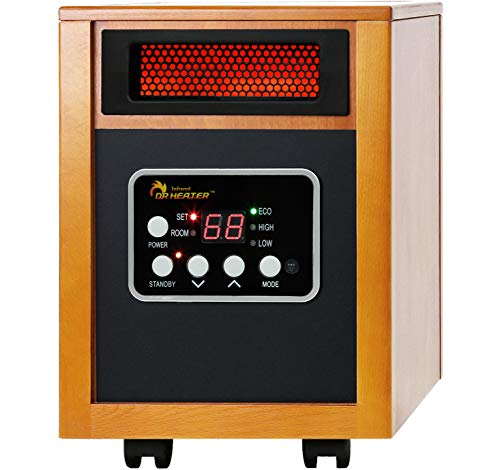
This portable heater uses a dual heating system (infrared quartz tube + PTC) for stronger heat output and includes an IR remote and a 12‑hour automatic shut‑off timer. It’s intended for larger rooms and features tip‑over and overheat protection.
- 12-Hour Timer: The timer provides automatic shut‑off after a preset interval; useful for auto shut‑down but not explicitly for delayed auto power on.
- Dual Heating System: Infrared plus PTC claim higher effective heat delivery suitable for larger living spaces.
- Safety: Tip‑over protection and overheat protection with a quiet blower.
- Use Case: Appropriate for users who want remote control and timed shut‑off for overnight or extended runs; pairing with a smart plug can add scheduled auto‑on capability.
EZ-HEAT Electric Ceramic Portable Space Heater with Thermostat and Fan
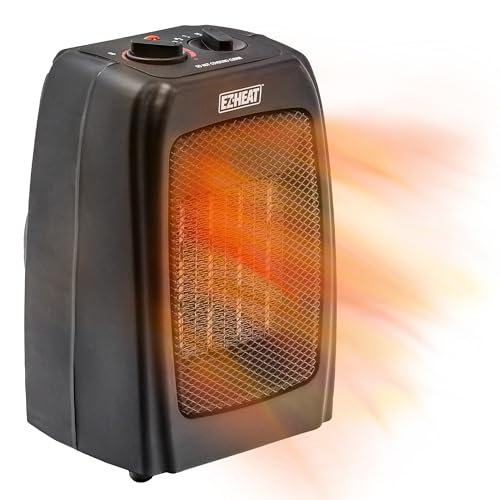
This compact ceramic heater provides two heat settings and a cooling fan, with a thermostat that automatically turns the heater off at the preset temperature and reactivates when the temperature falls. Built‑in overheat and tip‑over protection add safety for continuous use.
- Thermostat Auto On/Off: The thermostat cycles the heater to maintain the set temperature—this achieves automatic power on behavior based on room temperature rather than a clock schedule.
- Portability: Small size and integrated handle make it easy to move between rooms for spot heating.
- All-Season Use: Two heat levels plus a fan-only setting extend use into warmer months.
- Safety Features: Flame-resistant materials, automatic overheat shutoff, and tip‑over switch.
Buying Guide: How To Choose A Space Heater That Turns On At A Certain Time
When selecting a heater that can start heating at a set time, consider scheduling method, control flexibility, power and coverage, safety features, and integration with existing smart home systems. Below are core considerations to compare across products.
Call 888-896-7031 for Free Local HVAC Quotes – Compare and Save Today!
Scheduling And Auto Power On Methods
- Wi‑Fi/App Scheduling: Heaters with built‑in Wi‑Fi (like the Heat Storm units) allow app‑based schedules and remote on/off. This is the most convenient method for time‑based activation from anywhere.
- Built-In Timers: Some heaters include a clock timer with auto power on/off functionality (e.g., the Minetom 450W plug‑in). Confirm whether the timer supports auto power on (delayed start) as well as auto shut‑off.
- Thermostat-Based Auto On: Thermostat control turns the heater on/off automatically based on temperature changes rather than a clock schedule. This is useful for maintaining a target temperature but does not follow a specific clock time.
- Smart Plug Integration: For heaters without native scheduling, using a Wi‑Fi smart plug can add timed on/off scheduling. Ensure the heater supports safe use with smart plugs (steady power draw, no built‑in startup protection causing issues).
Power, Coverage, And Energy Considerations
- Wattage vs Room Size: Higher wattage (1500W) produces more heat for larger rooms. Low‑wattage units (450W) are better for mild climates, small rooms, or to avoid circuit overloads.
- Energy Efficiency: Infrared heaters warm objects and can feel efficient in certain layouts. Ceramic PTC elements often provide steady heat and quick recovery.
- Circuit Load: Check amperage and avoid running multiple high‑wattage devices on the same circuit. Low‑wattage plug‑in options reduce the risk of tripping breakers.
Control Options And Convenience
- Remote And App Controls: Remote controls and smartphone apps allow remote scheduling and mode changes; choose units with reliable apps and clear interfaces.
- Thermostat Precision: Digital thermostats with actual degree settings offer tighter temperature control than simple low/medium/high switches.
- Timers Granularity: Look for units with hourly increments and the ability to set both delayed start and delayed stop if needed.
Safety And Build Quality
- Tip‑Over And Overheat Protection: Essential features for unattended scheduled operation; these automatically shut the heater off in unsafe situations.
- Surface Temperature: Units with cool‑touch grills reduce burn risk, especially in homes with children or pets.
- Durability: Rugged steel bodies suit garages and workshops; compact plastic housings are fine for bedrooms but verify flame‑resistant materials.
Installation And Placement
- Wall‑Mounted Vs Portable: Wall‑mounted models save floor space and often integrate better with home decor. Portable heaters allow room‑to‑room flexibility.
- Ventilation And Clearance: Allow proper clearance from walls, furniture, curtains, and follow manufacturer mounting/placement guidelines to ensure safe scheduling and operation.
Comparison Perspectives
- Smart Home Integration: If you want time‑based control tied to routines (e.g., preheat 30 minutes before wake time), choose Wi‑Fi models or use a smart plug integrated with your assistant.
- Budget And Operating Cost: Low‑wattage programmable models can reduce operating costs but may not meet comfort needs in colder climates.
- Safety Priority: For overnight scheduling, prioritize heaters with both tip‑over and overheat protection and a cool exterior.
- Coverage Needs: For whole‑room heating choose higher wattage or dual system heaters; for personal zone heating a small programmable plug‑in or ceramic heater may suffice.
Use the checklist above to match scheduling features and heating performance to your living situation. If precise clock‑based activation is required, focus on Wi‑Fi scheduling or models explicitly listing an auto power on timer. For temperature‑responsive automation, prioritize reliable thermostats that cycle the unit on and off for comfort and efficiency.
Tips for Getting the Best HVAC Prices
- Prioritize Quality Over Cost
The most critical factor in any HVAC project is the quality of the installation. Don’t compromise on contractor expertise just to save money. - Check for Rebates
Always research current rebates and incentives — they can significantly reduce your overall cost. - Compare Multiple Quotes
Request at least three estimates before making your choice. You can click here to get three free quotes from local professionals. These quotes include available rebates and tax credits and automatically exclude unqualified contractors. - Negotiate Smartly
Once you've chosen a contractor, use the proven strategies from our guide — How Homeowners Can Negotiate with HVAC Dealers — to get the best possible final price.