
Choosing the right thermostat for a heating system affects comfort, energy use, and compatibility. This guide reviews five thermostats suited for heat-only and single-stage heater systems, comparing features like programmability, display, wiring requirements, and installation notes. Use the summary table to quickly compare models, then read individual product sections and the buying guide to decide which thermostat fits your heater and home.
| Product | Type | Key Feature |
|---|---|---|
| Suuwer Non-Programmable Thermostat | Non-Programmable (Single-Stage) | Blue backlight, 2–5 wire compatibility |
| Honeywell Home RTH2300B1038 | 5-2 Day Programmable | 4 periods/day, ±1°F control |
| Honeywell CT87K1004 Round Heat Only | Manual Heat-Only | Classic round design, ±1°F accuracy |
| Honeywell TH1100DV1000 Pro-Digital | Digital Heat-Only | Backlit display, adjustable 40–90°F |
| Emerson 1E78-140 Heat Only | Non-Programmable Heat-Only | Easy-read backlit display |
Content Navigation
- Suuwer Non-Programmable Thermostats For Home 1 Heat/1 Cool
- Honeywell Home RTH2300B1038 5-2 Day Programmable Thermostat
- Honeywell CT87K1004 The Round Heat Only Manual Thermostat
- Honeywell TH1100DV1000 Pro-Digital 2-Wire Heat Only
- Emerson Thermostats 1E78-140 Non-Programmable Heat Only
- Buying Guide: Choosing The Right Thermostat For Your Heater
- 1. Confirm System Compatibility
- 2. Wiring And Installation
- 3. Programmable Vs. Non-Programmable
- 4. Display, Controls, And Usability
- 5. Features That Matter
- 6. Accuracy And Control Stability
- 7. Aesthetics And Physical Fit
- 8. Long-Term Value And Energy Considerations
- 9. Comparison Perspectives
- 10. Final Compatibility Checklist
Suuwer Non-Programmable Thermostats For Home 1 Heat/1 Cool

Application: Designed for conventional single-stage heating systems (1 heat/1 cool). The product listing emphasizes reading installation and wiring instructions and verifying compatibility with existing 2–5 wire bases.
Key Features: Blue backlit display, simple non-programmable interface, supports gas/oil/electric furnaces for single-stage control. The listing warns it does not work with multistage, heat pump, PTAC, line voltage electric baseboard, or mini-split systems.
Installation & Compatibility Notes: The manufacturer advises caution for inexperienced installers and recommends verifying the existing base wiring. This thermostat is suitable when you need a straightforward replacement for a single-stage furnace or when programming features are unnecessary.
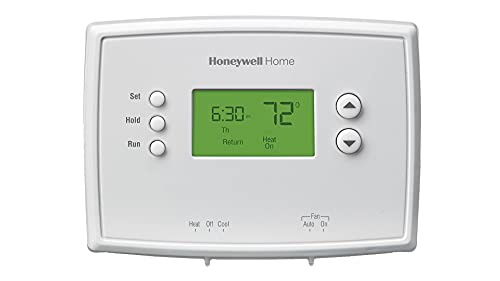
Honeywell Home RTH2300B1038 5-2 Day Programmable Thermostat
Call 888-896-7031 for Free Local HVAC Quotes – Compare and Save Today!
Application: Best for homeowners wanting schedule control for heat and cooling with separate weekday and weekend programs. Suitable for systems that support standard thermostat wiring and single-stage control.
Key Features: 5-2 day programming with four periods per day (wake, leave, arrive, sleep), precise temperature control ±1°F, backlit digital display, and temperature range limits to prevent extreme setpoints. Interface provides one-touch setpoint access.
Operational Considerations: The programming capability helps reduce energy use by following routines. Ensure your heating system is compatible with programmable thermostats and that wiring matches the device requirements before purchase.
Honeywell CT87K1004 The Round Heat Only Manual Thermostat

Application: Traditional manual thermostat for heat-only systems, compatible with common single-stage furnace installations and often chosen for its classic look and simplicity.
Key Features: Iconic round styling with a decorative cover ring that hides wall marks and a ±1°F accurate mechanical temperature control. No electronic programming or digital display—operates with a simple dial.
Call 888-896-7031 for Free Local HVAC Quotes – Compare and Save Today!
Who It Suits: Ideal for users who prefer mechanical controls, simple installation, and a familiar aesthetic. Confirm base and wiring compatibility for heat-only systems prior to installation.
Honeywell TH1100DV1000 Pro-Digital 2-Wire Heat Only

Application: Digital heat-only thermostat designed for two-wire furnace controls and similar single-stage heating systems where a simple digital readout is preferred.
Key Features: Adjustable temperature scale across a standard 40–90°F selection, backlit display for easy reading, and constant ambient temperature display. The digital format offers straightforward control without multi-program scheduling.
Installation & Use: A 2-wire compatible digital thermostat is helpful for older heating systems or where minimal wiring exists. Verify that your heater supports the two-wire configuration and that you do not need cooling control.
Emerson Thermostats 1E78-140 Non-Programmable Heat Only

Application: Non-programmable digital thermostat for single-stage heat-only setups. Suited for users who want a digital display without scheduling complexity.
Key Features: Easy-to-read backlit digital display, non-programmable control, and compatibility with single-stage heat-only systems. Emphasis on clear temperature readout and straightforward operation.
Use Case: Appropriate for renters or homeowners who prefer a simple digital interface and steady manual control of a furnace or heat-only system. Always confirm wiring and system compatibility before installing.
Buying Guide: Choosing The Right Thermostat For Your Heater
This buying guide outlines key considerations to match a thermostat to a heating system, balancing compatibility, control needs, installation, and accuracy. Review each section to determine the best fit for your home.
1. Confirm System Compatibility
Heat-Only Vs. Heat/Cool: Identify whether your system is heat-only (furnace-only) or combined heating and cooling. Heat-only thermostats do not control air conditioners or heat pumps.
Single-Stage Vs. Multi-Stage: Many home heating systems are single-stage. Thermostats marked for single-stage or 1 Heat/1 Cool are appropriate. Do not use single-stage thermostats with multistage or heat pump systems.
Line Voltage Systems: Electric baseboard heaters typically use line voltage thermostats (120–240V) and are incompatible with low-voltage thermostats designed for furnaces.
2. Wiring And Installation
Count Existing Wires: Check the thermostat wires in the wall. Many heat-only systems use 2–3 wires. Products like the Suuwer and Emerson models specify compatible wire counts.
Professional vs. DIY: If you are inexperienced with wiring, consider professional installation. Incorrect wiring can cause device failure or system issues. Manufacturers often include installation diagrams—read them carefully.
3. Programmable Vs. Non-Programmable
Programmable Thermostats: Models like the Honeywell RTH2300B1038 and RTH6360D support schedules that save energy by adjusting setpoints automatically. Choose when you follow a predictable routine.
Non-Programmable Thermostats: Mechanical and simple digital thermostats (CT87K, Emerson, TH1100DV) provide manual control and ease of use for irregular occupancy or renters.
4. Display, Controls, And Usability
Display Type: Backlit digital displays improve readability in low light. Mechanical dials offer tactile simplicity but lack numeric precision.
Control Precision: Thermostats that offer ±1°F accuracy provide finer temperature regulation, which can improve comfort and reduce short cycling.
5. Features That Matter
Schedule Options: Look for 5-2 or 7-day scheduling if you need weekday/weekend differences or full weekly customization.
Smart Functions: This guide focuses on basic and programmable thermostats; for remote control, learning algorithms, or smart home integration, consider Wi‑Fi smart thermostats (not covered in this selection).
Safety & Build: Mechanical thermostats are low-tech and robust. Digital units should offer reliable displays and secure mounting to prevent misreading or wiring exposure.
6. Accuracy And Control Stability
Sensor Type: Mechanical bimetal sensors (manual round thermostats) and solid-state sensors (digital thermostats) both provide stable control when matched to the system. Look for manufacturer-stated accuracy such as ±1°F for precise control.
Placement: Install thermostats away from direct sunlight, drafts, doors, and heat sources to avoid inaccurate readings that cause over- or under-heating.
7. Aesthetics And Physical Fit
Design Considerations: Classic round models like the Honeywell CT87K provide a decorative look and hide wall imperfections. Slim digital models fit flush and present a modern appearance.
Mounting & Wall Plate: Check that the thermostat’s decorative ring or base plate will cover existing wall marks or that a compatible wall plate is available.
8. Long-Term Value And Energy Considerations
Energy Savings: Programmable thermostats reduce run hours by matching heating schedules to occupancy. If you have an irregular schedule, manual control may reduce unintended heating but requires active adjustment.
Reliability: Simple non-programmable units often have fewer failure points. Digital units provide clarity and may include minimal diagnostic capability, but always verify build quality and warranty.
9. Comparison Perspectives
Best For Simple Heat-Only Systems: Honeywell CT87K1004 and Emerson 1E78-140 provide straightforward control for single-stage heating without programming complexity.
Best For Scheduled Savings: Honeywell RTH2300B1038 gives weekday/weekend scheduling and precise control suitable for occupied homes with repeatable routines.
Best For Minimal Wiring Or Replacements: Suuwer and TH1100DV are presented for single-stage systems where limited wiring exists; confirm compatibility with existing base wiring.
Tips for Getting the Best HVAC Prices
- Prioritize Quality Over Cost
The most critical factor in any HVAC project is the quality of the installation. Don’t compromise on contractor expertise just to save money. - Check for Rebates
Always research current rebates and incentives — they can significantly reduce your overall cost. - Compare Multiple Quotes
Request at least three estimates before making your choice. You can click here to get three free quotes from local professionals. These quotes include available rebates and tax credits and automatically exclude unqualified contractors. - Negotiate Smartly
Once you've chosen a contractor, use the proven strategies from our guide — How Homeowners Can Negotiate with HVAC Dealers — to get the best possible final price.
10. Final Compatibility Checklist
- Confirm heater type: furnace, boiler (hydronic), heat pump, or baseboard electric.
- Check wiring count and terminal labels at the current thermostat.
- Match thermostat specifications to system type: single-stage, multistage, heat pump, or line voltage.
- Decide on programmability vs. manual control based on daily routines.
- Verify mounting space and display readability for household members.