
The right tube heater thermostat keeps systems at stable temperatures across applications from aquariums to seed mats and air heaters. Below is a concise comparison of five relevant products chosen for their thermostat or tube-heater integration and temperature control features.
| Product | Primary Use | Key Feature |
|---|---|---|
| BN-LINK Digital Heat Mat Thermostat Controller | Seed Germination, Reptiles, Incubation | External probe, ETL listed, 40–108°F |
| Jectse PTC Thermostat Heating Element 250W | Air Heaters, Air Curtains, Humidifiers | PTC ceramic element, constant temperature |
| hygger 200W Titanium Aquarium Heater + External IC Controller | Aquariums 20–45 Gallon | Titanium tube, digital external controller |
| hygger Pinpoint Titanium Submersible Heater 500W | Large Aquariums / Reef Tanks | Shatterproof titanium tube, dual LCD controller |
| StarTech.com 20g Tube CPU Thermal Paste | Electronics / Heatsink Thermal Interface | Ceramic-based, non-conductive heat grease |
Content Navigation
- BN-LINK Digital Heat Mat Thermostat Controller
- PTC Thermostat Heating Element 250W 110V
- hygger 200W Titanium Aquarium Heater With External IC Controller
- hygger Pinpoint Saltwater Aquarium Heater With Digital Thermostat
- StarTech.com 20g Tube CPU Thermal Paste Grease
- Buying Guide: Choosing The Right Tube Heater Thermostat
- Application And Mounting
- Control Accuracy And Range
- Type Of Heating Element
- Safety Certifications And Listings
- Power Rating And Tank/Space Size
- Sensor Placement And Probe Length
- Separate Controller vs Integrated Unit
- Material Compatibility
- Installation And Mounting Options
- Thermal Interface And Heat Transfer
- Redundancy And Overheat Protection
- Comparison Perspectives
BN-LINK Digital Heat Mat Thermostat Controller

The BN-LINK Digital Heat Mat Thermostat Controller is designed for heating-only applications such as seed germination mats, reptile enclosures and small incubators. It features a simple three-button setup and a bright display that toggles between Fahrenheit and Celsius.
- Temperature Range: 40–108°F suitable for low-temperature incubation and terrariums.
- Controls & Indicators: LED heating and power indicators for status visibility in darkness.
- Probe & Cord Lengths: 3.94 ft 3-prong power cord and 4.92 ft temperature probe for flexible placement.
- Safety & Listings: ETL listed for basic safety compliance; intended for heating-only devices.
This controller offers straightforward operation and an external probe for remote temperature sensing. It is most applicable where precise low-range control is needed and where the heater is strictly a heating device (no cooling function).
PTC Thermostat Heating Element 250W 110V

The Jectse PTC Thermostat Heating Element combines a PTC ceramic heating element with an aluminum tube for rapid and self-regulating heat output. It offers inherent constant-temperature behavior typical of PTC devices.
Call 888-896-7031 for Free Local HVAC Quotes – Compare and Save Today!
- PTC Ceramic Element: Low thermal resistance with automatic regulation and energy-saving characteristics.
- Construction: Aluminum tube with surface insulation and high-temperature-resistant wiring.
- Mounting: Includes mounting hole for securing the unit in HVAC, air curtain or appliance applications.
- Applications: Air conditioner heaters, humidifiers, small electric heaters and instrument heating.
Because of its PTC characteristic, this unit limits current as temperature rises, offering inherent overheat protection in many setups. It is a component-style solution for systems needing a compact tube heater element with thermostat-like behavior.
hygger 200W Titanium Aquarium Heater With External IC Controller

The hygger 200W Titanium Aquarium Heater includes an external IC thermostat controller and is tailored for 20–45 gallon fish tanks. The titanium tube offers strong corrosion resistance for saltwater and freshwater use.
- Power & Fit: 200W for mid-size tanks; rod length 10.7 inches.
- External Controller: Digital IC controller with memory for the set temperature and automatic on/off behavior.
- Titanium Tube: Durable, seawater-resistant construction for years of service life.
- Installation: Controller and heater power cords are 5.5 ft; mounting holes on the controller for wall hanging.
This configuration separates the sensing and control electronics from the heater tube, allowing in-tank placement of the titanium heater while the thermostat and display remain external and accessible.
hygger Pinpoint Saltwater Aquarium Heater With Digital Thermostat
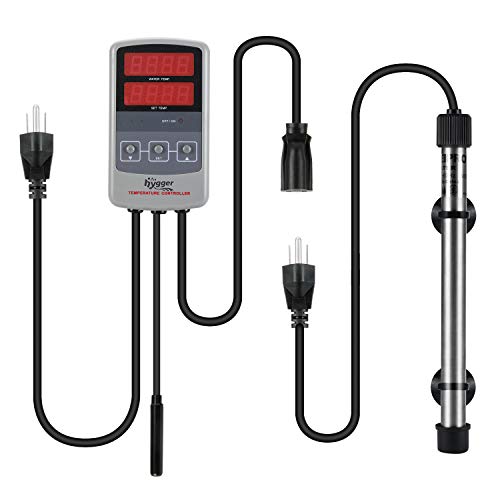
The hygger Pinpoint Titanium Heater is a fully submersible, shatterproof titanium tube heater supplied with a separate digital controller. It’s intended for freshwater and reef tanks where corrosion resistance and precise control are essential.
Call 888-896-7031 for Free Local HVAC Quotes – Compare and Save Today!
- Submersible Titanium Tube: No glass, shatterproof design, anticorrosion for saltwater reef tanks.
- Separate Controller: Dual LCD shows tank temperature and setpoint; control accuracy around ±0.5°C.
- Mounting & Placement: Includes suction cups; recommended placement near strong water flow for even distribution.
- Range & Performance: Wide control range up to 104°F, suitable for marine and planted setups.
Ideal where continuous submersion, corrosion resistance and clear external readout are required. The separate controller simplifies adjustments without removing the heater from the tank.
StarTech.com 20g Tube CPU Thermal Paste Grease

The StarTech Tube CPU Thermal Paste is a ceramic-based, electrically non-conductive thermal compound designed to improve heat transfer between electronic components and heatsinks.
- Thermal Interface: Fills microscopic surface imperfections to improve heat transfer and reduce hotspots.
- Ceramic Formula: Non-conductive for safe usage near electronics where shorting must be avoided.
- Use Cases: CPUs, GPUs, small heatsinks and any situation where improved thermal coupling is needed.
While not a thermostat, effective thermal interface materials are essential when integrating tube heaters and heatsinks, ensuring consistent thermal transfer and stable temperature control in electronic heating assemblies.
Buying Guide: Choosing The Right Tube Heater Thermostat
Selecting a tube heater thermostat depends on application, environment and control precision. Below are key considerations to evaluate before purchasing.
Application And Mounting
Identify whether the heater is for an aquarium (submersible), air heater, seed germination mat, or appliance integration. Submersible heaters require corrosion-resistant tubes (titanium). External controllers suit in-tank heaters to keep electronics dry.
Control Accuracy And Range
Check the temperature range and control resolution. Aquariums and incubators often need tight control (±0.5°C), while general air heaters may accept wider tolerances. Verify whether the device uses an external probe or built-in sensor; an external probe often improves setpoint accuracy at a specific location.
Type Of Heating Element
PTC ceramic elements provide self-regulating behavior and inherent overheat protection. Metal or titanium tube heaters deliver robust durability and are preferred in corrosive environments. Choose based on required durability and thermal characteristics.
Safety Certifications And Listings
Look for safety listings (ETL, UL or equivalent) and features such as thermal cutoffs, properly rated power cords, and insulation. For aquarium use, shatterproof construction and waterproofed wiring are critical.
Power Rating And Tank/Space Size
Match watts to the volume or space you need to heat. Aquarium heater wattage is typically specified per gallon; air heaters and PTC elements list wattage and expected application types. Ensure the thermostat/controller and wiring are rated for the device’s current draw.
Sensor Placement And Probe Length
Probe location strongly impacts measured temperature. Longer probe cords permit remote sensing away from direct heat sources. For incubators and terrariums, placing the probe at organism level gives more relevant temperature control.
Separate Controller vs Integrated Unit
Separate external controllers allow easier access and reduce in-tank electronics exposure. Integrated units are often more compact but may limit adjustment convenience. Consider maintenance and access needs.
Material Compatibility
For saltwater or humid environments choose titanium or corrosion-resistant materials. For HVAC or appliance use, ensure the heater’s tube and housing materials tolerate sustained operating temperatures.
Installation And Mounting Options
Evaluate mounting holes, suction cups, or brackets included with the device. Easy installation reduces time and risk of improper placement that could affect thermostat performance.
Thermal Interface And Heat Transfer
When the heater interfaces with a heatsink or electronic component, use an appropriate thermal compound to maximize conduction. Non-conductive ceramic pastes are a safer choice around sensitive electronics.
Redundancy And Overheat Protection
For critical systems, consider secondary temperature monitoring or thermostats and devices with fail-safe cutoffs. Self-regulating elements and ETL-listed controllers provide additional layers of safety.
Comparison Perspectives
- Precision Need: Incubators and reef tanks favor units with tighter control and external controllers (hygger models).
- Durability Need: Saltwater environments favor titanium tubes and corrosion-resistant builds.
- Component Integration: For appliance or airflow heating, PTC ceramic tube elements offer compact, self-regulating solutions (Jectse).
- Cost vs Features: Simple thermostats (BN-LINK) deliver practical control for mats and terrariums without advanced materials.
Use the above criteria to compare products on probe placement, materials, control accuracy and safety features to select the tube heater thermostat best suited to your specific application.
Tips for Getting the Best HVAC Prices
- Prioritize Quality Over Cost
The most critical factor in any HVAC project is the quality of the installation. Don’t compromise on contractor expertise just to save money. - Check for Rebates
Always research current rebates and incentives — they can significantly reduce your overall cost. - Compare Multiple Quotes
Request at least three estimates before making your choice. You can click here to get three free quotes from local professionals. These quotes include available rebates and tax credits and automatically exclude unqualified contractors. - Negotiate Smartly
Once you've chosen a contractor, use the proven strategies from our guide — How Homeowners Can Negotiate with HVAC Dealers — to get the best possible final price.