
Choosing the right venting components and compatible unit heaters is essential for safe, efficient heating in garages, shops, and workshops. Below is a quick comparison of the five selected products that address venting kits, unit heaters with venting capability, and alternative heating/cooling solutions where venting choices differ.
| Product | Type | Primary Venting Style |
|---|---|---|
| Mr. Heater 4″ Stainless Steel Horizontal Vent Kit | Vent Kit | Horizontal / Through-wall |
| Mr. Heater Big Maxx MHU80NG Unit Heater | Natural Gas Unit Heater | Category 1 vertical, Category 3 horizontal |
| DuraVent Vent Unit Heater Kit – 4in Horizontal | Vent Kit | Horizontal |
| COSTWAY 9000BTU Mini Split (Ductless) | Wall-Mounted Ductless AC / Heat Pump | No direct venting (refrigerant lines) |
| Midea 8,000 BTU Smart Inverter Window AC With Heat | Window Air Conditioner With Heat | Window exhaust venting (single hose) |
Content Navigation
- Mr. Heater 4 Inch Stainless Steel Horizontal Vent Kit
- Mr. Heater F260560 Big Maxx MHU80NG Natural Gas Unit Heater
- DuraVent Vent Unit Heater Kit – 4in. Horizontal
- COSTWAY 9000BTU Mini Split Air Conditioner & Heater (Wall-Mounted)
- Midea 8,000 BTU Smart Inverter Window AC With Heat
- Buying Guide: Choosing Unit Heater Venting And Alternatives
Mr. Heater 4 Inch Stainless Steel Horizontal Vent Kit

This kit Includes All Parts For Complete Horizontal Venting Designed For Big Maxx Unit Heaters. The kit lists an adapter, b-vent pipe, two vent pipes, 90-degree elbow, wall thimble, roof flashing, storm collar, and vent cap. The thimble expands for through-wall applications. Material is metal (stainless steel), and the kit provides adjustable elbow options to accommodate alignment challenges.
Relevant For Installers: The kit supports through-the-wall horizontal venting and can be used with multiple Big Maxx models including MHU45 and MHU75. Key dimensions and included pieces make it suited to small commercial or residential outbuildings where a sealed, code-compliant horizontal vent is required.
Mr. Heater F260560 Big Maxx MHU80NG Natural Gas Unit Heater
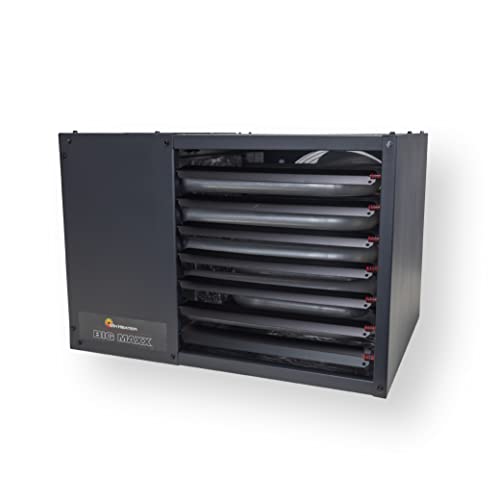
The Big Maxx MHU80NG Unit Heater Offers 80,000 BTU output and is rated for coverage up to approximately 2,000 sq. ft. It ships with mounting brackets and a conversion kit for LP (note: thermostat, hose, and regulator are not included). Clearance and electrical requirements are provided for safe installation.
Call 888-896-7031 for Free Local HVAC Quotes – Compare and Save Today!
Venting Compatibility: The product description states compatibility with Category 1 vertical and Category 3 horizontal venting. That makes it compatible with the Mr. Heater 4″ horizontal vent kit and similar B-vent systems when installed per code and manufacturer instructions. This flexibility allows installers to choose vertical chimney venting or a sealed horizontal run depending on building layout.
DuraVent Vent Unit Heater Kit – 4in. Horizontal

The DuraVent Kit Is Specified For 4-inch horizontal venting and lists compatibility with specific unit heater models (Item #s 27426, 27427, 27456, 27457, 27464, 27465). As a manufacturer vent accessory, it focuses on matching diameter and clearances recommended for small-to-medium unit heaters.
Installer Considerations: Kits like this prioritize tight fits, code-compliant components, and durable metal construction. Confirm model compatibility and local code requirements before installation. The kit’s simplicity makes it a practical option for direct horizontal runs through non-combustible walls or where a short sealed run is required.
COSTWAY 9000BTU Mini Split Air Conditioner & Heater (Wall-Mounted)

The COSTWAY Wall-Mounted Ductless Unit Uses inverter technology and a refrigerant line set to deliver cooling and heating without traditional combustion venting. It is rated for rooms up to ~450 sq. ft. and uses R32 refrigerant per the listing. This product is a non-vented heating alternative because refrigerant lines carry heat transfer rather than exhaust gases.
Call 888-896-7031 for Free Local HVAC Quotes – Compare and Save Today!
Venting Relevance: For buyers considering venting complexity, a mini split eliminates the need for flue or exhaust venting. Installation instead focuses on a small wall penetration for the refrigerant and condensate lines and an outdoor condensing unit, which can simplify compliance in some retrofit or enclosed-space scenarios.
Midea 8,000 BTU Smart Inverter Window AC With Heat

The Midea Window Unit Is A multi-season air conditioner with heat pump capability suitable for single-room heating and cooling. It installs in a window and relies on a standard window exhaust configuration, which vents hot air to the outdoors via the unit’s rear opening rather than a sealed combustion flue.
When Venting Matters: Window heat pump units avoid combustion exhaust but still require clear outdoor airflow behind the unit and proper sealing at the window opening. For spaces where combustion venting is restricted or where a compact electric heat solution is preferred, window units present a straightforward alternative.
Buying Guide: Choosing Unit Heater Venting And Alternatives
Selecting the right venting solution depends on the heater type, building layout, local codes, and performance goals. Use the following checklist and comparison points to evaluate options.
Venting Types And When To Use Them
- Category 1 (Vertical Chimney) Venting — Typical for natural draft, low-pressure combustion appliances that rely on a vertical stack to discharge exhaust safely above the roofline.
- Category 3 (Horizontal/Positive-Pressure) Venting — For higher-efficiency sealed combustion appliances and some unit heaters that can handle positive pressure in vent sections. Requires components rated for positive pressure.
- Through-Wall Horizontal Venting — Used when vertical routing is impractical. Requires proper thimbles, wall caps, and clearance to combustibles.
- No Vent (Ductless Heat Pump / Mini Split) — Eliminates flue gases entirely and moves heat via refrigerant lines; ideal where venting is restricted or where electrified heating is preferred.
- Window Heat Pump Units — Compact option with straightforward installation, best for single rooms and where window penetration is acceptable.
Key Installation And Code Considerations
- Manufacturer Compatibility — Match vent kit diameter and component ratings to the specific unit heater model. Kits often list compatible units.
- Positive-Pressure Ratings — Confirm whether components are rated for Category 3/positive-pressure venting if the heater specifies it.
- Clearances — Maintain minimum clearances to combustibles and required distances from openings or adjacent structures.
- Roof Vs. Wall Termination — Vertical systems need appropriate roof flashing and chimney terminations; horizontal runs require sealed wall thimbles and caps with storm collars.
- Local Codes And Permits — Always verify local building and mechanical codes; combustion appliances commonly require permits and inspection.
- Corrosion Resistance And Materials — Use stainless or galvanized steel components suitable for exhaust temperatures and the fuel type (natural gas, propane).
Performance & Efficiency Tradeoffs
- Vented Combustion Heaters — Often provide higher BTU output for larger spaces but require proper venting and fresh air supply.
- Electric Heat Pumps / Mini Splits — Offer high efficiency (COP/SEER ratings) and do not emit combustion gases, reducing venting complexity at the cost of installation of exterior condenser and refrigerant lines.
- Window & Portable Units — Lower installation complexity; good for spot heating or supplemental heat. They require proper exhaust clearance and window sealing, not a combustion flue.
Durability And Maintenance Factors
- Regular Inspection — Check vent joints, seals, and caps for corrosion, blockage, and weather damage. Ensure caps prevent bird or rodent entry.
- Condensate Management — Some high-efficiency vents may develop condensate; ensure slope and drain provisions where required.
- Filter And Combustion Air — Keep filters and combustion air paths clear. Confirm that the installation provides adequate make-up air for combustion appliances in tight buildings.
Comparison Perspectives To Help Decide
- Small Workshop / Garage With Natural Gas Service — Vented unit heater plus a compatible horizontal or vertical kit is common. Prioritize Category rating and correct diameter.
- Retrofit In Tightly Sealed Building — Consider mini split or electric heat pump to avoid combustion air and venting complications.
- Temporary Or Seasonal Use — Window or portable heat/cool units offer flexibility with minimal venting changes but are less ideal for full-time garage heating.
- Long Horizontal Runs — Use vent components rated for positive pressure and ensure minimal bends to preserve draft and avoid condensate traps.
Using these evaluation points will help you match a unit heater and venting approach to your space, compliance needs, and operational goals while maintaining safety and efficiency.
Tips for Getting the Best HVAC Prices
- Prioritize Quality Over Cost
The most critical factor in any HVAC project is the quality of the installation. Don’t compromise on contractor expertise just to save money. - Check for Rebates
Always research current rebates and incentives — they can significantly reduce your overall cost. - Compare Multiple Quotes
Request at least three estimates before making your choice. You can click here to get three free quotes from local professionals. These quotes include available rebates and tax credits and automatically exclude unqualified contractors. - Negotiate Smartly
Once you've chosen a contractor, use the proven strategies from our guide — How Homeowners Can Negotiate with HVAC Dealers — to get the best possible final price.