
Tents require careful selection of heating equipment to balance warmth and safety. This guide compares portable and wall-style propane heaters that offer vented or sealed-burn designs and features relevant to tent or small-shelter use. Below is a quick comparison of the five selected products followed by detailed product sections and a buying guide.
| Product | Type | Key Feature |
|---|---|---|
| Mr. Heater Portable Buddy MH9BX | Portable Infrared (Indoor-Safe) | 4,000–9,000 BTU, Piezo Igniter, Tip-Over Switch |
| Comfort Glow 11,000 BTU Direct Vent Wall Heater | Direct Vent Wall Heater | Sealed Burn, Heats Up To 375 Sq. Ft., Piezo Ignition |
| Comfort Glow 17,000 BTU Direct Vent Wall Heater | Direct Vent Wall Heater | Sealed Burn, Heats Up To 570 Sq. Ft., Space-Saving |
| KOMAN Propane Heater For Tent | Portable Tent/Patio Heater | Dual Fuel (1lb & 20–40lb), Tip-Over Switch, CSA-Certified |
| Buyplus 6200 BTU Portable Patio Heater | Portable Patio/Tent Heater | 6,200 BTU, Electronic Ignition, Mesh Guard |
Content Navigation
- Mr. Heater Portable Buddy Heater MH9BX
- Comfort Glow 11,000 BTU Direct Vent Liquid Propane Wall Heater
- Comfort Glow 17,000 BTU Direct Vent Liquid Propane Wall Heater
- KOMAN Propane Heater For Tent, Camping & Patio
- Buyplus Propane Heater 6200BTU Portable Patio Heater
- Buying Guide: Choosing A Vented Propane Heater For Tent Use
Mr. Heater Portable Buddy Heater MH9BX
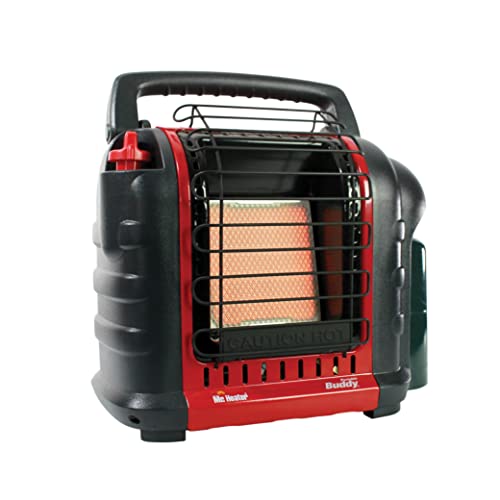
The Mr. Heater Portable Buddy MH9BX is a compact propane radiant heater offering adjustable heat from 4,000 to 9,000 BTU. It uses infrared technology to directly warm objects and people rather than heating air. The unit is designed for spaces up to about 225 sq. ft., and it features a Piezo igniter for matchless startup. Enhanced safety includes a tip-over switch that cuts fuel flow if the heater is knocked or tipped.
Features referenced: powerful radiant heat output, advanced tip-over safety switch, and reliable Piezo ignition. This model is commonly described as indoor-safe for enclosed spaces when proper ventilation and oxygen depletion considerations are observed, but it is not a sealed direct-vent unit.
Comfort Glow 11,000 BTU Direct Vent Liquid Propane Wall Heater
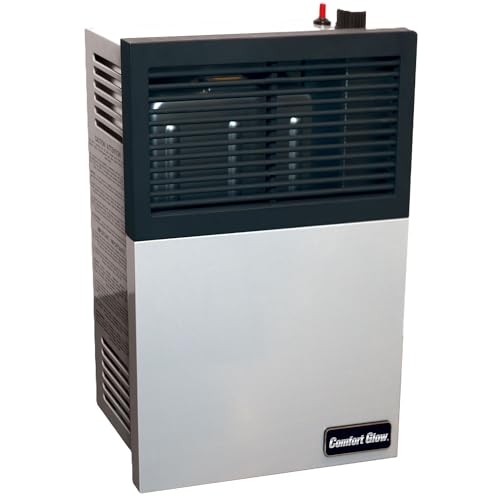
The Comfort Glow 11,000 BTU Direct Vent is a wall-mounted sealed-burn propane heater with a direct vent design that exhausts combustion products outside the structure. It is rated to heat up to approximately 375 sq. ft. and uses a matchless Piezo ignition with a safety pilot and built-in pressure regulator to stop gas flow if the pilot goes out.
Call 888-896-7031 for Free Local HVAC Quotes – Compare and Save Today!
This direct vent configuration separates combustion air from room air, which can be advantageous for tent-like structures that permit an external vent path or for enclosed cabins. The design emphasizes space-saving wall mounting and a sealed combustion chamber to reduce indoor combustion contaminants.
Comfort Glow 17,000 BTU Direct Vent Liquid Propane Wall Heater

The Comfort Glow 17,000 BTU Direct Vent offers a higher output with a sealed burn, direct vent design suitable for spaces up to about 570 sq. ft. It includes the same core safety features: a matchless Piezo ignition and a safety pilot with a pressure regulator that halts gas if the pilot is extinguished.
For applications where an external vent run is feasible, this model provides greater capacity without compromise on sealed-combustion safety. The unit mounts on walls and emphasizes efficient convective heating with minimized indoor combustion byproducts.
KOMAN Propane Heater For Tent, Camping & Patio

The KOMAN Propane Heater is marketed specifically for tent and camping use with a dual-fuel capability: it connects to 1 lb disposable tanks or 20–40 lb LP tanks via a POL adapter. The product includes a tip-over switch, an automatic shut-off valve, and a ceramic heating element to reduce overheating risks in gas lines.
Call 888-896-7031 for Free Local HVAC Quotes – Compare and Save Today!
Additional practicality features include a hanger handle for repositioning and a tank holder for stability. The unit is CSA-certified, indicating it has passed relevant safety testing for its intended use. The manufacturer warns to keep the unit away from flammables and notes that propane tanks are not included.
Buyplus Propane Heater 6200BTU Portable Patio Heater

The Buyplus 6200 BTU portable patio heater offers a mid-range output typically used for small outdoor shelters and tent setups where ventilation is available. It features an electronic ignition and a control valve for heat modulation. A protective mesh guard surrounds the heating element to reduce direct contact with hot surfaces.
Design elements focus on portability and straightforward startup. The unit is intended for outdoor or well-ventilated use and includes a gas tank holder for stability. The manufacturer clarifies that fuel is not included and that the mesh guard serves as a basic safety barrier.
Buying Guide: Choosing A Vented Propane Heater For Tent Use
Selecting a heater for tent or small shelter use requires attention to venting, combustion safety, fuel connection, size, and environmental conditions. The sections below outline key considerations and comparison perspectives to inform safe, effective choices.
Tips for Getting the Best HVAC Prices
- Prioritize Quality Over Cost
The most critical factor in any HVAC project is the quality of the installation. Don’t compromise on contractor expertise just to save money. - Check for Rebates
Always research current rebates and incentives — they can significantly reduce your overall cost. - Compare Multiple Quotes
Request at least three estimates before making your choice. You can click here to get three free quotes from local professionals. These quotes include available rebates and tax credits and automatically exclude unqualified contractors. - Negotiate Smartly
Once you've chosen a contractor, use the proven strategies from our guide — How Homeowners Can Negotiate with HVAC Dealers — to get the best possible final price.
Venting And Combustion Type
- Direct Vent / Sealed-Burn: These units draw combustion air from outside and exhaust combustion products outdoors. They offer the cleanest indoor air profile and are preferred where an external vent run is possible.
- Vent-Free / Blue Flame: Vent-free heaters release combustion products into the heated space and typically include an ODS (oxygen depletion sensor). They are not recommended for very small tents or sleeping areas without controlled ventilation.
- Radiant Portable Heaters: Infrared radiant heaters warm objects and people directly. They can be effective in tent settings if the heater is qualified for indoor use and used with strict ventilation and safety practices.
Safety Features To Prioritize
- Tip-Over Switch: Automatically shuts fuel if the unit falls; essential for tent setups where instability is possible.
- Oxygen Depletion Sensor (ODS): Shuts the heater down if oxygen levels drop below safe thresholds; common on indoor-rated gas heaters.
- Sealed Combustion / Direct Venting: Reduces indoor pollutants and is preferable where a vent can be routed outdoors.
- Auto Shut-Off For Pilot Failure: Prevents continued gas flow if the pilot is extinguished.
Size, BTU Output, And Tent Volume
- Estimate tent volume and insulation. For small canvas tents, lower BTU radiant units may suffice; for larger or poorly insulated tents, higher BTU capacity or multiple heaters might be needed.
- Portable heaters often range from ~4,000 to 9,000 BTU (suitable for small areas). Wall or direct vent units are higher capacity and intended for semi-permanent installations.
Fuel Type And Connection Flexibility
- Disposable 1 lb Tanks: Convenient for short trips but require frequent replacement.
- 20–40 lb LP Tanks: Offer longer runtime but add weight and need proper connectors (POL or LP adapters).
- Adapters & Regulators: Ensure compatibility and correct regulator sizing for safe pressure and flow.
Installation And Venting Practicalities For Tents
- Direct Vent Options: Require a vent path to the outside. In tents, creating a safe and weatherproof vent can be challenging.
- Portable Units: Don’t require permanent installation but must be positioned to avoid contact with fabric and flammables.
- Mounting Considerations: Wall-mounted units are more suitable for semi-permanent canvas shelters with structural support and a planned vent path.
Environmental And Operational Factors
- Elevation: Some heaters have performance variations at high elevations. Check manufacturer guidance for elevation limits.
- Wind And Drafts: Portable units can lose effectiveness in windy conditions; radiant heaters are less affected than convective models.
- Run Time And Fuel Efficiency: Match tank capacity and BTU draw to expected runtime to avoid mid-trip fuel issues.
Comparison Perspectives
- Safety-Focused Perspective: Prioritize sealed-burn direct vent units where a vent can be installed; choose units with ODS and tip-over protection for enclosed setups.
- Portability-Focused Perspective: Select compact radiant or portable patio heaters with tip-over switches and stable bases when mobility and packability matter.
- Ventilation-Limited Perspective: Avoid vent-free units for sleeping tents; instead, opt for radiant portable heaters labeled for indoor-safe use combined with deliberate ventilation and CO/alk monitoring.
Operational Best Practices
- Always provide adequate ventilation and never run propane heaters in entirely sealed tents without a manufacturer-approved sealed combustion solution.
- Use a carbon monoxide (CO) detector rated for camping to monitor air quality when using any combustion heater near sleeping areas.
- Maintain clearances from tent fabric, sleeping bags, and gear; follow the manufacturer’s minimum clearance specifications.
- Secure fuel tanks and hoses, only use approved connectors and regulators, and inspect for leaks before each use.