
Vented space heaters (direct vent or direct vent wall furnaces) move combustion exhaust outside and bring fresh air in, offering safer indoor air quality compared with vent-free units. The table below summarizes five well-regarded vented models suitable for rooms, garages, cabins, and additions.
| Model | Fuel Type | Output (BTU) | Coverage |
|---|---|---|---|
| Comfort Glow 11,000 BTU LP | Liquid Propane | 11,000 | Up To 375 Sq. Ft. |
| Comfort Glow 17,000 BTU Natural Gas | Natural Gas | 17,000 | Up To 570 Sq. Ft. |
| Comfort Glow 17,000 BTU LP | Liquid Propane | 17,000 | Up To 570 Sq. Ft. |
| Comfort Glow 25,000 BTU Natural Gas | Natural Gas | 25,000 | Up To 825 Sq. Ft. |
| Rinnai EX22DTWN Direct Vent | Natural Gas | 21,500 | Modulating Output For Even Heat |
Content Navigation
Comfort Glow 11,000 BTU Liquid Propane Wall Heater
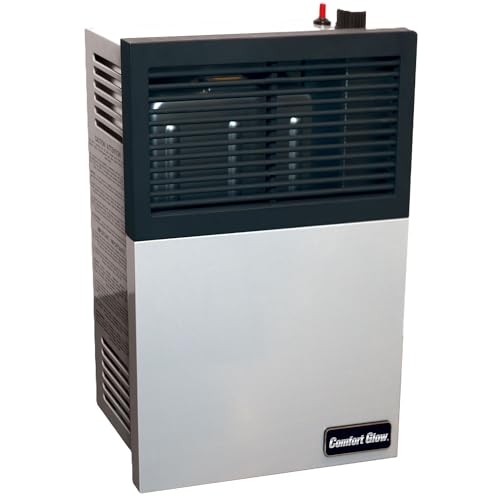
This 11,000 BTU direct vent propane heater is designed for small to medium spaces. The sealed burn system separates combustion from indoor air, which helps maintain indoor air quality. Coverage is listed up to 375 sq. ft.
Key features include a Matchless Piezo Ignition and a safety pilot with a pressure regulator that stops gas flow if the pilot goes out. The unit mounts on the wall and has compact dimensions for space-saving installation. This model is suited for rooms, additions, or garages that accept liquid propane and require an externally vented combustion path.
Comfort Glow 17,000 BTU Direct Vent Natural Gas

The 17,000 BTU natural gas direct vent wall heater is rated to heat up to 570 sq. ft. It uses a sealed burn system to prevent combustion byproducts from entering living spaces, which is a defining benefit of vented models.
Call 888-896-7031 for Free Local HVAC Quotes – Compare and Save Today!
Safety features include the sealed combustion chamber, a pressure-regulated safety pilot, and matchless ignition. The design is intended for wall mounting with a low profile to minimize intrusion into the room. This model is suitable where a natural gas line is available and moderate to large room coverage is needed.
Comfort Glow 17,000 BTU Direct Vent Liquid Propane

This LP-powered 17,000 BTU direct vent model shares mechanical and safety design elements with its natural gas counterpart, including a sealed burn combustion system and pressure-regulated safety pilot.
The rated coverage is up to 570 sq. ft. The wall-mounted form factor supports installation in spaces without a natural gas supply where liquid propane is the chosen fuel. The sealed design offers consistent indoor air quality by exhausting combustion gases externally.
Comfort Glow 25,000 BTU Direct Vent Natural Gas

At 25,000 BTU this larger Comfort Glow model is rated to heat up to 825 sq. ft. It is intended for larger rooms, open-plan areas, or insulated garages where a higher output vented heater is required.
Call 888-896-7031 for Free Local HVAC Quotes – Compare and Save Today!
Like the smaller Comfort Glow models, it features a sealed burn system, matchless piezo ignition, and a safety pilot with pressure regulation. The larger chassis and venting requirements mean planning for wall space and vent routing is essential during installation.
Rinnai EX22DTWN Direct Vent Wall Furnace

The Rinnai EX22DTWN is a modulating direct vent wall furnace with features aimed at even temperature distribution and energy efficiency. Modulating output allows the unit to adjust heat levels to match demand, reducing cycling and improving comfort.
Safety and usability features include a cool-to-the-touch cabinet, self-diagnostic electronics, and design elements that emphasize family-friendly operation. The unit’s energy-efficient modulation can reduce fuel use while targeting consistent room temperatures compared with single-stage vented units.
Buying Guide: How To Choose A Vented Space Heater
Selecting the right vented space heater requires matching capacity, fuel type, installation feasibility, safety features, and efficiency to your space and needs. The sections below compare key considerations.
Tips for Getting the Best HVAC Prices
- Prioritize Quality Over Cost
The most critical factor in any HVAC project is the quality of the installation. Don’t compromise on contractor expertise just to save money. - Check for Rebates
Always research current rebates and incentives — they can significantly reduce your overall cost. - Compare Multiple Quotes
Request at least three estimates before making your choice. You can click here to get three free quotes from local professionals. These quotes include available rebates and tax credits and automatically exclude unqualified contractors. - Negotiate Smartly
Once you've chosen a contractor, use the proven strategies from our guide — How Homeowners Can Negotiate with HVAC Dealers — to get the best possible final price.
Fuel Type And Availability
- Natural Gas units connect to existing gas lines and are convenient where infrastructure exists. They tend to be a good choice for continuous or primary supplemental heating.
- Liquid Propane (LP) models require cylinders or tank supply and are appropriate where natural gas is not available. Plan for cylinder storage and replacement logistics.
Output (BTU) And Room Size
- Match BTU output to room size and insulation: 11,000–17,000 BTU for small-to-medium rooms, 20,000+ BTU for large rooms or open spaces.
- Factor ceiling height, insulation, windows, and cold walls; poorly insulated rooms need more output to maintain comfort.
Venting Requirements And Installation
- Direct vent models require a sealed flue or vent to the outdoors. Confirm wall location, clearances, and vent routing before purchase.
- Professional installation is commonly recommended for gas vented heaters to ensure safe combustion air and exhaust routing, and to meet code requirements.
Safety Features
- Look for a sealed combustion chamber to prevent indoor air contamination.
- Pressure-regulated safety pilots and automatic shut-off features are important for gas models.
- Cool-to-the-touch cabinets and self-diagnostics increase safe operation and ease of maintenance.
Efficiency And Control
- Modulating heaters (like the Rinnai model) adjust output to match demand, improving comfort and reducing fuel consumption.
- Simple thermostatic control versus advanced modulation: thermostats are sufficient for many rooms, while modulating systems provide finer control and energy savings in frequently used spaces.
Installation Space And Mounting
- Wall-mounted units save floor space but require adequate wall clearance and mounting support.
- Measure available wall area and verify vent penetration location relative to framing, exterior obstacles, and local codes.
Maintenance And Serviceability
- Sealed burn systems reduce indoor maintenance related to combustion byproducts, but pilot assemblies, vents, and filters (if present) still require periodic inspection.
- Check manufacturer guidance for service intervals and availability of replacement parts.
Comparison Perspectives
- Small Room Use: Lower-output Direct Vent LP (11,000 BTU) offers adequate coverage with compact size.
- Medium Rooms: 17,000 BTU units provide a balance of size and coverage; choose LP or natural gas based on fuel access.
- Large Areas: 25,000 BTU or modulating models handle larger square footage; modulating units offer smoother temperature control.
- Indoor Air Quality: All selected direct vent models keep combustion exhaust outside; sealed burn is a key differentiator from vent-free heaters.
Regulatory And Code Considerations
- Local building codes and manufacturer installation instructions determine acceptable venting methods and clearance distances. Confirm local code and permit requirements before purchase or installation.
- Some jurisdictions restrict vent-free units in living spaces; vented models are typically more widely accepted for a broader range of installations.
Final Selection Checklist
- Confirm fuel availability (natural gas or LP).
- Measure room size and determine required BTU output.
- Verify venting path, wall location, and clearance for installation.
- Prioritize safety features like sealed combustion and pressure-regulated pilots.
- Decide between simple thermostat control and modulating output for energy use and comfort.