
Finding the right ventless LP (propane) heater means balancing output, safety features, installation style, and room size. The table below summarizes five top ventless propane-compatible heaters and vent-free log sets selected for their relevance to homes, garages, and living spaces.
| Product | Type | Max BTU | Covers (Approx.) |
|---|---|---|---|
| Comfort Glow 24″ Highland Ember Log Insert | Vent-Free Gas Log Insert (Dual Fuel) | — (insert rated) | Up To 1,400 Sq. Ft. |
| Mr. Heater 30,000 BTU Vent Free Radiant Propane | Radiant Wall Heater | 30,000 | Up To 1,000 Sq. Ft. |
| ProCom ML300TBA-B Ventless Propane Blue Flame | Blue Flame Space Heater | 30,000 | Up To 1,400 Sq. Ft. |
| ProCom 25,000 BTU Free Standing Dual Fuel Fireplace | Free-Standing Ventless Fireplace | 25,000 | Up To 1,100 Sq. Ft. |
| Mr. Heater MHVFGH30LPBT 30,000 BTU Garage Heater | Blue Flame Propane Garage Heater | 30,000 | Up To 1,000 Sq. Ft. |
Content Navigation
- Comfort Glow 24″ Highland Ember Log Insert
- Mr. Heater 30,000 BTU Vent Free Radiant Propane
- ProCom ML300TBA-B Ventless Propane Blue Flame
- ProCom 25,000 BTU Free Standing Dual Fuel Fireplace
- Mr. Heater MHVFGH30LPBT 30,000 BTU Garage Heater
- Buying Guide: Choosing A Ventless LP Heater
- Type Of Ventless Heater
- BTU Output And Room Size
- Fuel Compatibility And Supply
- Installation And Mounting Options
- Controls And Comfort Features
- Safety Mechanisms
- Performance Perspectives
- Installation Costs And Local Codes
- Maintenance And Longevity
- Where To Use Each Style
- Energy Efficiency & Operating Costs
- Comparison Checklist
Comfort Glow 24″ Highland Ember Log Insert

This vent-free gas log insert is a dual-fuel set compatible with propane (LP) and natural gas. The product lists an 8-piece Highland Ember oak log set designed for realistic appearance and a glowing ember bed.
Key features include a thermostat remote control for adjusting heat from a distance and a redesigned remote receiver for improved battery life. The insert is described as suitable for fireplace inserts and provides a decorative flame while delivering supplemental heat.
As a ventless log option, this unit relies on indoor combustion without a chimney, making it important to follow manufacturer instructions for installation, room sizing, and use of oxygen depletion safety systems where specified.
Mr. Heater 30,000 BTU Vent Free Radiant Propane

Call 888-896-7031 for Free Local HVAC Quotes – Compare and Save Today!
This propane wall heater uses infrared radiant technology to warm objects and people directly rather than primarily heating air. The unit produces up to 30,000 BTU and is recommended for spaces up to roughly 1,000 sq. ft.
Features highlighted include high efficiency, multiple burner tiles for radiant heat distribution, and a fuel consumption rate that enables extended runtime with a standard LP cylinder. The product is presented for use in cold rooms, sunrooms, cabins, and additions.
Radiant vent-free heaters can be effective for targeted warmth and often produce fast, sun-like heat. Compliance with clearance, mounting, and room-ventilation guidelines is essential for safe operation.
ProCom ML300TBA-B Ventless Propane Blue Flame

The ProCom ML300TBA-B is a ventless blue flame space heater designed for propane (LP) operation at up to 30,000 BTU. The manufacturer lists heating coverage up to 1,400 sq. ft. and includes a thermostat control with High/Medium/Low settings.
This model offers both wall-mount and freestanding installation options, with included base feet and wall-mount hardware for flexible placement. The design emphasizes a compact profile to integrate into living spaces.
Call 888-896-7031 for Free Local HVAC Quotes – Compare and Save Today!
Blue flame ventless heaters heat room air directly and are often used for whole-room supplemental heat. Important listed features include the thermostat control and the product’s suitability for residential rooms and offices.
ProCom 25,000 BTU Free Standing Dual Fuel Fireplace
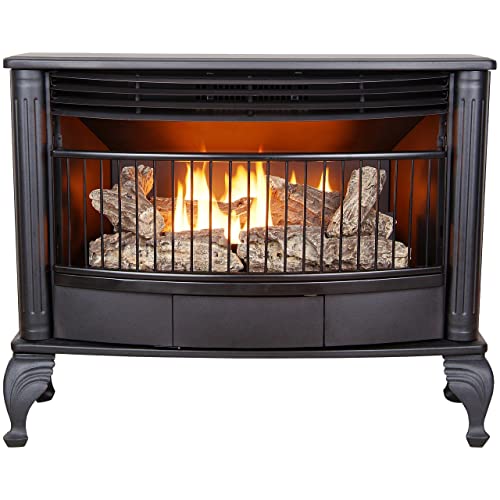
This ProCom unit is a free-standing ventless fireplace with 25,000 BTU output and hand-painted, cast concrete logs designed to mimic real wood. It supports dual fuel operation (LP and natural gas) and lists heating up to 1,100 sq. ft.
The product details mention thermostat-operated control and variable heat settings for customizing room temperature. The emphasis on decorative realism makes it suitable where a visual flame effect is desired alongside heat delivery.
Free-standing ventless fireplaces are a blend of aesthetics and heating. Installation considerations include clearances and proper gas line hookup according to local codes.
Mr. Heater MHVFGH30LPBT 30,000 BTU Garage Heater

Designed specifically for garages and workshops, this vent-free blue flame propane heater offers up to 30,000 BTU and includes a thermostat and battery-powered electronic ignition. The manufacturer states coverage for areas up to 1,000 sq. ft. and reliable performance at elevations up to 4,500 ft.
Safety is addressed through an automatic oxygen depletion sensor (ODS) that shuts the unit off if oxygen levels drop below safe thresholds. Fuel consumption data and runtime figures are provided in manufacturer materials.
Garage-specific ventless heaters prioritize durability and safe indoor combustion in partially enclosed workspaces, but placement and ventilation guidelines must still be followed.
Buying Guide: Choosing A Ventless LP Heater
Type Of Ventless Heater
- Blue Flame Heaters: Heat room air directly and tend to provide whole-room, even warmth. Good for living areas and garages.
- Radiant Heaters: Use infrared technology to warm objects and people directly. Preferable for targeted heating and quick comfort.
- Ventless Log Inserts / Fireplaces: Combine visual flame aesthetics with heating. Ideal for homeowners who want a fireplace look without venting.
BTU Output And Room Size
Select a unit with suitable BTU capacity for your space. As a rough guide:
- Up to 1,000 sq. ft.: 20,000–30,000 BTU models are commonly recommended.
- 1,000–1,400 sq. ft.: 25,000–30,000 BTU units or larger depending on insulation and ceiling height.
Consider insulation, ceiling height, and cold-climate exposure when matching BTU ratings to actual heating needs.
Fuel Compatibility And Supply
Confirm LP (propane) compatibility and whether the model is dual fuel (LP and natural gas). Check regulator and hose requirements, recommended cylinder size, and fuel consumption rates to estimate runtime and operational costs.
Installation And Mounting Options
- Wall-Mounted: Common for radiant and blue flame wall heaters—may require clearance and secure mounting brackets.
- Free-Standing: Offers portability and decorative placement; requires appropriate clearances from combustible materials.
- Fireplace Inserts: Require proper fit to the fireplace opening and may need additional components for ignition and control.
Controls And Comfort Features
Look for thermostat control, multiple heat settings (High/Medium/Low), remote control options, and programmable features. Thermostat control helps maintain steady temperatures and can improve fuel efficiency.
Safety Mechanisms
- Oxygen Depletion Sensor (ODS): Shuts the unit off if indoor oxygen falls below safe levels—important for vent-free combustion.
- Automatic Shutoff: Protects against unsafe operation in low-oxygen or tipped conditions.
- Clearance Requirements: Review minimum clearances from walls, ceilings, and combustible materials in product documentation.
Performance Perspectives
Compare radiant vs. convective (blue flame) performance: radiant units provide immediate localized warmth to people and objects; blue flame units circulate heated air for more uniform room temperatures. Free-standing logs add ambiance but may distribute heat differently than blue flame units.
Installation Costs And Local Codes
Account for any professional installation fees, gas line routing, permits, and local building codes. Some jurisdictions restrict or regulate ventless devices—verify local rules before purchase and installation.
Maintenance And Longevity
Consider ease of cleaning burner ports, access to replacement parts, and the availability of service. Regular inspection for soot, burner blockage, or gas leaks is essential for safe operation.
Where To Use Each Style
- Living Rooms & Bedrooms: Blue flame units or decorative ventless logs with thermostat control.
- Garages & Workshops: Robust blue flame or radiant garage-rated heaters with ODS and reliable ignition.
- Cabins & Additions: Radiant or ventless inserts where quick, direct heat is beneficial and venting is impractical.
Energy Efficiency & Operating Costs
Efficiency can vary with heater type and how well the space retains heat. Radiant heaters may feel warmer at lower air temperatures, potentially reducing run time. Review fuel consumption rates and runtime estimates to compare real-world operating costs.
Comparison Checklist
- Confirm LP compatibility and conversion kits if needed.
- Match BTU to room size and insulation level.
- Verify included controls: thermostat, remote, ignition type.
- Check safety features: ODS, automatic shutoff, listed clearances.
- Assess installation method and local code compliance.
- Factor in maintenance access and parts availability.
Use these criteria to compare the models above: the Mr. Heater radiant and garage models emphasize targeted and durable heat for workspaces; ProCom blue flame models offer whole-room heating and flexible mounting; Comfort Glow vent-free log inserts prioritize aesthetic flame presentation with thermostat control.
Tips for Getting the Best HVAC Prices
- Prioritize Quality Over Cost
The most critical factor in any HVAC project is the quality of the installation. Don’t compromise on contractor expertise just to save money. - Check for Rebates
Always research current rebates and incentives — they can significantly reduce your overall cost. - Compare Multiple Quotes
Request at least three estimates before making your choice. You can click here to get three free quotes from local professionals. These quotes include available rebates and tax credits and automatically exclude unqualified contractors. - Negotiate Smartly
Once you've chosen a contractor, use the proven strategies from our guide — How Homeowners Can Negotiate with HVAC Dealers — to get the best possible final price.