
Choosing A Vertical Propane Heater means matching output, venting type, and installation to your space. Below is a quick comparison of the most relevant vertical-style propane heating units and portable propane heaters selected for garage, shop, or outdoor-covered use.
| Product | Type | BTU | Coverage |
|---|---|---|---|
| Mr. Heater Big Maxx MHU80 (LP Conversion Kit Included) | Ceiling/Wall Unit Heater | 80,000 BTU | Up To ~2000 Sq. Ft. (natural spec shown) |
| Reznor UDXC-100 Propane Garage Heater | Ceiling-Mount/Vertical Unit | Up To 105,000 BTU (two-level output) | Large Shops, Warehouses |
| Mr. Heater MHU80LP Propane Unit Heater | Ceiling/Wall Unit Heater | 80,000 BTU | Up To ~1000 Sq. Ft. (manufacturer spec varies) |
| Dyna-Glo IR30PMDG-1 30,000 BTU Infrared Wall Heater | Wall-mounted Infrared | 6,000–30,000 BTU | Up To ~1,000 Sq. Ft. |
| Mr. Heater Portable Buddy MH9BX | Portable Radiant Propane Heater | 4,000–9,000 BTU | Up To ~225 Sq. Ft. |
Content Navigation
- Mr. Heater F260560 Big Maxx MHU80NG Natural Gas Unit Heater
- Reznor 100,000 BTU Gas Unit Propane Garage Heater UDXC-100
- Mr. Heater Propane Unit Heater 80,000 BTU/Hr. MHU80LP
- Dyna-Glo IR30PMDG-1 30,000 BTU Liquid Propane Infrared Wall Heater
- Mr. Heater Portable Buddy Heater MH9BX 4,000-9,000 BTU
- Buying Guide: How To Choose The Right Vertical Propane Heater
- Comparison Perspectives
Mr. Heater F260560 Big Maxx MHU80NG Natural Gas Unit Heater
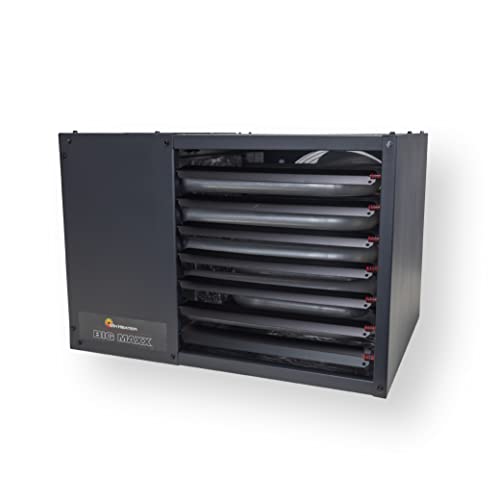
This Mr. Heater Big Maxx model is specified for natural gas but the listing notes an included Liquid Propane conversion kit. The unit is a vertical/ceiling-mount category heater with an output rating of 80,000 BTU.
- Key Features: Includes two angle brackets and LP conversion kit; dimensions 29.33″ L x 15.5″ W x 26.37″ H.
- Coverage: Manufacturer references coverage up to 2,000 sq. ft. when configured per specs.
- Installation Notes: Requires minimum 8 ft. clearance from floor to base; thermostat, hose, and regulator not included.
- Venting Options: Category 1 vertical or category 3 horizontal venting when installed correctly.
For applications that need a ceiling-mounted unit with conversion flexibility, this model offers a high-output option with standard mounting hardware included. Ensure proper gas type conversion and professional installation for safe operation.
Reznor 100,000 BTU Gas Unit Propane Garage Heater UDXC-100

The Reznor UDXC-100 is presented as a propane-ready unit heater designed for indoor commercial and residential spaces. It is intended for ceiling or suspended mounting with multiple suspension points.
Call 888-896-7031 for Free Local HVAC Quotes – Compare and Save Today!
- Key Features: Rated for approximately 105,000 BTU with two output levels (low ~61,005 BTU, high ~87,150 BTU listed), and an 83% thermal efficiency rating.
- Mounting: Threaded-nut retainers at four suspension points support ceiling mounting; mounting hardware sold separately.
- Applications: Designed for workshops, warehouses, factories, garages, and similar environments requiring steady high-output heat.
For larger workspaces, the UDXC-100 provides high heat output and adjustable firing levels. Confirm required clearances, venting, and gas supply capacity before selecting this unit for commercial use.
Mr. Heater Propane Unit Heater 80,000 BTU/Hr. MHU80LP

The MHU80LP is a dedicated propane unit heater designed for mounting in garages and workshops. It features an 80,000 BTU output with ceiling-mount compatibility.
- Key Features: Spark ignition with a self-diagnostic control module and two angle brackets for mounting.
- Coverage: Manufacturer indicates heating capability up to an area commonly referenced for similar models (example specs vary by install).
- Installation: Includes basic mounting brackets; electrical connection and fuel lines require compliant installation.
This model is focused on straightforward ceiling or wall installation for medium to large garages. The spark ignition and self-diagnostic module aim to simplify commissioning and maintenance checks.
Dyna-Glo IR30PMDG-1 30,000 BTU Liquid Propane Infrared Wall Heater

The Dyna-Glo IR30PMDG-1 is a vent-free infrared wall heater delivering radiated warmth similar to sunlight, with variable output from 6,000 to 30,000 BTU/hr. It is intended for wall-mount applications and vertical orientation.
Call 888-896-7031 for Free Local HVAC Quotes – Compare and Save Today!
- Key Features: Infrared technology warms objects and occupants directly; liquid propane ready with variable heat control for spaces up to about 1,000 sq. ft.
- Use Cases: Suitable for garages, workrooms, or rooms where quick radiant heat is preferred over forced air circulation.
- Vent-Free Considerations: Vent-free operation means combustion products remain indoors; follow local codes and room-size requirements for safe use.
Infrared wall heaters are effective for targeted heating and do not rely on ductwork. Check local regulations regarding vent-free propane appliances and ensure adequate ventilation where required.
Mr. Heater Portable Buddy Heater MH9BX 4,000-9,000 BTU
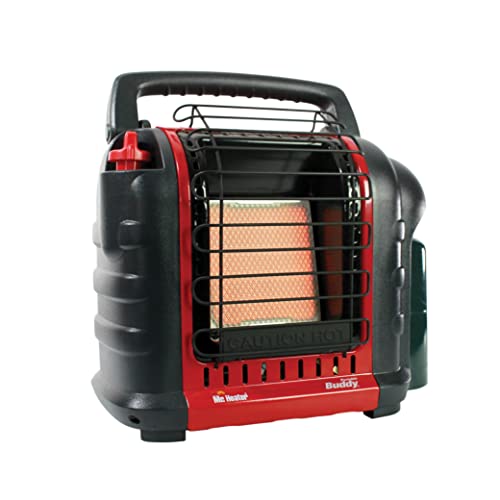
The Portable Buddy MH9BX is a compact, infrared radiant propane heater designed for spot heating in smaller indoor-safe spaces such as campers, small workshops, job sites, and covered patios. Output ranges from 4,000 to 9,000 BTU.
- Key Features: Advanced infrared technology for direct heat, improved tip-over safety switch, durable Piezo igniter for matchless lighting.
- Coverage: Effective for spaces up to approximately 225 sq. ft. depending on insulation and ambient conditions.
- Safety: Built-in tip-over protection and oxygen depletion sensor features in many Buddy models contribute to safer indoor use when venting and clearances are observed.
As a portable option, the Buddy is best for localized heating and temporary setups. It complements vertical mounted systems by providing quick spot warmth near workstations or occupants.
Buying Guide: How To Choose The Right Vertical Propane Heater
Selecting a vertical propane heater requires balancing heat output, venting type, installation, and safety. Below are core factors to evaluate to match a heater to your space and needs.
Heat Output And Room Size
Calculate required BTU based on square footage and insulation. As a rule of thumb, more insulated spaces need fewer BTUs. Unit heaters in the 80,000–105,000 BTU range suit large garages or small warehouses, while 6,000–30,000 BTU infrared units are better for single rooms or targeted wall-mount heating.
Venting Type: Vent-Free Vs. Vented Unit Heaters
Vented Unit Heaters (category 1/3 venting) require flue or direct venting and are common for ceiling-mounted commercial heaters. They remove combustion products to the exterior. Vent-Free/Infrared models radiate heat without exhaust but leave combustion byproducts in the room. Confirm local codes and occupancy requirements before choosing vent-free appliances.
Mounting Orientation And Clearance
Vertical and ceiling-mounted units require clearances for safe operation. Check manufacturer minimum distances from floors, walls, and overhead objects. Ceiling or suspended installations often require proper bracing and electrical connections.
Fuel Type And Conversion Kits
Verify whether the unit is factory-set for propane or natural gas. Some models include an LP conversion kit; others are dedicated to one fuel. Professional conversion and testing are recommended to ensure safe pressure and nozzle adjustments.
Efficiency And Controls
Look for thermal efficiency ratings and multi-stage firing if you need variable heat levels. Thermostat compatibility, spark ignition, and self-diagnostic modules simplify operation and troubleshooting.
Safety Features
Important safety elements include tip-over switches for portable units, oxygen depletion sensors or flame failure devices, and self-diagnostic controls. For fixed units, ensure proper installation by qualified technicians and adherence to building and gas codes.
Installation And Maintenance
Plan for professional installation for hardwired or vented units. Factor in chimney/vent materials, gas piping size, and electrical requirements. Regular maintenance items include burner cleaning, vent inspections, and thermostat calibration.
Noise And Air Movement
Forced-air unit heaters use fans and may produce constant background noise; infrared and radiant units are typically quieter. Consider noise tolerance for workspaces and choose the technology that suits occupant comfort.
Application Fit: Workshop, Garage, Or Patio
Match the heater type to the environment: heavy-duty suspended unit heaters for large, open shops; wall-mounted infrared for targeted room heating; and portable radiant units for spot heating or temporary use in enclosed or semi-enclosed areas.
Durability And Materials
For commercial or semi-outdoor environments, prioritize corrosion-resistant coatings and robust mounting hardware. Check manufacturer guidance for outdoor-exposed installations.
Comparison Perspectives
When comparing options, evaluate from several perspectives:
- Output Per Footprint: High-BTU suspended units deliver broad area coverage; infrared units concentrate heat on objects and people.
- Installation Complexity: Portable units require minimal setup; vented ceiling units need gas, electrical, and venting work.
- Operational Costs: Efficiency ratings and thermostat control affect fuel consumption. Multi-stage units can reduce cycling losses.
- Regulatory Compliance: Local codes may restrict vent-free appliances in certain occupancies; verify before purchase.
Use the above factors to prioritize safety, suitability, and long-term operating needs for your space. Professional consultation is recommended for fixed vented units or where building codes apply.
Tips for Getting the Best HVAC Prices
- Prioritize Quality Over Cost
The most critical factor in any HVAC project is the quality of the installation. Don’t compromise on contractor expertise just to save money. - Check for Rebates
Always research current rebates and incentives — they can significantly reduce your overall cost. - Compare Multiple Quotes
Request at least three estimates before making your choice. You can click here to get three free quotes from local professionals. These quotes include available rebates and tax credits and automatically exclude unqualified contractors. - Negotiate Smartly
Once you've chosen a contractor, use the proven strategies from our guide — How Homeowners Can Negotiate with HVAC Dealers — to get the best possible final price.