
Wall hung heaters save floor space while delivering targeted warmth. Below is a comparison of five popular wall-mounted electric heaters selected for performance, features, and user-focused design.
| Product | Primary Feature | Power/Type |
|---|---|---|
| Dr. Infrared Heater Ecoheat | Dual infrared + fan-forced system | 1500W / Infrared + Blower |
| Dreo Smart Wall Heater WH719S | Wide oscillation, smart app control | 1500W / PTC Ceramic |
| Heat Storm HS-1500-PHX-WIFI | Wi‑Fi control, infrared panel | 1500W / Infrared |
| Cadet Com-Pak CSC151TW | Complete unit with thermostat | 1500W / Electric Wall Heater |
| Envi Plug-in Electric Panel | Fan-less, low-wattage continuous heat | Low-wattage / Panel Heater |
Content Navigation
Dr. Infrared Heater Ecoheat Wall Hung

Design And Heating Method: The unit pairs a quartz infrared element with a high-pressure blower for both instant radiant warmth and faster room distribution. The dual system aims to combine the advantages of infrared and fan-forced heat.
Controls And Modes: Offers three heat settings—ECO, HIGH, and LOW—and comes with a remote control. The ECO mode is intended to balance comfort and energy use.
Installation And Flexibility: Designed for wall mounting or freestanding use with an easy-hang system. The product converts to portable use without tools, which adds flexibility for different spaces.
Performance Notes: At 1500 watts (approx. 5200 BTU equivalent), the unit targets mid-size rooms. The blower helps speed heat distribution compared with radiant-only panels but may introduce some operational noise depending on blower speed.
Call 888-896-7031 for Free Local HVAC Quotes – Compare and Save Today!
Dreo Smart Wall Heater WH719S

Heating Coverage: Features 120° vertical oscillation intended to distribute warm air evenly from top to bottom, reducing hotspots and improving perceived comfort across the room.
Smart Features: Integrates with the Dreo app, offers scheduling, and supports Alexa and Google Home voice control. Remote control and a 24-hour timer expand automation options for daily routines.
Temperature Control: Uses a PTC ceramic element with an adjustable thermostat capable of 1°F increments across a wide range. This supports precise temperature maintenance and helps avoid frequent cycling.
Practical Considerations: The smart connectivity and oscillation are aimed at users who want fine control and even distribution. Verify Wi‑Fi compatibility and app requirements for integration with existing smart home systems.
Heat Storm HS-1500-PHX-WIFI Wall Heater

Call 888-896-7031 for Free Local HVAC Quotes – Compare and Save Today!
Connectivity And Control: Wi‑Fi enabled for remote temperature adjustments via a mobile device. The unit includes a touchscreen with digital thermostat and a handheld remote for local control.
Safety And Design: The heater provides a tip-over safety shutoff and a space-saving wall mount profile intended for bedrooms, offices, and kitchens where floor space is limited.
Heating Technology: Operates as an infrared panel to provide radiant heat. Infrared panels tend to warm objects and occupants directly rather than heating large volumes of air rapidly.
Installation Notes: Designed specifically as a wall-mounted unit. Confirm electrical requirements and mounting clearances before installation to meet local code and safety recommendations.
Cadet Com-Pak Electric Wall Heater

Complete Unit With Thermostat: The Cadet Com-Pak is a self-contained wall heater that includes a built-in thermostat designed for consistent room temperature control.
Power And Output: Rated at 1500 watts (5120 BTU) on 120 volts, the unit targets small to medium-size rooms and is a commonly used specification for residential wall heaters.
Durable Design: Cadet units are typically built for straightforward, long-term operation with a metal cabinet and grille that suits utility-focused installations.
Installation And Use: Often installed as a permanent wall fixture. Verify wiring and mounting instructions and consult an electrician for hardwired installations to ensure code compliance.
Envi Plug-In Electric Panel Heater
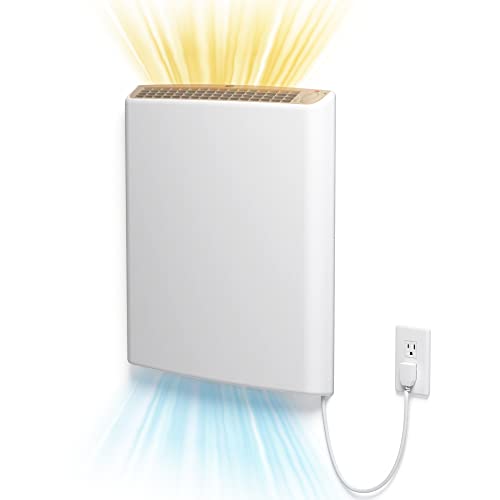
Fan-Less, Quiet Operation: Uses a patented stack convection design for silent, continuous warming without a fan. This makes it suitable for bedrooms and allergy-sensitive environments.
Safe, Low-Temperature Output: Designed to operate at a cool surface temperature (around 90°F), and includes a wall-sense safety sensor that cuts power if dislodged from the wall.
Energy Use And Targeted Heat: Marketed as low-wattage supplemental heating for targeted comfort and continuous operation. The panel aims to support zone heating strategies and reduce reliance on central systems.
Ease Of Installation: Advertised as an easy install with a plug-in option in some models for fast deployment without hardwiring, depending on the chosen configuration and local codes.
Buying Guide: Choosing The Right Wall Hung Heater
Heating Technology And Room Size
Infrared vs. Convection vs. Fan-Forced: Infrared panels heat objects directly and offer quick comfort in well-targeted areas. Convection/fan-forced heaters circulate warm air to fill a room more uniformly. Fan-forced models often heat faster but can be noisier.
Match Wattage To Room Size: Common wall heaters are 1500W for small to medium rooms. Consider insulation, ceiling height, and window area when estimating required capacity. For larger zones, supplementary heating or multiple units may be necessary.
Controls, Automation, And Connectivity
Thermostats And Precision: Built-in thermostats with narrow setpoint increments provide better temperature stability and energy savings compared to on/off models.
Smart Features: Wi‑Fi, app control, and voice assistant compatibility add scheduling and remote control convenience. Confirm app ecosystem and network requirements prior to purchase.
Installation And Mounting Options
Hardwired vs. Plug-In: Hardwired units often require professional installation and must meet local electrical codes. Plug-in or plug-to-wall models can be easier to install but verify outlet ratings and safety expectations.
Mounting Flexibility: Some units are convertible for freestanding use versus wall-mounted. If you plan to move a heater between rooms, portability may be a deciding factor.
Safety Features
Overheat Protection And Tip-Over: Look for overheat shutoff, cool-touch surfaces, and tip-over protection where relevant. Wall-sense sensors that cut power if a unit is removed are beneficial for plug-in panels.
Surface Temperatures: For child and pet safety, consider panels with lower exterior temperatures or grill designs that reduce contact risk.
Noise And Indoor Air Quality
Fan Noise: Fan-forced units provide faster heat distribution but introduce mechanical noise. Fan-less convection or infrared panels are quieter and better for bedrooms and study areas.
Air Movement And Allergens: Fans can circulate dust and allergens; fan-less infrared or stack convection units can be preferable for allergy-sensitive households.
Energy Efficiency And Operating Costs
Mode Selection: ECO modes, programmable schedules, and accurate thermostats reduce runtime and energy waste. Match heater output to occupancy patterns rather than oversizing the unit.
Supplemental Heating Strategy: Using wall-mounted units for zone heating can reduce central system runtime. Evaluate whether a single unit can meet comfort needs or if targeted zones are more efficient.
Durability And Maintenance
Build Materials: Metal cabinets and quality internal components extend service life. Regular dust removal and following manufacturer cleaning instructions help maintain efficiency.
Warranty And Support: Check warranty terms and available customer support channels. For smart-enabled units, consider software update policies and ecosystem stability.
Installation Cost And Local Codes
Electrical Requirements: Confirm voltage and circuit requirements before purchase. Hardwired heaters may require an electrician for safe installation and code compliance.
Clearances And Mounting Height: Adhere to manufacturer-specified clearances from floors, ceilings, and combustible materials to ensure safe operation.
Tips for Getting the Best HVAC Prices
- Prioritize Quality Over Cost
The most critical factor in any HVAC project is the quality of the installation. Don’t compromise on contractor expertise just to save money. - Check for Rebates
Always research current rebates and incentives — they can significantly reduce your overall cost. - Compare Multiple Quotes
Request at least three estimates before making your choice. You can click here to get three free quotes from local professionals. These quotes include available rebates and tax credits and automatically exclude unqualified contractors. - Negotiate Smartly
Once you've chosen a contractor, use the proven strategies from our guide — How Homeowners Can Negotiate with HVAC Dealers — to get the best possible final price.
Comparison Perspectives To Consider
- Quiet Comfort: Fan-less panels like Envi prioritize silent operation over rapid heat-up times.
- Fast Distribution: Units with blowers or oscillation (Dr. Infrared, Dreo) aim to spread heat faster across a room.
- Smart Home Integration: Heat Storm and Dreo provide Wi‑Fi and voice compatibility for automation-focused setups.
- Permanent vs. Portable: Cadet and hardwired models suit permanent installations; convertible or plug-in models suit flexible use.
- Targeted Zone Heating: Low-wattage continuous panels are effective for maintaining background warmth, while high-output units handle occasional rapid heat needs.