
Choosing the right wall mounted convection heater means balancing coverage, energy use, noise, and installation. The table below summarizes five well-rated options that fit a range of room sizes and use cases, from smart Wi‑Fi models to low‑wattage, continuous‑run panels.
| Product | Type / Power | Key Strength |
|---|---|---|
| Dreo Smart Wall Heater (WH719S) | Electric Convection / 1500W | Wide oscillation, smart controls (app/Alexa) |
| EconoHome Wall Heater Panel | Convection Panel / 400W | Low‑watt continuous heat for small rooms |
| ENVI Plug-In Electric Panel Heater | Convection Panel / Low Wattage | Fan‑less, wall‑sense safety, quiet 24/7 heat |
| NORRUK Wall-Mounted Convection Panel | Convection Panel / 500W (model dependent) | Silent, dust‑free operation with portable stand |
| De’Longhi Convection Panel Heater (HCX9115E) | Convection / 1500W | Versatile floor or wall mounting, ECO mode |
Content Navigation
Dreo Smart Wall Heater, Electric Space Heater

This Dreo wall heater uses a PTC ceramic convection element and a motorized outlet to distribute warm air with up to 120° vertical oscillation. The wide oscillation is designed to move heated air from top to bottom, targeting faster, more even room warming than a fixed convection panel.
Control options include a physical thermostat with 1°F accuracy across a wide range (41–95°F), a remote, and smart connectivity via the Dreo app and voice assistants. The unit offers scheduling and a 24‑hour timer for automated operation.
Safety and comfort features include overheat protection and a mount designed for indoor use. The design suits bedrooms and living areas where directional flow and smart scheduling are priorities.
EconoHome Wall Heater Panel With Thermostat

Call 888-896-7031 for Free Local HVAC Quotes – Compare and Save Today!
The EconoHome panel is a low‑watt convection heater designed for spaces up to about 120 sq ft. Running at 400W on 120V, it aims to provide steady ambient warmth while minimizing electricity draw.
Built‑in thermostat control supports a temperature range approximately 41–86°F, and the unit includes a heat reflector to improve panel convection performance. Safety certifications and overheat protection are listed, and the model can be hard‑wired if preferred.
Its flat panel profile is meant for unobtrusive wall mounting in bedrooms, offices, or small living spaces where continuous low‑level heat and energy conservation are primary concerns.
ENVI Plug-In Electric Panel Wall Heater
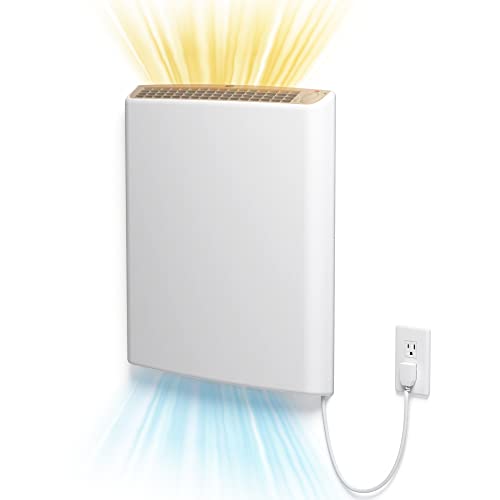
ENVI’s panel heater focuses on quiet, fan‑less convection and continuous operation. It operates at relatively low surface temperature (~90°F) and includes a wall‑sense safety sensor that cuts power if removed from the wall.
The design aims to reduce dust circulation and noise, making it appropriate for bedrooms and spaces with allergy or noise sensitivities. Its plug‑in nature simplifies installation and supports 24/7 supplemental heating without a loud fan.
Call 888-896-7031 for Free Local HVAC Quotes – Compare and Save Today!
ENVI highlights energy efficiency and targeted zone heating to complement central systems, offering a low‑wattage option for maintaining comfortable conditions in frequently used rooms.
NORRUK Wall-Mounted 120V 500W Convection Panel
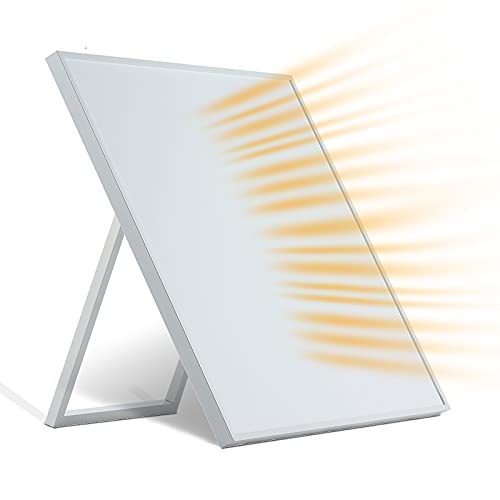
NORRUK’s convection panel emphasizes silent, dust‑free heating and energy efficiency. The fanless design avoids noise and dust agitation, which can benefit asthma and allergy sufferers.
This model is presented as portable with an included stand and is also wall‑mountable. The slim form factor doubles as a writable surface and contains overheat protection. Quiet operation and low maintenance are central to its value proposition.
Recommended uses include bedrooms, offices, and small living areas where unobtrusive background warmth and minimal upkeep are desired.
De’Longhi Convection Panel Heater, Full Room Quiet
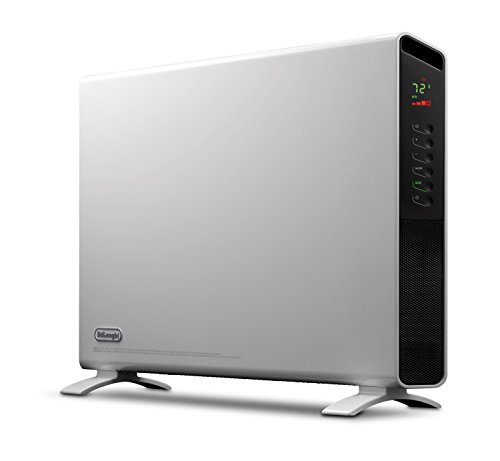
De’Longhi’s HCX9115E is a convection panel heater offering 1500W performance for medium to larger rooms with both floor and wall mounting options. The unit includes an ECO mode to optimize energy use and a programmable timer for scheduled operation.
The design blends portability with the convenience of a wall kit, allowing seasonal repositioning. Fast heat distribution and automatic adjustments via ECO PLUS aim to improve comfort while controlling energy consumption.
Its combination of higher output and multiple mounting choices supports a wider range of rooms compared with lower‑watt fixed panels.
Buying Guide: Choosing A Wall Mounted Convection Heater
Selecting the best wall mounted convection heater depends on room size, installation constraints, control preferences, and operational priorities. Below are key considerations and comparative perspectives to help evaluate options objectively.
Tips for Getting the Best HVAC Prices
- Prioritize Quality Over Cost
The most critical factor in any HVAC project is the quality of the installation. Don’t compromise on contractor expertise just to save money. - Check for Rebates
Always research current rebates and incentives — they can significantly reduce your overall cost. - Compare Multiple Quotes
Request at least three estimates before making your choice. You can click here to get three free quotes from local professionals. These quotes include available rebates and tax credits and automatically exclude unqualified contractors. - Negotiate Smartly
Once you've chosen a contractor, use the proven strategies from our guide — How Homeowners Can Negotiate with HVAC Dealers — to get the best possible final price.
Room Size And Heating Power
- Small Rooms (up to ~150 sq ft): Low‑watt panels (300–600W) can maintain comfortable temperatures with continuous operation and low energy use.
- Medium Rooms (150–300 sq ft): Higher outputs (900–1500W) or supplemental fans may be needed for faster warm‑up and even distribution.
- Large Rooms: Single wall panels typically cannot heat large open spaces efficiently; consider multiple panels or central heating integration.
Convection Vs. Infrared
- Convection Heaters warm air, creating circulation and steady ambient temperature; best for whole‑room comfort and continuous use.
- Infrared Heaters heat objects and people directly; they can feel warmer quickly but may not maintain even room temperature without air movement.
- For a typical “wall mounted convection heater” search, prioritize models described as convection or PTC ceramic fan‑assisted units for even air distribution.
Energy Efficiency And Operating Cost
- Lower wattage reduces instantaneous energy draw but may run longer. Consider duty cycle and target temperature.
- Features like timers, thermostats with narrow accuracy, and ECO modes reduce wasted runtime and improve efficiency.
- Fan‑less designs avoid parasitic fan motor draw but may deliver slower warm‑up compared with fan‑assisted convection units.
Control Options And Automation
- Manual Thermostats provide straightforward set‑and‑forget control without connectivity requirements.
- Smart Controls (Wi‑Fi/App/Voice) enable remote scheduling, voice commands, and integration with home automation but add dependency on apps and network reliability.
- Evaluate whether smart features justify added complexity for your use case.
Installation And Mounting
- Plug‑In Models are easiest to install and can be moved seasonally.
- Hard‑Wired Units may require electrician work but provide a cleaner permanent installation and often higher power options.
- Check manufacturer mounting kits and clearances; some panels can be freestanding or wall‑mounted with included hardware.
Safety And Indoor Air Quality
- Look for overheat protection and certifications (cETL, UL, RoHS) where applicable.
- Fanless convection reduces dust circulation; sealed or low‑surface‑temperature panels reduce burn risk in high‑traffic areas.
- For bathrooms or damp locations, verify IP ratings or manufacturer guidance for safe use.
Noise And Comfort
- Fan‑assisted convection models may produce audible airflow. If quiet operation is a priority, prefer fan‑less panels or low‑noise PTC units.
- Oscillating outlets (when present) can improve vertical distribution, reducing cold spots but may add motor noise.
Durability, Warranty, And Maintenance
- Check warranty length and what it covers; longer warranties reduce long‑term ownership risk.
- Fan‑less designs usually require minimal maintenance; fan‑based units may need occasional dusting or filter cleaning.
- Materials and build quality affect lifespan; powder‑coated aluminum and flame‑retardant housings improve durability.
Comparative Considerations
- If you want smart scheduling and rapid warm‑up, consider PTC or fan‑assisted convection models with Wi‑Fi (e.g., the Dreo smart unit).
- If you prioritize quiet, continuous, low‑watt operation, low‑watt convection panels like EconoHome or ENVI offer steady heat with low noise.
- For versatility, units that offer both floor and wall mounting (like De’Longhi) give flexibility for seasonal repositioning.
- For allergy or asthma concerns, fan‑less, dust‑reducing designs are preferable (ENVI and NORRUK emphasize this).