
Wall socket heaters provide targeted warmth without taking up floor space. Below is a concise comparison of five plug-in and wall-mounted models chosen for performance, energy use, installation style, and smart features.
| Model | Type | Key Feature |
|---|---|---|
| GiveBest Programmable Space Heater (450W) | Plug-In Outlet | Low wattage, LED display, 180° rotatable plug |
| GiveBest 800W Wall Outlet Space Heater | Plug-In Outlet | Stronger 800W output, remote control, LED display |
| Ontel Handy Heater Turbo (800W) | Plug-In Outlet / Compact Ceramic | Ceramic element, programmable 12-hour timer, heats up to 250 sq ft |
| DREO Smart Wall Heater (PTC) | Wall-Mounted / Hard-Mount | PTC ceramic, 30° oscillation, app and voice control |
| ENVI Plug-In Electric Panel Wall Heater | Plug-In Panel | Fan-less convection, low-wattage continuous heating, safety sensor |
Content Navigation
GiveBest Programmable Space Heater With LED Display

Type: Plug-in wall outlet heater. Power: 450 watts. This compact unit is designed for low energy consumption and to avoid overloading typical household circuits.
Features include an adjustable thermostat (60°F–90°F) shown on an LED display, a timer and remote control capability, and a 180° rotatable plug to fit different outlet orientations. The 450W rating makes it suitable for mild climates or small spaces such as bathrooms, offices, or small bedrooms.
Installation is non-permanent: plug directly into a standard wall outlet. Its low-watt design emphasizes energy efficiency and circuit safety, but it delivers limited heat compared to higher-watt models and is best for supplemental or spot heating needs.
GiveBest 800W Wall Outlet Space Heater With Remote

Call 888-896-7031 for Free Local HVAC Quotes – Compare and Save Today!
Type: Plug-in outlet heater. Power: 800 watts. This model balances stronger output with still relatively low energy draw compared to large portable heaters.
Key features are remote control, LED display, adjustable thermostat, and timer. The product description notes quiet operation and suitability for effectively warming areas up to modest room sizes. The 180° rotatable plug is included for flexible outlet alignment.
Compared with the 450W model, the 800W unit provides faster and broader warming capability, making it better for larger small rooms or longer run times while still being mindful of circuit limits. It remains a plug-in solution with simple setup and programmable control options.
Ontel Handy Heater Turbo Wall Outlet Small Space Heater

Type: Plug-in ceramic space heater. Power: 800 watts. Designed as a compact, wall-mounted plug-in that heats via a ceramic element and built-in thermostat.
Features include a programmable 12-hour timer, adjustable thermostat (60°F–90°F), and an auto shut-off safety function. Manufacturer notes ceramic technology helps retain humidity so it may be less drying than some heaters.
Call 888-896-7031 for Free Local HVAC Quotes – Compare and Save Today!
The Ontel unit claims coverage up to 250 sq ft, though real-world coverage depends on insulation and ambient temperature. As a plug-in ceramic heater it offers rapid warm-up and compact installation, making it suitable for small rooms, offices, and bathrooms where floor space is limited.
DREO Smart Wall Heater With PTC Technology

Type: Wall-mounted electric PTC heater (hard-mount). Highlights: PTC heating element, 30° manual oscillation, and smart control via remote, app, and Alexa.
The unit emphasizes powerful airflow and quiet operation with stated low noise and strong airspeed. Smart features include app integration, voice control via Alexa, a 24-hour timer, and ECO mode for energy-conscious settings. A temperature calibration function on the app helps maintain precise readings.
Unlike plug-in outlet heaters, this model is intended for installation on the wall and provides directed, oscillating warm-air distribution. The PTC ceramic approach offers steady heat with built-in safety characteristics and efficient recovery after thermostat cycles. Best suited for bedrooms, offices, and living spaces where a hard-mounted solution is acceptable.
ENVI Plug-In Electric Panel Wall Heater
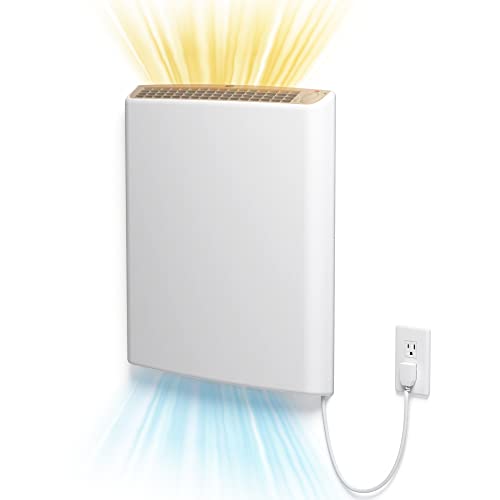
Type: Plug-in panel heater with fan-less convection. Designed for continuous low-wattage comfort and targeted supplemental heating.
Key features include patented fan-less “Stack Convection”, a wall-sense safety sensor that cuts power if removed from the wall, and operation at a cool surface temperature to reduce airborne dust circulation. The unit is marketed for 24/7 safe use, including in homes with children or pets.
ENVI’s panel style provides quiet, gentle warmth ideal for bedrooms or areas where background noise is a concern. Its low-wattage design aims for efficient supplemental heating or localized comfort without the draft or noise of fan-based units.
Buying Guide: How To Choose A Wall Socket Heater
This buying guide covers the essential considerations when comparing plug-in and wall-mounted heaters to match your space, safety needs, and energy goals.
Heating Capacity And Wattage
Choose wattage based on room size and required heat. 450–800W plug-in models are suited for small rooms and spot heating. For larger rooms or whole-room heating, consider higher-watt hard-mounted units or multiple units. Remember that higher wattage increases heat output but also electrical demand.
Installation Type: Plug-In Vs Wall-Mounted
- Plug-in Outlet Heaters (GiveBest, Ontel, ENVI): Easy to install and portable; avoid complex wiring. Best for renters and temporary use.
- Hard-Mount/Wall-Mounted Heaters (DREO hard-mount variants): Often provide wider heat distribution and smart features but require more permanent installation and may need professional mounting.
Energy Efficiency And Usage Patterns
Low-watt models reduce circuit strain and energy use but may run longer. Smart features like timers, thermostats, and ECO modes help lower runtime and cost. Consider local climate and whether the unit will be supplemental or primary heat.
Control Options And Convenience
Remote control, programmable timers, app and voice control add convenience. For bedroom or remote operation, remote or app control avoids repeated physical adjustments. LED displays and precise thermostats improve user feedback and accuracy.
Safety Features
Look for overheat protection, auto shut-off, cool-to-touch surfaces, and wall-sense sensors for plug-in panels. Water-resistant ratings or splash protection are important if used in bathrooms. Fan-less designs reduce dust circulation for allergy concerns.
Noise And Comfort
Fan-based units may provide faster heat but generate noise and air movement. Ceramic and PTC heaters often offer quieter operation. Fan-less convection panels provide the quietest background warmth for bedrooms and study areas.
Air Quality And Humidity Effects
Some ceramic heaters claim reduced dryness compared to other technologies. Fan-less panels do not blow dust and are preferable for allergy sufferers. If humidity retention is important, check manufacturer claims and consider a humidifier if needed.
Outlet And Circuit Considerations
Confirm the circuit capacity and avoid plugging multiple high-watt devices into the same outlet. Features like rotatable plugs increase compatibility with different outlet orientations. For higher wattage hard-mount heaters, verify wiring and whether professional installation is required.
Coverage And Real-World Performance
Manufacturer square footage claims depend on insulation, ceiling height, and outdoor temperature. Use wattage, airflow, and oscillation features as proxies for real-world coverage rather than relying solely on listed area numbers.
Comparison Perspectives
- Best For Minimal Installation: Plug-in models with rotatable plugs (GiveBest) provide simple setup.
- Best For Quiet, Continuous Warmth: Fan-less panel heaters (ENVI) deliver silent convection heat suited to bedrooms.
- Best For Smart Control: Smart wall heaters with app and voice integration (DREO) provide scheduling, remote access and precise temperature control.
- Best For Rapid Spot Heating: Ceramic plug-in units (Ontel) offer fast warm-up and compact placement.
- Best Balance Of Output And Circuit Safety: Mid-range plug-in options (800W GiveBest, Ontel) deliver stronger heat without high circuit demand of larger baseboard or portable heaters.
Use the above factors to prioritize what matters most for your application: portability, quiet operation, smart capabilities, or continuous low-watt warmth. Match the heater type to the room, confirm outlet and circuit compatibility, and favor models with robust safety features for unattended or overnight use.
Tips for Getting the Best HVAC Prices
- Prioritize Quality Over Cost
The most critical factor in any HVAC project is the quality of the installation. Don’t compromise on contractor expertise just to save money. - Check for Rebates
Always research current rebates and incentives — they can significantly reduce your overall cost. - Compare Multiple Quotes
Request at least three estimates before making your choice. You can click here to get three free quotes from local professionals. These quotes include available rebates and tax credits and automatically exclude unqualified contractors. - Negotiate Smartly
Once you've chosen a contractor, use the proven strategies from our guide — How Homeowners Can Negotiate with HVAC Dealers — to get the best possible final price.