
Protecting well pumps and related equipment from freezing requires the right combination of heaters, insulation, and accessories. This guide reviews five Amazon products suited for freeze protection, electrical splice reliability, and maintenance for well systems.
| Product | Primary Use |
|---|---|
| AEGONAN Utility Heater With Built-In Thermostat | Pump house freeze protection, thermostatic control |
| H&G Lifestyles Heated Well Pressure Tank Cover | Insulated heated jacket for pressure tanks |
| oiununo Potable Thermal Expansion Tank | Pressure stabilization for well systems |
| Tuhorse Well Pump Wire Splice Kit | Waterproof electrical splices for submersible pumps |
| 6699 Tankless Water Heater Flushing Kit (With Pump) | Utility pump kit for system flushing and small transfers |
Content Navigation
AEGONAN Utility Heater With Thermostat

This 600W electric convection heater is designed specifically for pump houses and utility rooms for freeze protection. It features a built-in thermostat with a digital display and a settable range from 40°F to 105°F, enabling automated on/off control to maintain a desired temperature. The unit uses X-shaped aluminum fins to increase surface area for more efficient convective heat transfer and has no moving parts, which reduces maintenance needs in remote installations.
Key features referenced: engineered for freeze protection, simple reliable design with no moving parts, built-in digital thermostat, and improved heat transfer fins. Suitable for continuous winter operation in pump houses, relay stations, and construction sheds where consistent ambient temperature is required to prevent freezing of equipment and lines.
H&G Heated Well Pressure Tank Cover

This insulated heated jacket is sized for standard pressure tanks (16″ diameter × 39″ height) and integrates a 340W heating element to maintain temperatures and prevent freezing down to approximately -20°F (-28°C). The design emphasizes heat retention and a consistent heating output, helping ensure the pressure tank and attached piping remain functional in extreme cold.
Call 888-896-7031 for Free Local HVAC Quotes – Compare and Save Today!
Referenced features include premium insulation, consistent heating capability with a specified wattage, and fit for standard tanks. The product is intended for users who need a targeted solution around the pressure tank rather than heating an entire pump house.
oiununo Potable Thermal Expansion Tank 1 Gallon

While not a heater, a thermal expansion tank helps manage pressure fluctuations that can occur with pumps and heaters in closed potable water systems. This 1-gallon unit features a dual O-ring seal on the air valve, thick-walled carbon steel construction tested to 207 PSI, and a food-grade 3/4″ MNPT connection. The internal diaphragm uses food-grade EPDM rubber compatible with potable water.
Referenced product attributes include leak-proof dual O-ring valve, high test pressure rating, and materials suitable for drinking water. Adding an expansion tank reduces pump cycling and pressure spikes that could stress piping or pump controls during freeze-thaw events or when heaters adjust temperatures.
Tuhorse Well Pump Wire Splice Kit

Freeze prevention for well systems also includes secure electrical connections. This kit includes 3M dual-wall heat shrink tubing and pure electrolytic copper butt connectors sized for #10, #12, and #14 AWG conductors. The clear tubing allows visual inspection of the splice before shrinking, and the dual-wall construction provides adhesive-lined sealing for moisture resistance.
Call 888-896-7031 for Free Local HVAC Quotes – Compare and Save Today!
Referenced features: four tubes and four connectors, USA-made components, clear tubing for visibility, and dual-wall heat-shrink technology. Properly sealed splices reduce water intrusion and corrosion that would otherwise compromise pump operation in cold conditions.
6699 Tankless Water Heater Flushing Kit With Pump
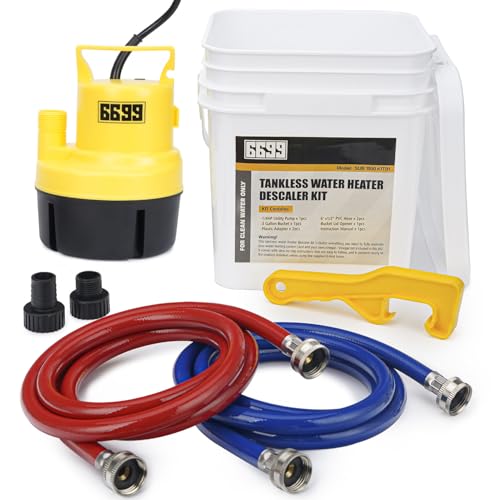
This flushing kit bundles a 1/4 HP submersible utility pump, two hose adapters, two 6-foot 1/2″ PVC hoses, and a 3-gallon bucket with lid opener to facilitate cleaning or flushing tasks. The pump claims up to 1,500 GPH (25 GPM) with a max lift of 23 feet and includes a suction screen to handle small solids.
Referenced features note this kit is intended for maintaining tankless heaters but also serves as a practical utility pump for flushing lines, removing standing water, or conducting maintenance where a small powered pump is useful in well support tasks. The included hoses and bucket make it a self-contained flushing solution for on-site servicing.
Buying Guide: Choosing The Right Well Pump Heating And Freeze-Protection Setup
Protecting a well pump system from freezing typically requires a combination of environmental heating, insulation, reliable electrical connections, and pressure management. Below are key considerations and comparison angles to choose suitable products.
1. Scope Of Protection
- Pumphouse Heater vs. Tank Heater: Use a convection unit like AEGONAN when you need to keep an entire pump house or equipment room above freezing. Use a heated jacket (H&G) when the goal is to protect a single pressure tank or component.
- Point Heating: Heated jackets are more energy-efficient when only the tank needs protection. Room heaters are better when piping, control boxes, and other equipment must stay warm.
2. Thermostat And Control
- Built-In Thermostat: Thermostatic control prevents wasted energy and maintains consistent conditions. Digital readouts and setpoint ranges (e.g., 40°F–105°F) help fine-tune protection.
- Manual vs. Automatic: Automatic thermostats reduce maintenance and intervention in remote sites; manual-only heaters require periodic checks.
3. Power And Wattage
- Wattage Determines Coverage: Higher wattage heats larger volumes faster. For small pump houses or sheds, 300–600W heaters can suffice; larger enclosures will need more or supplemental insulation.
- Availability Of Power: Confirm line voltage and circuit capacity; low-power options are useful where electrical supply is limited.
4. Insulation And Passive Protection
- Insulation Jackets: High-R-value jackets reduce heating load and preserve heat during outages. Heated jackets combine insulation and active heat for targeted protection.
- Pipe Insulation: Insulate exposed lines and use heat tape where applicable to prevent freeze points along runs.
5. Electrical Reliability And Splicing
- Waterproof Splices: Dual-wall heat-shrink butt connectors with adhesive liners provide a lasting moisture barrier for submersible pump cable joints.
- Inspection Access: Clear tubing that lets you verify conductor seating before shrinkage reduces installation errors.
6. Pressure Management And System Health
- Expansion Tanks: Include a thermal expansion tank to moderate pressure fluctuations when water temperature changes or when heating devices interact with closed systems.
- Pump Cycling: Proper pressure management reduces rapid cycling that can accelerate motor wear in cold conditions.
7. Maintenance And Servicing
- Flushing Kits and Utility Pumps: Portable utility pumps and flush kits assist in maintenance tasks such as descaling and sediment removal, improving overall system longevity.
- Service Intervals: Schedule periodic inspections of heaters, jackets, splices, and tank connections before winter to address wear or corrosion.
8. Safety And Certifications
- Material Compatibility: For potable systems, ensure components use food-grade materials (stainless steel fittings, EPDM diaphragms).
- Overheat Protection: Prefer heaters with built-in overheat or tip-over protection if installed in confined spaces.
9. Installation Considerations
- Accessibility: Place heaters where airflow is not obstructed and electrical connections remain accessible for inspection.
- Mounting And Weatherproofing: For remote pump houses, select weather-rated devices or house them within enclosures designed to prevent moisture ingress.
10. Comparison Perspectives
- Energy Use vs. Coverage: Heated jackets concentrate energy on a critical component; room heaters require more energy but protect multiple items.
- Passive Upgrades vs. Active Heat: Upgrading insulation and sealing drafts often reduces necessary heater size. Combining insulation with a low-wattage heater yields efficient protection.
- Electrical Robustness: Investing in sealed splices and quality connectors yields long-term reliability, reducing freeze-related electrical failures.
When designing a freeze-protection plan, combine targeted heating (tank jackets), ambient heating (convection heaters), secure electrical practices (heat-shrink splice kits), and pressure management (expansion tanks). Use portable utility pumps for maintenance and system flushing to preserve performance year-round.
Tips for Getting the Best HVAC Prices
- Prioritize Quality Over Cost
The most critical factor in any HVAC project is the quality of the installation. Don’t compromise on contractor expertise just to save money. - Check for Rebates
Always research current rebates and incentives — they can significantly reduce your overall cost. - Compare Multiple Quotes
Request at least three estimates before making your choice. You can click here to get three free quotes from local professionals. These quotes include available rebates and tax credits and automatically exclude unqualified contractors. - Negotiate Smartly
Once you've chosen a contractor, use the proven strategies from our guide — How Homeowners Can Negotiate with HVAC Dealers — to get the best possible final price.